Aster ($ASTER): The Next-Gen DEX With CEX-Level Experience
What is Aster?
Aster is a decentralized perpetual contracts (perpetuals) exchange built to offer both spot and perpetual trading, with a strong emphasis on being truly on-chain. It is designed to give users, from professional traders to average DeFi participants, a seamless, powerful, and transparent trading environment with low fees, deep liquidity, smart automated tools, and full non-custodial security. The project is backed by YZi Labs (formerly known as Binance Labs), and was selected into its Season 7 incubation program.
Users can choose between a Simple Mode for one-click trading and a Pro Mode with advanced features. It supports multichain execution, leveraging deep on-chain liquidity to reduce friction and maximize efficiency.
Why is Aster Highly Anticipated?
Aster is generating significant buzz in the DeFi space, and not without reason. Positioned as a next-generation decentralized perpetuals exchange, it combines credibility, user-focused design, and strong growth incentives. Here’s why Aster is highly anticipated:
- First major decentralized perp DEX with strong backing: The combination of decentralized perpetuals, pro tools, and backing from established players (YZi Labs) gives it credibility.
- Bridges gaps between centralized ease and decentralized security: Aster’s design aims to give close to centralized-exchange experience (ease, speed, leverage) while retaining decentralization.
- Market demand: DeFi users increasingly demand non custodial derivatives, better collateral flexibility (e.g. using liquid staking tokens), and transparent protocols. Aster tries to meet that.
- Potential early network effects: With community airdrops, ecosystem incentives, rewards for early participation, there’s a chance for fast user growth which tends to feed into liquidity, volume, and network strength.
- Innovative tokenomics & revenue capture: Revenue buyback, careful vesting, large allocation for community / ecosystem suggests alignment with long-term holders.
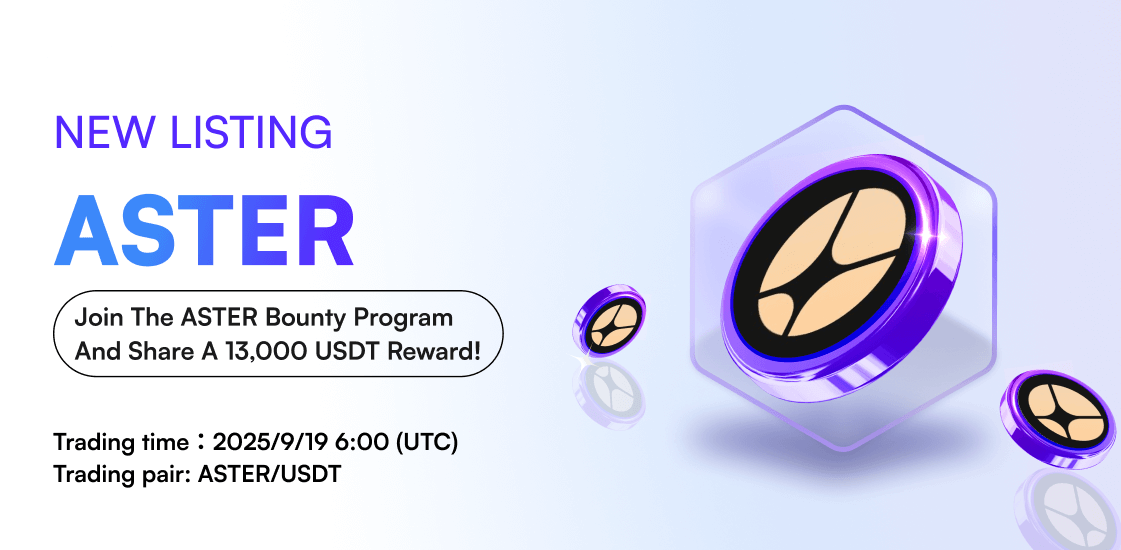
Key Market Info — Supply, ATH, Price Performance Since Launch
Because Aster is very new, there are some data points that are not yet fully established (circulating supply, historical price charts, etc.). From what is publicly available via CoinMarketCap and other sources:
- Max supply: 8,000,000,000 ASTER
- Circulating supply: Not yet established or reported (as of time of writing)
- Launch date / TGE: September 17
- Price performance & ATH: Not yet available, since token is not yet trading (or very recently listed) in open markets. Thus no historical price or all-time high (ATH) data currently verifiable.
Aster Tokenomics
Here’s a breakdown of how the ASTER token is allocated, its unlock schedule, and utility:
Key utility roles of the ASTER token:
- Governance: Holders can vote and participate in protocol decisions.
- Incentives: Used to reward liquidity providers, trading users, partners.
- Ecosystem support: Funding new features, partnerships.
- Value capture: A portion of protocol revenue will be used to buy back ASTER, which helps stabilisation and long-term incentive alignment.
Why Trade Aster
Here are reasons why ASTER might appeal as a trading asset or protocol to engage with:
- High leverage & tools: Offers up to 1001x leverage (depending on mode), advanced trading tools in Pro Mode (e.g. hidden orders, grid trading).
- Deep liquidity & multichain: Liquidity deeply available on multiple chains (BNB Chain, Ethereum, etc.), which tends to reduce slippage & allow larger trades.
- MEV-free simple mode: Minimization of miner/extractor value extraction in certain modes to protect users from front-running and unfair trades.
- Non-custodial security: Users retain control of funds; less exposure to centralized custody risks.
- Backed by strong incubator: YZi Labs involvement means access to resources, mentorship, exposure, possibly helping with adoption, integration, and credibility.
Conclusion
Aster ($ASTER) is shaping up to be an ambitious project in the DeFi derivatives space. With full decentralization, non-custodial trading, advanced trading tools, and strong backing, it addresses many of the pain points that traders and users face today in decentralized perpetual trading.
Its tokenomics are designed to reward early users and ecosystem participants, while maintaining long vesting schedules for team and advisors to avoid pump-and-dump risk. The protocol’s utility model appears balanced: combining governance, incentives, and value capture.
Вам також може сподобатися

Що таке Avail (AVAIL)? Доступність даних, токеноміка та застосування
Дізнайтеся, як Avail (AVAIL), Avail DA та Nexus забезпечують доступність даних і мультичейн-інфраструктуру, а також про токеноміку, стейкінг, застосування та ризики AVAIL.

Що таке Audius (AUDIO)? Децентралізований музичний стримінг
Дізнайтеся, як Audius (AUDIO) та Open Audio Protocol забезпечують децентралізований музичний стримінг, а також про стейкінг, управління, токеноміку та ризики AUDIO.

Що таке Cosmos (ATOM)? Cosmos Hub, IBC, стейкінг і застосування
Дізнайтеся, як працюють Cosmos (ATOM), Cosmos Hub, IBC і Cosmos SDK, а також про стейкінг, управління, токеноміку, застосування та ризики ATOM.