Plasma’s XPL Token Launch: The Next-Gen of Stablecoin Settlement
What is Plasma Blockchain (XPL Token)?
Plasma is a high-performance Layer 1 blockchain designed for stablecoin payments and settlements. Its native asset, the XPL token, powers the ecosystem by enabling gas payments, staking, and governance.
Plasma aims to solve the biggest issues in blockchain payments i.e. scalability, low-cost transfers, and compliance, while maintaining institutional-grade security. For users and enterprises, Plasma provides an infrastructure where stablecoins like USDT and the XPL coin can move quickly and securely.
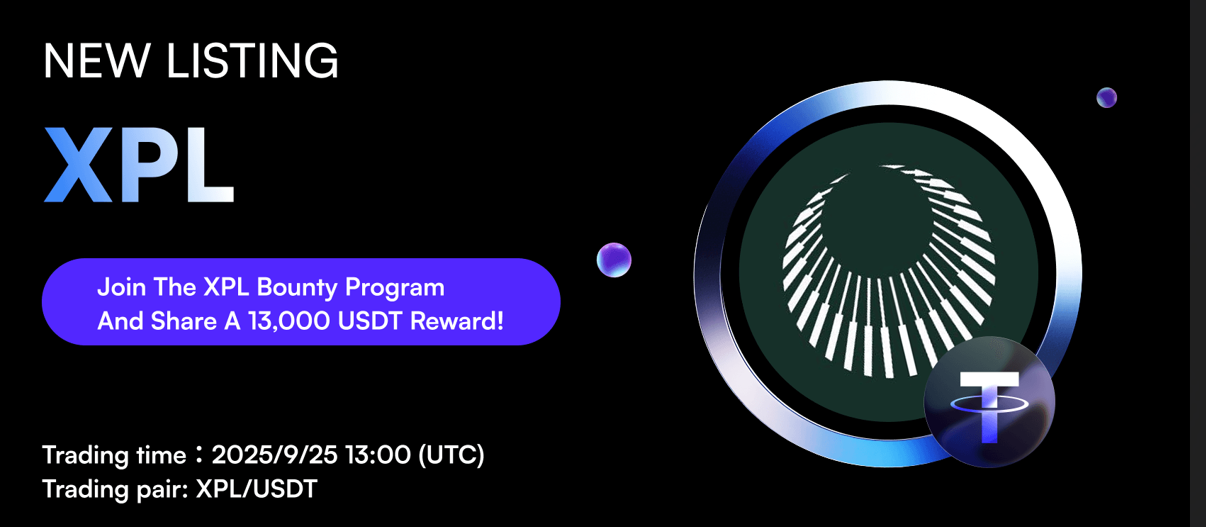
According to its official website, Plasma’s mainnet beta will go live alongside the launch of its native token, XPL on September 25 at 8:00 AM ET.
How XPL Stands Out From Other Stablecoin Projects
XPL has a few things going for it that separates it from other more established stablecoin players. Here's how it's playing the high-stakes game:
1. Dual Gas Fee Mechanism
Most blockchains require the native token for gas fees. Plasma is different — it lets users pay for transactions in either XPL or USDT. This drastically lowers the barrier to entry, especially for people and institutions who want to use stablecoins directly without converting into another token first.
2. Purpose-Built for Stablecoin Settlement
Other blockchains (like Ethereum or Solana) support stablecoins but were not built specifically for them. Plasma is designed from the ground up to optimize for high-frequency, low-cost stablecoin transactions. That means it’s not just a general smart contract chain—it’s a payments-first infrastructure.
3. PlasmaBFT Consensus
Instead of reusing existing consensus models, Plasma developed PlasmaBFT, which:
- Takes the security principles of Bitcoin
- Blends them with Ethereum’s smart contract flexibility
- Adds optimizations for speed, privacy, and compliance
This hybrid approach gives Plasma both institutional-grade trust and consumer-level speed.
4. Compliance + Privacy Balance
Most stablecoin networks struggle between privacy (which users want) and compliance (which regulators demand). Plasma is intentionally designed to address both sides, making it attractive for enterprises, fintechs, and regulated institutions.
5. Payment-Centric Ecosystem
Where many stablecoin projects are limited to just issuing tokens (like USDT or USDC on other chains), Plasma is building the infrastructure itself. This allows it to support:
- Remittances
- Merchant payments
- Cross-border settlements
- Stablecoin-based DeFi apps
XPL is not just a speculative coin — it’s the backbone of an ecosystem designed for real-world financial activity. In short: Plasma + XPL = the first Layer 1 blockchain truly optimized for stablecoin adoption.
What is the Purpose of Plasma (XPL Coin)?
Plasma’s purpose is to become the go-to infrastructure for stablecoin transactions. The XPL token sits at the core of this mission by enabling:
- Low-Cost Gas Fees – Both XPL and USDT can be used to pay for transactions, lowering barriers for new users.
- High-Speed Payments – Designed for remittance and high-frequency payment use cases with near-instant confirmation.
- Privacy and Compliance – Balances user confidentiality with regulatory readiness.
- Institutional Security – Secured by PlasmaBFT, a unique consensus that blends Bitcoin’s security with Ethereum’s smart contract functionality.
With these features, Plasma blockchain is positioned to become the backbone of global stablecoin adoption.
XPL Token Price and Market Performance
The launch of the XPL token has attracted strong investor attention:
- Project Name: Plasma
- Token Symbol: XPL
- Blockchain Sector: Layer 1
- Total Supply: 1 billion tokens
- Circulating Supply at Launch: 200 million
- Launch Price: $0.10
- Current Price: $0.28 (as of latest update)
- Market Cap: $56 million (based on circulating supply)
With a 180% price increase since launch, XPL has quickly established itself as one of the most talked-about new crypto tokens of 2025.
Is XPL a Good Investment?
Many investors are considering whether XPL crypto is a strong long-term bet. Its appeal lies in:
- Real-World Use Case – A blockchain built specifically for stablecoin adoption and global payments.
- Dual Gas Mechanism – Paying fees in USDT or XPL makes it easy for new users to adopt.
- Scalability – High throughput and low latency for payment networks and remittances.
- Community & Ecosystem Growth – Rising developer activity and exchange listings are increasing visibility.
While XPL investment potential is promising, crypto remains volatile—investors should do their own research before buying.
Why Plasma (XPL) is Highly Anticipated
The hype surrounding Plasma blockchain and its XPL coin is driven by:
- Stablecoin-Centric Design – Unlike most chains, Plasma focuses on stablecoin settlement and payments.
- Innovative Consensus – PlasmaBFT provides Bitcoin-level security with Ethereum-style smart contracts.
- Practical Utility – Beyond speculation, XPL drives real adoption in remittances and financial services.
- Ecosystem Potential – With strong backing and developer growth, Plasma is building a long-term payment infrastructure.
How to Buy XPL Token (Step-by-Step Guide)
If you’re looking to buy XPL crypto, here’s how:
- Register on an Exchange – Sign up on a platform that lists XPL such as CoinW.
- Deposit Funds – Add USDT, BTC, or ETH to your wallet.
- Search for XPL Trading Pairs – Look for XPL/USDT or XPL/BTC.
- Buy XPL Token – Place a market order or set a limit order.
- Store Safely – Transfer XPL to a secure self-custody wallet.
Trade XPL perpetual futures easily and safely.
Frequently Asked Questions About Plasma (XPL)
1. What is Plasma blockchain?
Plasma is a Layer 1 blockchain for stablecoin payments, powered by its native token, XPL.
2. What is the role of the XPL token?
XPL is used for gas fees, staking, governance, and ecosystem utilities within Plasma.
3. Can I pay transaction fees in USDT on Plasma?
Yes. Plasma allows users to pay fees in either USDT or XPL, making adoption easier.
4. What is the total supply of XPL coin?
XPL has a fixed total supply of 1 billion tokens.
5. Is XPL a good investment?
XPL has strong fundamentals and utility, but as with all cryptocurrencies, it carries risks.
6. How do I buy XPL?
You can buy XPL tokens on exchanges that list it, trade against USDT or BTC, and store them in a secure wallet.
Conclusion
The launch of the Plasma blockchain and its native XPL coin marks a major milestone in the evolution of stablecoin-focused crypto infrastructure. With transparent tokenomics, real-world payment use cases, and a cutting-edge consensus mechanism, Plasma is positioning itself as a leader in the Layer 1 blockchain sector.
You May Also Like

What Is Avail (AVAIL)? Data Availability, Tokenomics & Uses
Learn how Avail (AVAIL) uses Avail DA, Nexus and multi-chain infrastructure for data availability and chain abstraction, plus AVAIL tokenomics, staking, uses and risks.

What Is Audius (AUDIO)? Decentralized Music Streaming Explained
Learn how Audius (AUDIO) uses the Open Audio Protocol for decentralized music streaming, including AUDIO staking, governance, tokenomics, use cases, and risks.

What Is Cosmos (ATOM)? Cosmos Hub, IBC, Staking & Use Cases
Learn how Cosmos (ATOM), Cosmos Hub, IBC and the Cosmos SDK work, and explore ATOM staking, governance, tokenomics, use cases and key risks.