What is a Strategic Bitcoin Reserve?
The year 2024 was truly a watershed year for Bitcoin, as US politicians clamber over one another to position themselves as pro-crypto in the name of innovation, freedom and defense of the USD.
One of the phrases that has been popping up is a “Strategic Bitcoin Reserve.” With pro-Bitcoin Donald Trump taking office to serve his second presidential term, talk of a strategic Bitcoin reserve has amplified.
What are the big ideas behind this strategic reserve, what problems is it expected to solve, and for Bitcoin investors and enthusiasts, what this will mean for Bitcoin’s price. This article gives a simple, quick explainer to catch you up on the topic.
What is a Strategic Bitcoin Reserve?
A strategic Bitcoin reserve refers to a proposal for a country to hold a significant amount of Bitcoin as part of its national reserves. At the Nashville Bitcoin Conference in July 2024, US presidential candidate Donald Trump promised to build a Bitcoin reserve seeded by the stash of BTC the government has seized over the years.
Faced with a $35 trillion national debt right now, proponents argue that a strategic Bitcoin reserve could help reduce national debt and provide a new fiscal strategy without raising taxes. This potential economic benefit adds to the appeal for crypto enthusiasts who believe in Bitcoin's long-term value.
One of the pioneering politicians behind the idea of a strategic Bitcoin reserve is Senator Cynthia Lummis, who voiced a plan to acquire 1 million Bitcoin over a 5-year period. According to Senator Lummis, this strategic Bitcoin reserve could potentially cut the US national debt in half by 2045. This proposal aims to take advantage of Bitcoin's potential for significant price appreciation over time. As Bitcoin's value increases, the value of the reserve would grow, providing more funds to pay down debt.
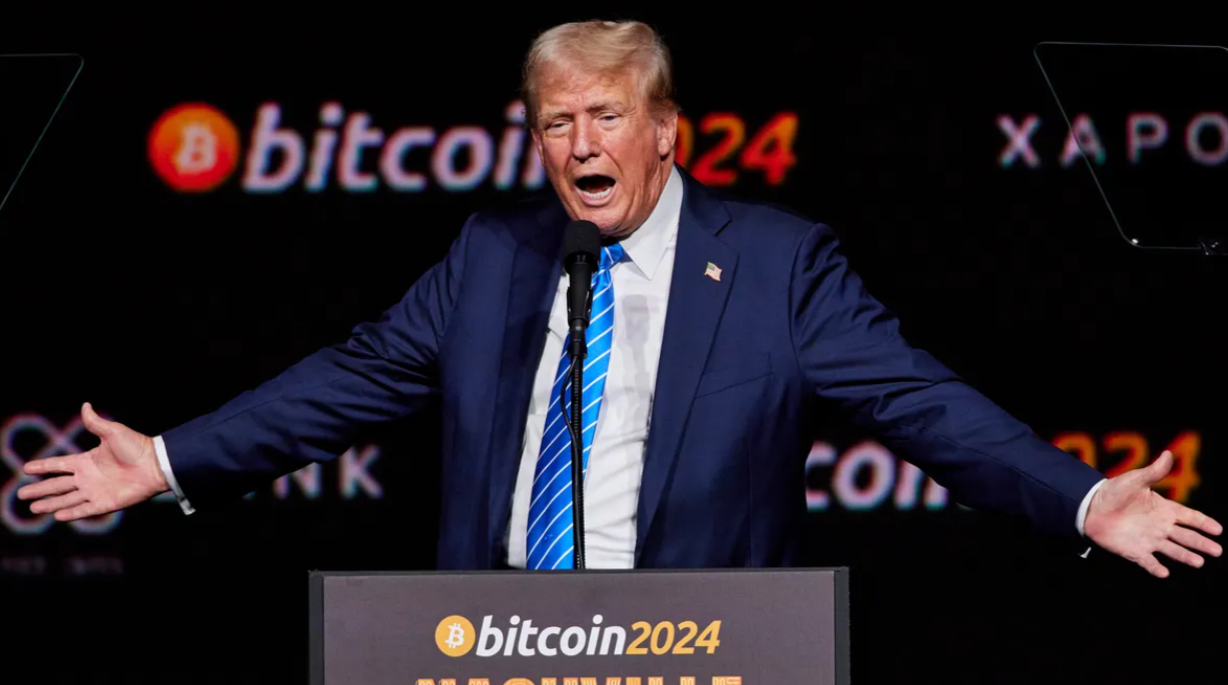
In his speech at the Bitcoin conference, Trump stated that the US government already holds around 213,000 BTC from seizures. As such, these existing holdings could be leveraged as part of a strategic reserve without requiring additional purchases.
(For the uninitiated, a strategic reserve is a stockpile of essential commodities or resources that is held back from normal use by governments, organizations, or businesses for specific strategic purposes or to cope with unexpected events. The US, as with many other countries, maintains several strategic reserves to address various potential crises, including the Strategic Petroleum Reserve (SPR), an emergency supply of crude oil, to protect the economy and national security during major oil supply disruptions. It also holds gold reserves and grain reserves to stabilize food prices and ensure food security.)
What is Bitcoin? What makes it so valuable?
Other Countries with Strategic Bitcoin Reserves
While still a new trend, a few countries have taken the leap and officially hold Bitcoin in their national reserves. Most prominently is El Salvador, which became the first country in the world to adopt Bitcoin as legal tender in 2021 and has since acquired thousands of BTC for its treasury. The country views Bitcoin as a long-term reserve asset and aims to build economic independence from traditional financial systems.
Surprisingly under the radar, Bhutan has been quietly mining Bitcoin using hydropower. The country uses this Bitcoin as part of its sovereign wealth strategy, integrating it into national reserves. It now holds slightly over 13,000 bitcoins.
Though not officially a reserve policy, Ukraine has received Bitcoin donations during wartime and has sold some of its holdings to fund national defense. This has demonstrated how Bitcoin can serve as an emergency financial reserve during crises.
Other nations such as Venezuela and Iran have reportedly mined or acquired Bitcoin to bypass international sanctions, though these efforts remain unofficial and often controversial. Most intriguingly, however, is the news in May 2025 that Pakistan is aggressively pivoting toward Bitcoin mining to capitalize on its surplus electricity and digital potential, as reported by Reuters.
What Would a Strategic Bitcoin Reserve Mean for Bitcoin’s Price?
If the idea of a strategic Bitcoin reserve gains global traction, the impact on Bitcoin’s price could be profound and long-lasting. Government accumulation of BTC would introduce new, long-term buyers with deep pockets, significantly tightening the available supply. Since Bitcoin has a hard cap of 21 million coins—and most are already mined or held by long-term holders—this added demand from sovereign entities could trigger a supply shock, driving prices upward.
Strategic reserve accumulation is also psychologically powerful. If governments begin treating Bitcoin as a national asset alongside gold and foreign currency reserves, it could dramatically elevate Bitcoin’s legitimacy in the eyes of institutional investors, corporations, and the general public. This would likely trigger a cascade of adoption, as other nations, central banks, and large entities rush to secure their own positions, further intensifying demand.
As for price predictions, the range is wide—but bullish scenarios dominate among analysts in this context. If just a few major economies (e.g., the U.S., Germany, or Japan) begin building reserves:
- Standard Chartered has predicted Bitcoin could reach $200,000 in a post-ETF, institutional adoption scenario.
- ARK Invest projects a long-term price of $1 million per BTC by the early 2030s under the assumption of nation-state accumulation and hyperbitcoinization.
- More conservative models like the Stock-to-Flow (S2F) estimate prices between $100,000 and $300,000 within the next few years if scarcity is compounded by government hoarding.
Ultimately, a global shift toward Bitcoin strategic reserves would likely anchor BTC as a macroeconomic asset, with price behavior more closely tied to national policies, geopolitical shifts, and central bank strategies—putting it on par with gold in the global financial system.
Buy Bitcoin with low fees at CoinW.
Strategic Bitcoin Reserve vs Gold Reserve
Among sound-money proponents, a debate has been raging–is Bitcoin the new gold?
While both assets share key properties like scarcity, durability, and resistance to inflation, Bitcoin brings something gold cannot: digital portability, transparency, and programmability. In a world increasingly shaped by digital infrastructure, governments and institutions are beginning to view Bitcoin not just as “digital gold,” but as a superior monetary asset for the 21st century. A Bitcoin strategic reserve can be audited in real time, moved across borders in seconds, and stored without the logistical burden of physical vaults.
Unlike gold, which has been hoarded and manipulated by central banks for decades, Bitcoin operates on a decentralized, trustless protocol. This gives it unique geopolitical advantages. Nations that adopt it early may gain asymmetric leverage in the future financial order.
Several goldbugs, most notably Peter Schiff do not think so. He argues that Bitcoin has no intrinsic value, is too volatile to serve as a reliable store of wealth, and ultimately sees it as a speculative bubble. Despite Bitcoin’s growing adoption, he maintains that it will eventually collapse, leaving investors with nothing.
What are we to make of all this? It’s quite possible that a hybrid approach maintaining both Bitcoin and gold reserves may become the new norm. Time will tell.
In conclusion
The concept of a Bitcoin strategic reserve signals a new era in national economic planning. As inflation, geopolitical instability, and digital transformation accelerate, Bitcoin is emerging as a serious contender to gold and fiat in the world of strategic reserves.
Governments that proactively integrate Bitcoin into their financial architecture may gain an edge in global competitiveness, financial independence, and economic security.
At the same time, it's important to note that while the concept of a Bitcoin strategic reserve is exciting for many crypto enthusiasts, it also faces significant challenges. These include regulatory hurdles, concerns about Bitcoin's volatility, and the need for robust security measures to manage large amounts of Bitcoin. Despite these challenges, the potential for such a development continues to be a topic of great interest and speculation in the crypto community.