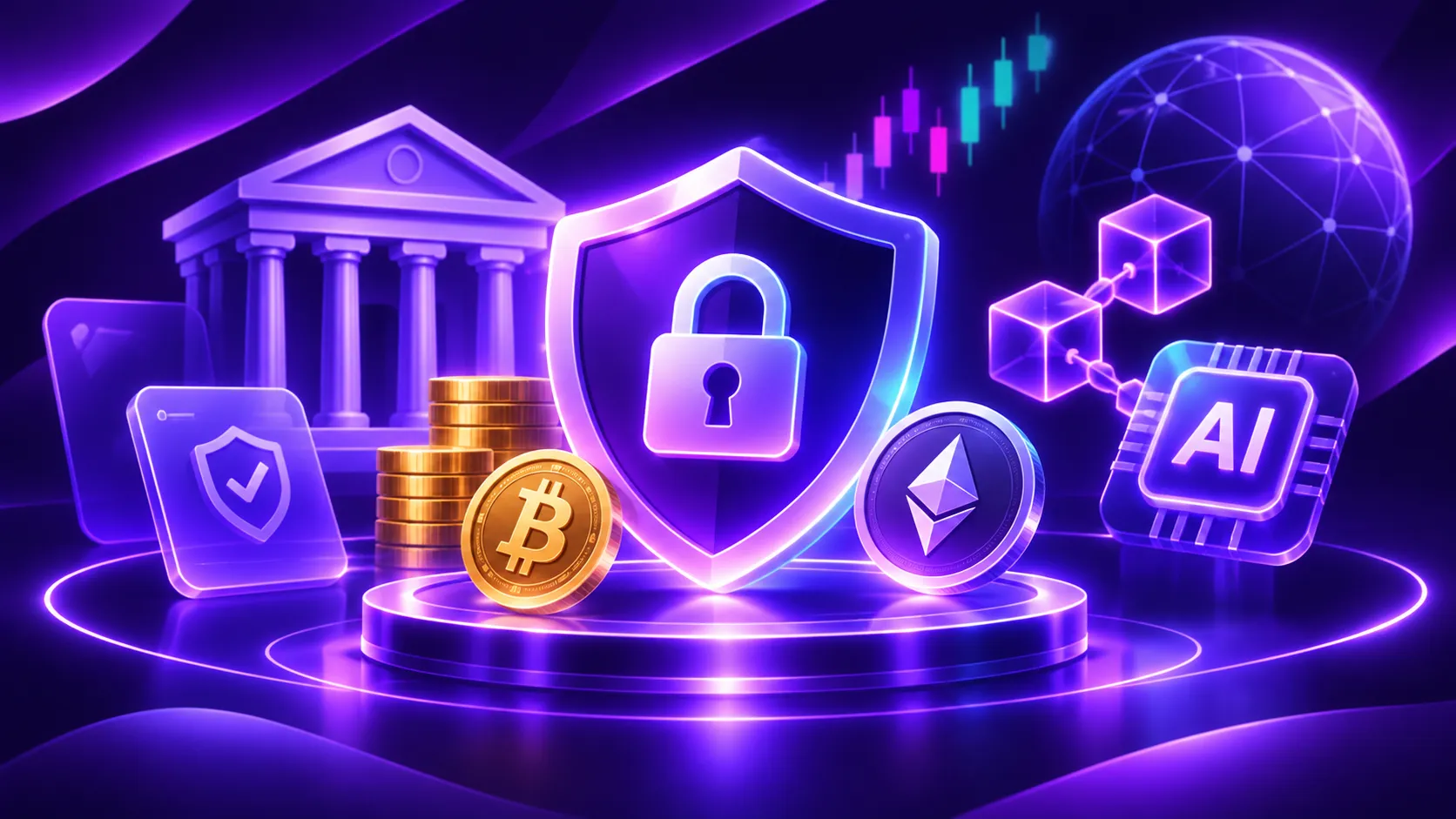
The financial industry is undergoing a structural transformation as banks, asset managers and payment providers increasingly integrate blockchain technology into their operations. From cryptocurrency custody and stablecoin payments to tokenized securities, digital assets are creating opportunities for faster, more accessible and programmable financial services.
However, this evolution introduces a significant challenge: can banking security keep pace with the speed of digital asset adoption?
In an opinion piece published on November 27, 2026, Firuza Karimova, Group CISO Designate at Standard Chartered, highlighted the growing importance of cybersecurity, operational resilience and human oversight as financial institutions expand into digital assets while facing increasingly sophisticated AI-enabled threats.
Unlike many conventional financial transactions, finalized blockchain transfers generally cannot be reversed by a central intermediary. This makes preventive security, secure custody infrastructure and real-time risk management increasingly important for both traditional financial institutions and cryptocurrency exchanges.
What Is Digital Asset Security?
Digital asset security refers to the technologies, policies and operational procedures used to protect cryptocurrencies, tokenized financial instruments, blockchain infrastructure and digital asset transactions against theft, fraud, unauthorized access and operational failures.
It encompasses private key protection, transaction monitoring, secure custody, smart contract security, identity verification and cybersecurity risk management.
As financial institutions expand their exposure to assets such as Bitcoin (BTC) and Ethereum (ETH), digital asset security is becoming an increasingly important component of institutional financial infrastructure.
Quick Summary
Institutional adoption: Banks are expanding into cryptocurrency custody, digital asset trading and tokenized financial products.
Transaction irreversibility: Finalized blockchain transactions are generally more difficult to reverse than conventional financial transfers.
AI-powered cybersecurity threats: Artificial intelligence is accelerating vulnerability discovery, exploitation and social engineering.
Digital asset custody: Private key management, cold storage and distributed transaction authorization are essential security considerations.
Regulatory oversight: International banking standards and digital operational resilience requirements are shaping institutional risk management.
Financial transparency: Proof of Reserves and verifiable custody practices can help strengthen confidence in cryptocurrency platforms.
Why Are Banks Increasingly Adopting Digital Assets?
Blockchain technology is expanding beyond cryptocurrency trading into traditional financial services. Banks are exploring digital assets to improve settlement efficiency, reduce operational friction and develop new financial products for institutional clients.
Potential applications include cross-border payments, tokenized deposits, institutional cryptocurrency trading, digital asset custody and the issuance of tokenized securities.
Standard Chartered's Expansion Into Digital Assets
Standard Chartered provides an example of how established financial institutions are integrating cryptocurrency services into their business models.
In September 2024, the bank launched its digital asset custody service in the United Arab Emirates, initially supporting Bitcoin and Ethereum under a license granted by the Dubai Financial Services Authority (DFSA).
In July 2025, Standard Chartered expanded its offering by introducing institutional cryptocurrency spot trading through its UK branch.
These developments illustrate how digital asset services are becoming integrated into established banking infrastructure rather than operating exclusively within cryptocurrency-native platforms.
The Growth of Tokenized Finance
Institutional adoption extends beyond conventional cryptocurrencies. Tokenization allows financial institutions to represent assets such as bonds, equities, deposits and other financial instruments on distributed ledgers.
Potential benefits include programmable settlement, improved collateral mobility and more efficient post-trade processes. However, these advantages also introduce dependencies on blockchain networks, smart contracts, digital identities and external infrastructure providers.
As more financial activities move on-chain, the security of these interconnected systems becomes increasingly relevant to the stability of traditional financial markets.
Why Blockchain Transactions Create New Banking Security Challenges
Traditional banking systems and blockchain-based financial infrastructure operate under different technical and operational models. Although both face cybersecurity threats, digital assets introduce additional risks related to transaction authorization, private key management and settlement finality.
Transaction Irreversibility
Conventional financial institutions may be able to investigate fraudulent transfers, coordinate with receiving banks or initiate recovery procedures in certain circumstances. Recovery is not guaranteed, but established institutional mechanisms can provide additional options.
On many public blockchains, finalized transactions cannot be unilaterally canceled. Recovering stolen or mistakenly transferred assets may depend on cooperation from recipients, custodians, exchanges, token issuers or law enforcement authorities.
Some centrally administered tokens may incorporate freezing or administrative functions, but these mechanisms are not universal across digital assets.
Consequently, financial institutions must place greater emphasis on identifying suspicious activity before a blockchain transaction is executed.
Private Key Management
Private keys are cryptographic credentials used to authorize blockchain transactions. If an unauthorized party gains sufficient control over the credentials required to sign a transaction, digital assets may be transferred without the legitimate owner's consent.
For institutional custodians, protecting private keys requires infrastructure that minimizes unauthorized access, separates operational responsibilities and reduces single points of failure.
Pseudonymity and Financial Crime
Public blockchain networks can provide transparent transaction records without necessarily revealing the real-world identities associated with every wallet address.
This creates challenges for anti-money laundering (AML) procedures, sanctions compliance and asset recovery. Although blockchain analytics can help investigators trace transactions, identifying the individuals controlling specific addresses may require additional information.
Traditional Banking Security vs. Digital Asset Security
| Security Feature | Traditional Banking | Blockchain-Based Finance |
|---|---|---|
| Transaction settlement | Depends on payment infrastructure | Can occur within seconds or minutes |
| Transaction reversal | Possible under certain conditions | Generally unavailable after finality on public blockchains |
| Asset authorization | Account-based institutional controls | Cryptographic signatures and custody controls |
| Transaction visibility | Primarily institution-controlled records | Publicly verifiable on many networks |
| Threat detection | Preventive and post-transaction monitoring | Greater emphasis on pre-transaction intervention |
| Primary security risks | Fraud, data breaches and operational failures | Key compromise, malicious transactions and smart contract vulnerabilities |
How Artificial Intelligence Is Transforming Cybersecurity Threats
Artificial intelligence is changing the economics of cybercrime. Activities that previously required extensive technical expertise, significant resources or manual effort can increasingly be assisted by AI-powered systems.
For banks and cryptocurrency companies, this means that cybersecurity frameworks must account for both the growing sophistication of attacks and the speed at which threats can emerge.
Software Vulnerabilities Are Becoming a Leading Attack Vector
According to Verizon's 2026 Data Breach Investigations Report (DBIR), software vulnerability exploitation has overtaken credential abuse as the leading initial access method in its breach dataset.
| Initial Access Method | Share in 2026 DBIR Dataset |
|---|---|
| Software vulnerability exploitation | 31% |
| Phishing | 16% |
| Credential abuse | 13% |
| Pretexting | 6% |
Source: Verizon 2026 Data Breach Investigations Report. The report covers incidents occurring between November 2024 and October 2025. Figures represent selected initial access methods across industries, not exclusively financial institutions or cryptocurrency companies.
These findings highlight the importance of continuous software testing, vulnerability management and rapid security updates across financial infrastructure.
AI-Powered Social Engineering
Generative AI can also assist malicious actors in producing convincing fraudulent messages, impersonating trusted individuals and creating synthetic audio or video.
For digital asset businesses, these threats are particularly relevant when employees have access to transaction approval systems, sensitive customer data or custody infrastructure.
Financial institutions should therefore combine technical security measures with employee training, independent verification procedures and clearly defined transaction authorization policies.
Artificial Intelligence as a Defensive Tool
AI is not exclusively a cybersecurity threat. Financial institutions can also deploy machine learning and automated systems to identify anomalies, detect suspicious transactions and prioritize emerging security vulnerabilities.
AI-assisted wallets may eventually incorporate more sophisticated transaction screening and automated security policies. However, these systems introduce their own risks, including incorrect decisions, excessive permissions and compromised automation.
Learn more about these developments in CoinW Academy's guide to agentic wallets and the role of AI in cryptocurrency custody.
What the $1.5 Billion Bybit Hack Revealed About Digital Asset Security
One of the most significant examples of digital asset custody risk occurred in February 2025, when approximately $1.5 billion in virtual assets was stolen from cryptocurrency exchange Bybit.
The Federal Bureau of Investigation (FBI) subsequently attributed the theft to North Korean cyber actors.
The incident demonstrated that substantial financial losses can occur when digital asset custody processes are compromised, even within established cryptocurrency businesses.
It also highlighted the importance of cooperation between cryptocurrency exchanges, blockchain analytics providers, custodians and law enforcement when responding to major security incidents.
Several broader lessons can be drawn from the incident:
Transaction approval integrity: Authorized personnel must be able to independently verify the transactions they approve.
Supply chain security: External software and infrastructure providers must be included in institutional security assessments.
Independent security controls: Multiple approval mechanisms are most effective when they do not share the same underlying point of failure.
Incident response: Organizations need established procedures for identifying, containing and responding to unauthorized asset movements.
Industry coordination: Information sharing can support investigations and improve collective cybersecurity readiness.
For banks entering the cryptocurrency industry, these lessons reinforce the need to adapt existing banking security frameworks to the technical requirements of blockchain-based assets.
How Banks and Cryptocurrency Exchanges Can Strengthen Digital Asset Security
Financial institutions and cryptocurrency exchanges can reduce digital asset risks through a combination of cryptographic protections, operational controls, cybersecurity monitoring and organizational accountability.
1. Defense-in-Depth Security
Defense in depth is a security strategy that uses multiple independent layers of protection to reduce the likelihood that a single compromised control will result in unauthorized access or financial loss.
In digital asset custody, these layers can include hardware-based key protection, network isolation, access restrictions, transaction verification, independent approvals and continuous monitoring.
The objective is to ensure that the compromise of one system does not automatically expose customer assets.
2. Multi-Party Computation and Multi-Signature Wallets
Multi-party computation (MPC) and multi-signature wallets are two approaches that can reduce reliance on individual transaction authorization credentials.
MPC allows multiple participants or systems to contribute to cryptographic signing without requiring a complete private key to be assembled in a single location.
Multi-signature wallets require multiple signatures to authorize transactions according to predefined rules.
Although their implementations differ, both approaches can help institutions distribute authorization responsibilities and reduce certain single-point-of-failure risks.
3. Cold Storage and Hardware Security Modules
Cold storage involves keeping private keys in environments isolated from internet-connected systems, reducing their exposure to certain online threats.
Hardware security modules (HSMs) are specialized devices designed to protect cryptographic operations and sensitive credentials.
Financial institutions can combine these technologies with controlled operational procedures to strengthen digital asset custody. However, secure storage alone does not eliminate risks arising during transaction approval or execution.
4. Real-Time Transaction Monitoring
Because unauthorized blockchain transfers may be irreversible, institutions need mechanisms to assess transaction risks before assets leave their custody.
These mechanisms can include withdrawal limits, address allowlists, behavioral analysis, transaction simulation, sanctions screening and additional approvals for high-risk transfers.
5. Third-Party Risk Management
Digital asset services often rely on multiple external providers, including wallet infrastructure companies, cloud service providers, blockchain analytics platforms and independent custodians.
A vulnerability or operational disruption affecting one provider can create consequences for other organizations connected to the same infrastructure.
Institutions should assess supplier security, operational dependencies, business continuity arrangements and alternative service options before integrating critical third-party systems.
6. Human Oversight of Automated Security Systems
AI-powered systems can improve the speed of cybersecurity operations, but organizations should establish clear limits on their authority.
High-value transactions, significant changes to security policies and other sensitive decisions may require independent human approval based on their associated risks.
Human accountability remains particularly important when automated systems are authorized to interact with financial infrastructure or initiate transactions.
The Role of Regulation in Digital Asset Security
As banks and other financial institutions expand their digital asset offerings, regulators are developing frameworks to address the associated financial, technological and operational risks.
Basel Committee Standards for Cryptoasset Exposures
The Basel Committee on Banking Supervision has established a dedicated framework for the prudential treatment of banks' cryptoasset exposures.
The Basel Framework's SCO60 cryptoasset standard, with an effective date of January 1, 2026, addresses financial exposures and operational considerations associated with cryptoasset activities.
It establishes expectations for banks to assess and manage relevant risks, including cybersecurity, liquidity, market and operational risks.
The standard also includes operational risk considerations relevant to certain cryptoasset custody services, demonstrating that institutional responsibilities extend beyond direct balance sheet exposure to cryptocurrencies.
The European Union's Digital Operational Resilience Act (DORA)
The European Union's Digital Operational Resilience Act (DORA) became applicable on January 17, 2025.
The regulation establishes information and communication technology (ICT) risk management requirements for financial entities within its scope, including relevant cryptoasset service providers.
Under Regulation (EU) 2022/2554, key requirements include ICT incident management, operational resilience testing, technology risk governance and oversight of critical third-party dependencies.
Markets in Crypto-Assets Regulation (MiCA)
The EU's Markets in Crypto-Assets Regulation (MiCA) establishes a regulatory framework for cryptoasset issuers and service providers operating within its scope.
Among other obligations, Regulation (EU) 2023/1114 introduces requirements related to organizational governance, customer asset safeguarding and the provision of cryptoasset custody services.
Together, these regulatory initiatives reflect an increasing focus on ensuring that digital asset innovation develops alongside appropriate risk management and consumer protection mechanisms.
Why Security and Transparency Matter for Cryptocurrency Exchanges
While banks are expanding their digital asset capabilities, cryptocurrency exchanges already operate within environments where digital asset custody, continuous market activity and blockchain transactions are central to their business models.
As institutional and retail participation grows, exchanges face increasing expectations regarding asset protection, operational reliability and financial transparency.
What Is Proof of Reserves?
Proof of Reserves (PoR) is a verification mechanism designed to demonstrate whether a cryptocurrency platform holds sufficient assets to cover the customer balances included in its reserve assessment.
Depending on the implementation, Proof of Reserves may incorporate cryptographic verification, publicly identifiable blockchain wallet addresses and Merkle tree-based mechanisms that allow customers to verify the inclusion of their balances in a reserve snapshot.
However, Proof of Reserves should not be treated as a substitute for comprehensive financial audits, cybersecurity assessments or evaluations of an organization's overall liabilities and solvency.
CoinW's November 2026 Proof of Reserves Update
At CoinW, transparency and digital asset protection are important components of our approach to cryptocurrency trading infrastructure.
According to our November 2026 Proof of Reserves update, published on November 24, CoinW reported a total reserve ratio of 113.2%.
This reported ratio indicates that the assets included in the reserve assessment exceeded the corresponding customer balances at the time of the snapshot.
CoinW updates its reserve data monthly as part of its commitment to maintaining a minimum 1:1 reserve ratio for customer assets and improving platform transparency.
CoinW's Multi-Layered Security Infrastructure
CoinW's approach to digital asset protection incorporates multiple technical and operational safeguards designed to address different categories of security risk.
As outlined in our official Security and Protection framework, these measures include:
Multi-party computation wallets: Distributed cryptographic signing mechanisms for digital asset transactions.
Layered hot and cold wallet infrastructure: Separation of operational liquidity from offline asset storage.
Hardware security modules: Specialized infrastructure for protecting sensitive cryptographic operations.
Multi-factor authentication: Additional account protection for sensitive operations.
Behavioral monitoring: Systems designed to identify potentially suspicious account activity.
Withdrawal risk controls: Additional verification and review mechanisms for potentially abnormal transactions.
These measures are designed to reduce exposure to different security threats. Nevertheless, no digital asset platform or custody system can eliminate cybersecurity and operational risks entirely.
What Does the Evolution of Banking Security Mean for Crypto Investors?
The convergence of traditional finance and blockchain technology could have several long-term implications for cryptocurrency markets.
Greater Institutional Participation
Improved custody infrastructure and clearer regulatory frameworks may help address some of the operational barriers that have historically limited institutional participation in digital assets.
However, institutional participation will continue to depend on market conditions, regulatory requirements, investment mandates and risk management considerations.
Growing Demand for Blockchain Infrastructure
As financial institutions explore tokenized assets and blockchain-based settlement, demand may increase for infrastructure providing reliable transaction processing, interoperability and access to external financial data.
Projects such as Chainlink (LINK) focus on blockchain connectivity, external data integration and cross-chain interoperability, while Ondo Finance (ONDO) operates within the tokenized real-world asset sector.
These projects illustrate different areas of blockchain infrastructure and tokenized finance that may become increasingly relevant as traditional financial services integrate distributed ledger technologies.
Nevertheless, institutional adoption of blockchain technology does not necessarily translate into increased demand for specific cryptocurrencies or higher token valuations.
Higher Expectations for Asset Protection
As banks and established financial institutions develop digital asset services, customers may increasingly compare cryptocurrency-native platforms according to their custody practices, financial transparency and operational reliability.
Security infrastructure could therefore become an increasingly important consideration alongside trading fees, available markets, liquidity and platform functionality.
Investors can monitor relevant cryptocurrency market developments through CoinW's crypto live prices page while independently evaluating the risks associated with individual assets and service providers.
How Can Crypto Users Improve Their Own Digital Asset Security?
Although financial institutions and cryptocurrency exchanges are responsible for securing their infrastructure, individual users also play an important role in protecting their digital assets.
Enable multi-factor authentication: Use additional authentication mechanisms to reduce unauthorized account access.
Use unique passwords: Avoid reusing passwords across cryptocurrency exchanges, email accounts and other online services.
Verify withdrawal addresses: Independently confirm the destination address and selected blockchain network before transferring funds.
Protect private keys and recovery phrases: Never disclose wallet recovery credentials to third parties or enter them into untrusted websites.
Recognize AI-generated scams: Independently verify unexpected messages, calls and requests involving financial transactions.
Review wallet permissions: Regularly assess existing smart contract approvals and revoke unnecessary permissions where appropriate.
Research custody providers: Evaluate their security infrastructure, transparency practices and applicable regulatory status before depositing assets.
Understand self-custody risks: Hardware wallets and other self-custody solutions offer greater direct control but require users to manage their own recovery procedures securely.
Future Outlook: Can Banking Security Keep Up With Digital Asset Innovation?
The future of digital finance will depend not only on faster transactions and innovative financial products but also on the ability of institutions to protect assets across increasingly interconnected technological environments.
On November 26, 2026, a speech published by the Bank for International Settlements on payments and tokenized markets addressed several emerging questions surrounding accountability, compromised cryptographic keys, erroneous transactions and the reliability of blockchain-based financial infrastructure.
These considerations demonstrate that the integration of traditional finance and blockchain technology requires more than technical innovation. It also requires clear responsibilities, effective governance and reliable mechanisms for managing operational failures.
Several developments could shape digital asset security over the coming years:
AI-assisted cybersecurity: Increasing use of automated monitoring and security analysis to identify emerging threats.
Programmable transaction controls: Greater integration of risk management policies into digital asset authorization infrastructure.
Institutional custody innovation: Continued development of distributed signing, hardware-based protection and secure wallet systems.
Regulatory convergence: Further efforts to establish consistent international approaches to digital asset risk management.
Industry-wide collaboration: Expanded cooperation between financial institutions, cryptocurrency exchanges, technology providers and public authorities.
Greater financial transparency: Continued development of reserve verification and other mechanisms for demonstrating asset safeguarding practices.
Ultimately, the institutions best positioned to support digital asset adoption may be those capable of combining technological innovation with effective security governance, operational resilience and transparent asset management.
FAQs
What is digital asset security?
Digital asset security encompasses the technologies and operational procedures used to protect cryptocurrencies, tokenized assets, blockchain transactions and cryptographic credentials against theft, fraud and unauthorized access.
Why are digital assets challenging to secure?
Digital assets introduce risks involving private key management, transaction irreversibility, smart contract vulnerabilities and interconnected infrastructure. These characteristics increase the importance of preventive security measures and independent transaction verification.
How is artificial intelligence affecting banking cybersecurity?
AI can accelerate vulnerability discovery, automate malicious activities and improve the effectiveness of social engineering. Financial institutions can also use AI defensively to detect anomalies, prioritize vulnerabilities and monitor transactions.
Can banks reverse cryptocurrency transactions?
Banks generally cannot unilaterally reverse finalized transactions on public blockchains. Asset recovery may depend on cooperation from recipients, custodians, exchanges, token issuers or law enforcement authorities.
How do banks protect digital assets?
Banks can use cold storage, multi-party computation, multi-signature wallets, hardware security modules, transaction monitoring, access restrictions and independent approval procedures to manage digital asset custody risks.
What is the difference between MPC and multi-signature wallets?
Multi-party computation distributes the cryptographic signing process across multiple participants, while multi-signature wallets require several distinct signatures to authorize transactions. Both can reduce reliance on a single authorization credential.
Does Proof of Reserves guarantee that a cryptocurrency exchange is safe?
No. Proof of Reserves can provide information about assets held against specified customer balances, but it does not independently guarantee solvency, cybersecurity, operational reliability or protection against future losses.
What is CoinW's latest reported Proof of Reserves ratio?
As of the November 24, 2026 update, CoinW reported a total reserve ratio of 113.2%. Reserve ratios are updated periodically and may change between published snapshots.
Will institutional crypto adoption improve digital asset security?
Institutional adoption may encourage stronger custody infrastructure, clearer governance standards and greater investment in cybersecurity. However, it can also introduce new operational dependencies and security risks that require continuous management.
Conclusion
The integration of digital assets into traditional banking represents a significant evolution in global financial infrastructure. Blockchain technology offers opportunities for faster settlement, programmable transactions and more efficient financial services, but these benefits come with additional security responsibilities.
Artificial intelligence, transaction irreversibility, private key management and third-party dependencies are reshaping how financial institutions must approach cybersecurity.
For banks and cryptocurrency exchanges, the challenge is not simply to adopt digital assets faster. It is to ensure that security infrastructure, operational resilience, governance and financial transparency develop alongside technological innovation.
At CoinW, we recognize the importance of combining digital asset innovation with multi-layered security infrastructure and transparent reserve reporting as the cryptocurrency industry continues to mature.
As traditional finance and blockchain-based markets become increasingly interconnected, trust will remain one of the most important foundations for sustainable digital asset adoption.
References / Sources
-
Standard Chartered: Digital Asset Custody Service Launch in the UAE (September 2024)
Standard Chartered: Digital Asset Trading for Institutional Clients (July 2025)
Verizon: 2026 Data Breach Investigations Report
FBI: North Korea Responsible for $1.5 Billion Bybit Hack (February 2025)
Basel Committee on Banking Supervision: SCO60 – Cryptoasset Exposures
-
European Union: Digital Operational Resilience Act (DORA)
European Union: Markets in Crypto-Assets Regulation (MiCA)
CoinW: Proof of Reserves Update – November 2026
CoinW: Security and Protection
Disclaimer: This article is intended for informational and educational purposes only and does not constitute financial, investment or legal advice. Digital assets involve market, cybersecurity, regulatory and operational risks. Users should conduct independent research and evaluate their individual circumstances before using digital asset services.