Sık Sorulan Sorular
What is the Perpetual Futures
Perpetual Futures Overview
CoinW perpetual futures is a derivative used to invest in cryptocurrency, similar to traditional futures. The biggest difference is that perpetual futures has no expiration or settlement date, allowing users to buy (go long) or sell (go short) with greater convenience. Additionally, it offers higher leverage. CoinW currently supports USDT perpetual.
[APP]
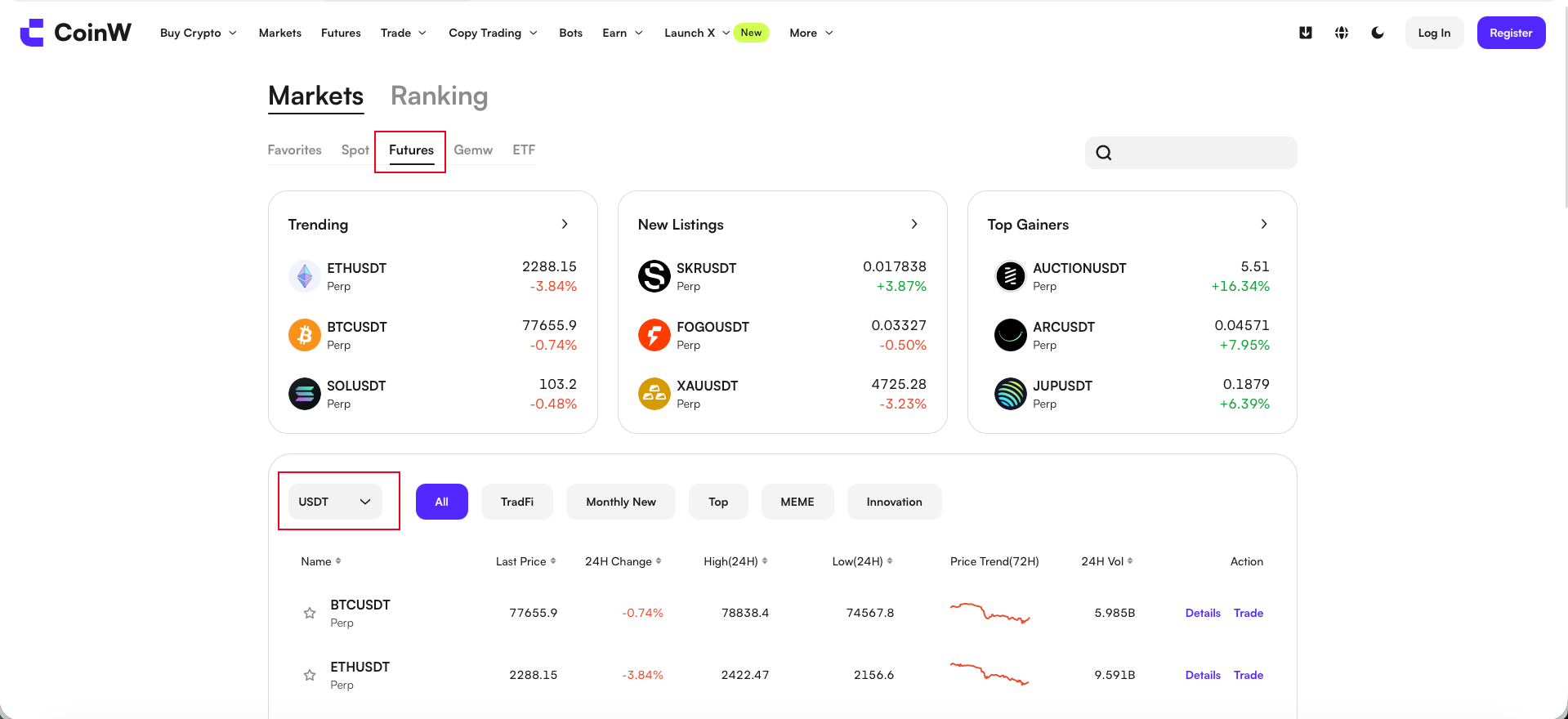
(1) Open the CoinW app homepage and tap Futures in the bottom navigation bar.
(2) On the futures trading page, select USDT Futures at the top.
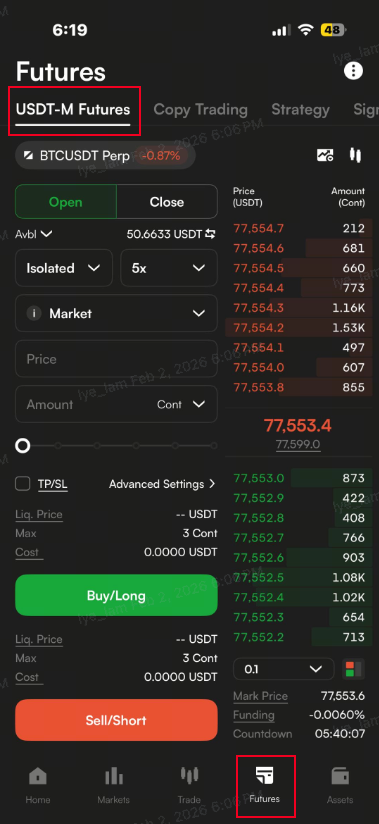
(3) On the futures trading page, tap the trading pair area to open the pair search page.
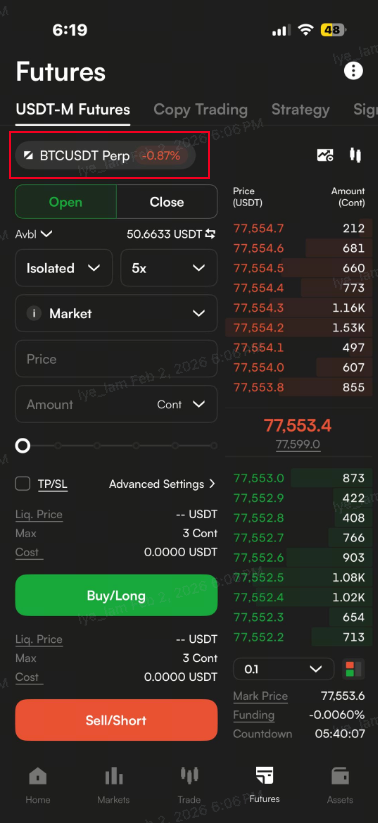
(4) On the pair search page, select All to view all perpetual futures trading pairs supported by CoinW.
[WEB]
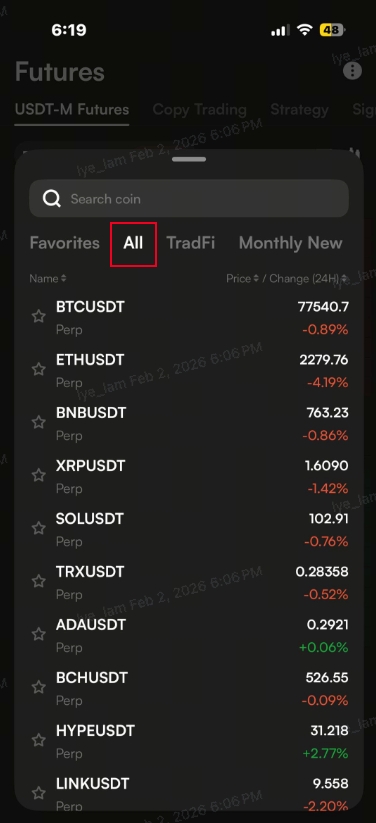
(1) First, log in to the CoinW official website.
(2) Click Futures in the top navigation bar.
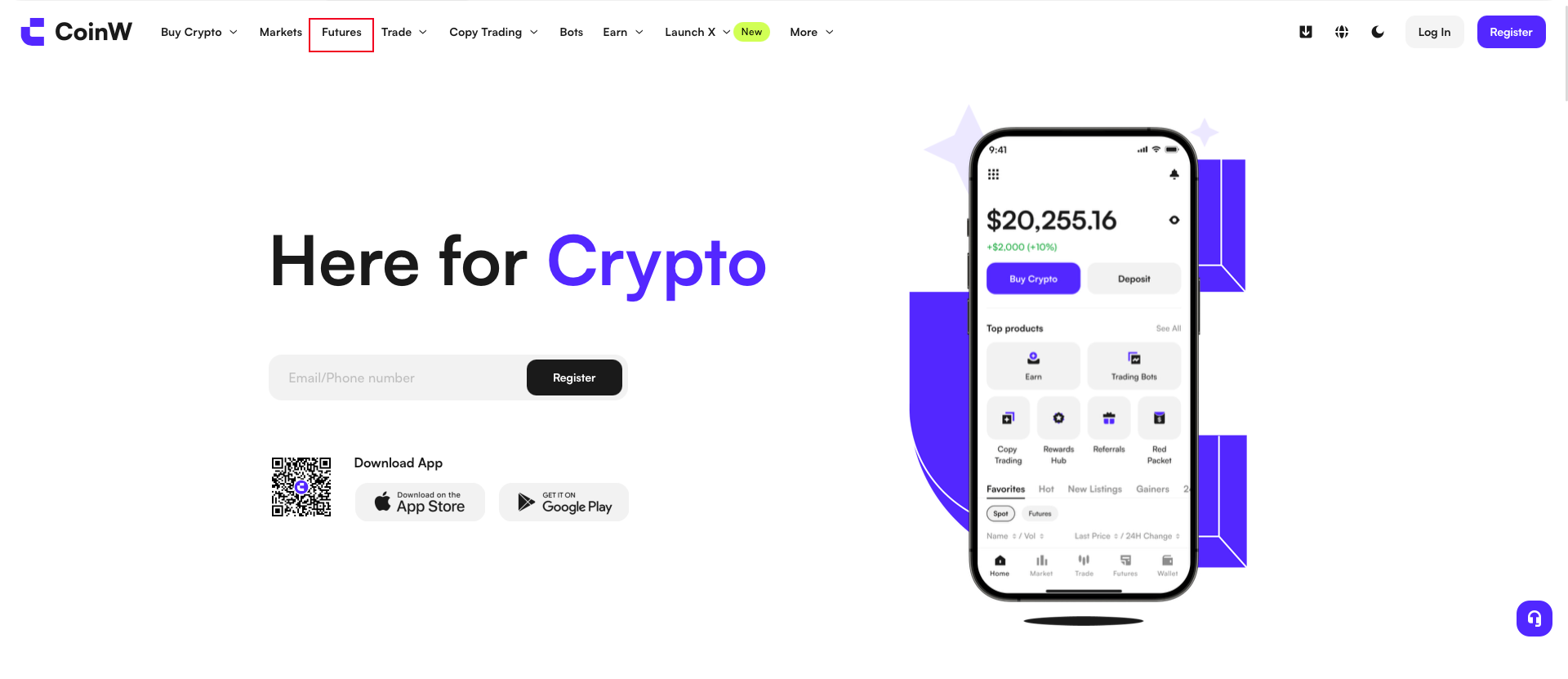
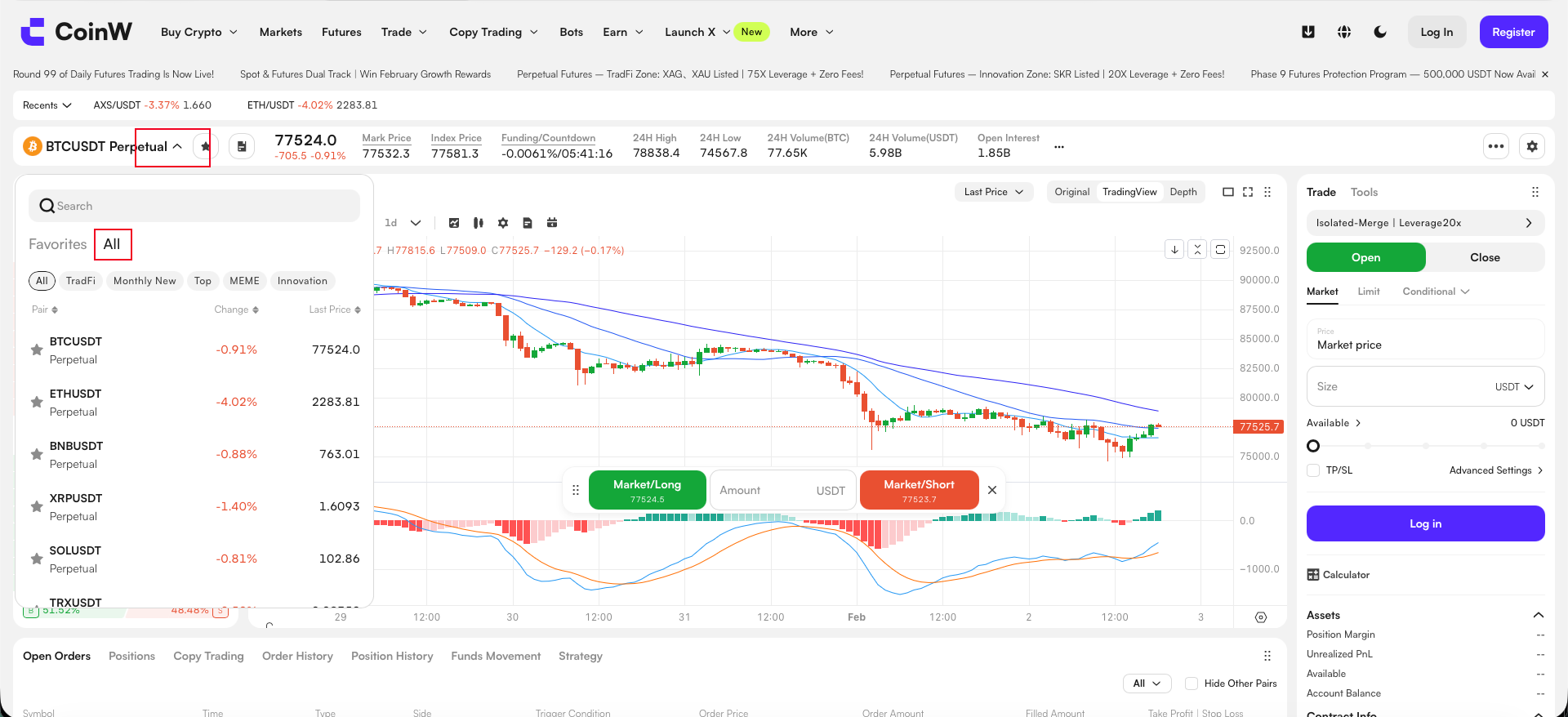
(3) After entering the futures trading page, hover your mouse over the trading pair section and select All to view all available pairs.
Contract Types
Based on the duration, contracts are divided into perpetual contracts and delivery contracts.
Currently, CoinW only supports perpetual contracts and does not support delivery contracts at this time.
Basic Trading Terms
In trading, you can choose to go long (buy) if you are bullish, and you will make a profit when the market rises, otherwise you will lose money. The opposite is true for going short (sell). The following are some basic terms of futures trading.
Leverage in futures trading allows for larger trades with the same principal and can magnify gains and losses.
Margin
Margin refers to the initial capital a user needs to open a position when participating in futures trading.
Position Margin = Initial Margin for the Position + Manually Adjusted Margin by the User
Under Isolated Margin Mode, users can add or reduce margin for a position, but the margin cannot be less than the initial margin.
Initial Margin is the minimum amount required to open a position.
Initial Margin for the Position = (Position Value / Leverage) + Closing Fee
Maintenance Margin is the minimum amount required to keep a position open.
Maintenance Margin for the Position = (Position Value × Maintenance Margin Rate) + Closing Fee
The amount of maintenance margin depends on the position value and the maintenance margin rate, which is related to the risk limit.
You can view the maintenance margin rate under Futures Trading > Trading Rules.
Mark Price
Mark price is based on the weighed price of the external market, plus a decaying funding basis rate over time. CoinW uses the mark price to determine liquidations rather than the intraday trading price. Using the mark price helps prevent malicious market manipulation that could lead to unnecessary liquidations, while also helping to anchor the intraday trading price to the external spot price.
Example
User A chose to buy spot BTC directly at a price of 10,000 USDT without using leverage. When the price of BTC rises by 5% to 10500 USDT, User A’s return is 500 USDT, and the return % is 5%. If the price of BTC falls by 5% to 9500 USDT, User A’s unrealized profit and loss (PNL) would be -500 USDT, with a return of -5%.
In contrast, User B used 10x leverage to trade perpetual futures. He bought 100,000 contracts (equivalent to 10 BTC) at the price of 10,000 USDT, and the initial margin was 10,000 USDT.
If the BTC price rises by 5% and User B’s position value increases to 105,000 USDT, User B’s unrealized profit would be 5,000 USDT, with a return of 50%.
If the BTC price drops by 5% and his position value decreases to 95,000 USDT, User B’s unrealized profit and loss would be -5,000 USDT, with a return of -50%.
Note: This example does not include futures funding, trading fees, entry and exit fees, etc.
Liquidation
When the margin balance is lower than the maintenance margin (i.e. the maintenance margin level falls to 100% or below), the position will be liquidated.
Unrealized PNL is the floating PNL calculated with the mark price as the exit price.
The mark price at the time of triggering liquidation is the liquidation price. The liquidation process relies on the market itself, the insurance fund, and the automatic deleveraging (ADL) system. Within a contract, the maintenance margin level is fixed, while the initial margin is related to the leverage. The higher the leverage, the smaller the initial margin, and the closer it is to the maintenance margin, making liquidation more likely. On the other hand, higher leverage increases the return %, meaning that risk and return are proportional.
Example
Suppose User A and User B both expect BTC to rise in the near future. When the BTC price is 10,000 USDT, User A buys 1 BTC in the spot market, while User B uses 100x leverage to buy perpetual futures, effectively going long on 1,000,000 contracts (equivalent to 100 BTC).
However, instead of rising, the BTC spot price drops to 49,900 USDT. User A experiences a loss of 0.2%, while User B’s loss rate reaches 20% due to the high leverage.
As the BTC price continues to fall to 9,050 USDT, User A’s loss increases to 0.5%. At this point, User B’s position margin has decreased to just 0.5 BTC (0.5% maintenance margin), triggering liquidation and resulting in the loss of his entire margin.
When a trader’s position side is consistent with the market trend, contracts can yield several times the profit of a corresponding spot trade, allowing for significant returns with a small investment. However, if the market moves on the opposite side to the trader’s position, the losses can be magnified as well.
Note: This example does not include futures funding, trading fees, entry and exit fees, etc.
Insurance Fund
Liquidation is to close the position at the bankruptcy price, and the bankruptcy price is the mark price at which the margin balance (including unrealised PNL) is equal to the exit fee. If the actual fill price is better than the bankruptcy price, the remaining amount (i.e., the lesser loss) will be credited to the insurance fund, which will be activated if the liquidation order is not executed by the time the mark price breaks the bankruptcy price.
Auto-Deleveraging (ADL)
If the liquidation order is not executed by the insurance fund, ADL will be triggered, and the user with the highest return will be selected from the users holding positions to reduce his/her position in order to execute the unfilled liquidation order. Return ranking is based on “Unrealized PNL x Leverage” (Note: If the position is in cross margin mode and the leverage limit has not been set, the maximum leverage of the position will be applied). The lights on CoinW website indicate the order of the current position in the ADL queue. The more lights are lit, the greater the probability that the position will be reduced in the case of ADL events. It is recommended to close and re-open positions to avoid automatic position reduction.
Position Mode
Cross Mode and Isolated Mode
In isolated mode, the position margin is the amount of margin allocated to the position. It is equal to the initial margin at the beginning and may be affected by leverage, risk limit andmargin deposits or withdrawals. When the margin balance is less than the maintenance margin, the position is liquidated and the loss is limited to the allocated margin.
In cross mode, all positions share margin and you can set multiple contract positions in cross margin mode. Liquidation will be triggered when the account maintenance margin level falls to 100% or below, and the user may lose the entire balance. However, unrealised profits cannot be used as a margin for other positions.
What is the Perpetual Futures
Perpetual Futures Overview
CoinW perpetual futures is a derivative used to invest in cryptocurrency, similar to traditional futures. The biggest difference is that perpetual futures has no expiration or settlement date, allowing users to buy (go long) or sell (go short) with greater convenience. Additionally, it offers higher leverage. CoinW currently supports USDT perpetual.
[APP]
(1) Open the CoinW app homepage and tap Futures in the bottom navigation bar.
(2) On the futures trading page, select USDT Futures at the top.
(3) On the futures trading page, tap the trading pair area to open the pair search page.
(4) On the pair search page, select All to view all perpetual futures trading pairs supported by CoinW.
[WEB]
(1) First, log in to the CoinW official website.
(2) Click Futures in the top navigation bar.
(3) After entering the futures trading page, hover your mouse over the trading pair section and select All to view all available pairs.
Contract Types
Based on the duration, contracts are divided into perpetual contracts and delivery contracts.
Currently, CoinW only supports perpetual contracts and does not support delivery contracts at this time.
Basic Trading Terms
In trading, you can choose to go long (buy) if you are bullish, and you will make a profit when the market rises, otherwise you will lose money. The opposite is true for going short (sell). The following are some basic terms of futures trading.
Leverage in futures trading allows for larger trades with the same principal and can magnify gains and losses.
Margin
Margin refers to the initial capital a user needs to open a position when participating in futures trading.
Position Margin = Initial Margin for the Position + Manually Adjusted Margin by the User
Under Isolated Margin Mode, users can add or reduce margin for a position, but the margin cannot be less than the initial margin.
Initial Margin is the minimum amount required to open a position.
Initial Margin for the Position = (Position Value / Leverage) + Closing Fee
Maintenance Margin is the minimum amount required to keep a position open.
Maintenance Margin for the Position = (Position Value × Maintenance Margin Rate) + Closing Fee
The amount of maintenance margin depends on the position value and the maintenance margin rate, which is related to the risk limit.
You can view the maintenance margin rate under Futures Trading > Trading Rules.
Mark Price
Mark price is based on the weighed price of the external market, plus a decaying funding basis rate over time. CoinW uses the mark price to determine liquidations rather than the intraday trading price. Using the mark price helps prevent malicious market manipulation that could lead to unnecessary liquidations, while also helping to anchor the intraday trading price to the external spot price.
Example
User A chose to buy spot BTC directly at a price of 10,000 USDT without using leverage. When the price of BTC rises by 5% to 10500 USDT, User A’s return is 500 USDT, and the return % is 5%. If the price of BTC falls by 5% to 9500 USDT, User A’s unrealized profit and loss (PNL) would be -500 USDT, with a return of -5%.
In contrast, User B used 10x leverage to trade perpetual futures. He bought 100,000 contracts (equivalent to 10 BTC) at the price of 10,000 USDT, and the initial margin was 10,000 USDT.
If the BTC price rises by 5% and User B’s position value increases to 105,000 USDT, User B’s unrealized profit would be 5,000 USDT, with a return of 50%.
If the BTC price drops by 5% and his position value decreases to 95,000 USDT, User B’s unrealized profit and loss would be -5,000 USDT, with a return of -50%.
Note: This example does not include futures funding, trading fees, entry and exit fees, etc.
Liquidation
When the margin balance is lower than the maintenance margin (i.e. the maintenance margin level falls to 100% or below), the position will be liquidated.
Unrealized PNL is the floating PNL calculated with the mark price as the exit price.
The mark price at the time of triggering liquidation is the liquidation price. The liquidation process relies on the market itself, the insurance fund, and the automatic deleveraging (ADL) system. Within a contract, the maintenance margin level is fixed, while the initial margin is related to the leverage. The higher the leverage, the smaller the initial margin, and the closer it is to the maintenance margin, making liquidation more likely. On the other hand, higher leverage increases the return %, meaning that risk and return are proportional.
Example
Suppose User A and User B both expect BTC to rise in the near future. When the BTC price is 10,000 USDT, User A buys 1 BTC in the spot market, while User B uses 100x leverage to buy perpetual futures, effectively going long on 1,000,000 contracts (equivalent to 100 BTC).
However, instead of rising, the BTC spot price drops to 49,900 USDT. User A experiences a loss of 0.2%, while User B’s loss rate reaches 20% due to the high leverage.
As the BTC price continues to fall to 9,050 USDT, User A’s loss increases to 0.5%. At this point, User B’s position margin has decreased to just 0.5 BTC (0.5% maintenance margin), triggering liquidation and resulting in the loss of his entire margin.
When a trader’s position side is consistent with the market trend, contracts can yield several times the profit of a corresponding spot trade, allowing for significant returns with a small investment. However, if the market moves on the opposite side to the trader’s position, the losses can be magnified as well.
Note: This example does not include futures funding, trading fees, entry and exit fees, etc.
Insurance Fund
Liquidation is to close the position at the bankruptcy price, and the bankruptcy price is the mark price at which the margin balance (including unrealised PNL) is equal to the exit fee. If the actual fill price is better than the bankruptcy price, the remaining amount (i.e., the lesser loss) will be credited to the insurance fund, which will be activated if the liquidation order is not executed by the time the mark price breaks the bankruptcy price.
Auto-Deleveraging (ADL)
If the liquidation order is not executed by the insurance fund, ADL will be triggered, and the user with the highest return will be selected from the users holding positions to reduce his/her position in order to execute the unfilled liquidation order. Return ranking is based on “Unrealized PNL x Leverage” (Note: If the position is in cross margin mode and the leverage limit has not been set, the maximum leverage of the position will be applied). The lights on CoinW website indicate the order of the current position in the ADL queue. The more lights are lit, the greater the probability that the position will be reduced in the case of ADL events. It is recommended to close and re-open positions to avoid automatic position reduction.
Position Mode
Cross Mode and Isolated Mode
In isolated mode, the position margin is the amount of margin allocated to the position. It is equal to the initial margin at the beginning and may be affected by leverage, risk limit andmargin deposits or withdrawals. When the margin balance is less than the maintenance margin, the position is liquidated and the loss is limited to the allocated margin.
In cross mode, all positions share margin and you can set multiple contract positions in cross margin mode. Liquidation will be triggered when the account maintenance margin level falls to 100% or below, and the user may lose the entire balance. However, unrealised profits cannot be used as a margin for other positions.