Sealer2100: CoinW and HPX Introduce a New Era of Crypto Wallet Security With Iris Recognition
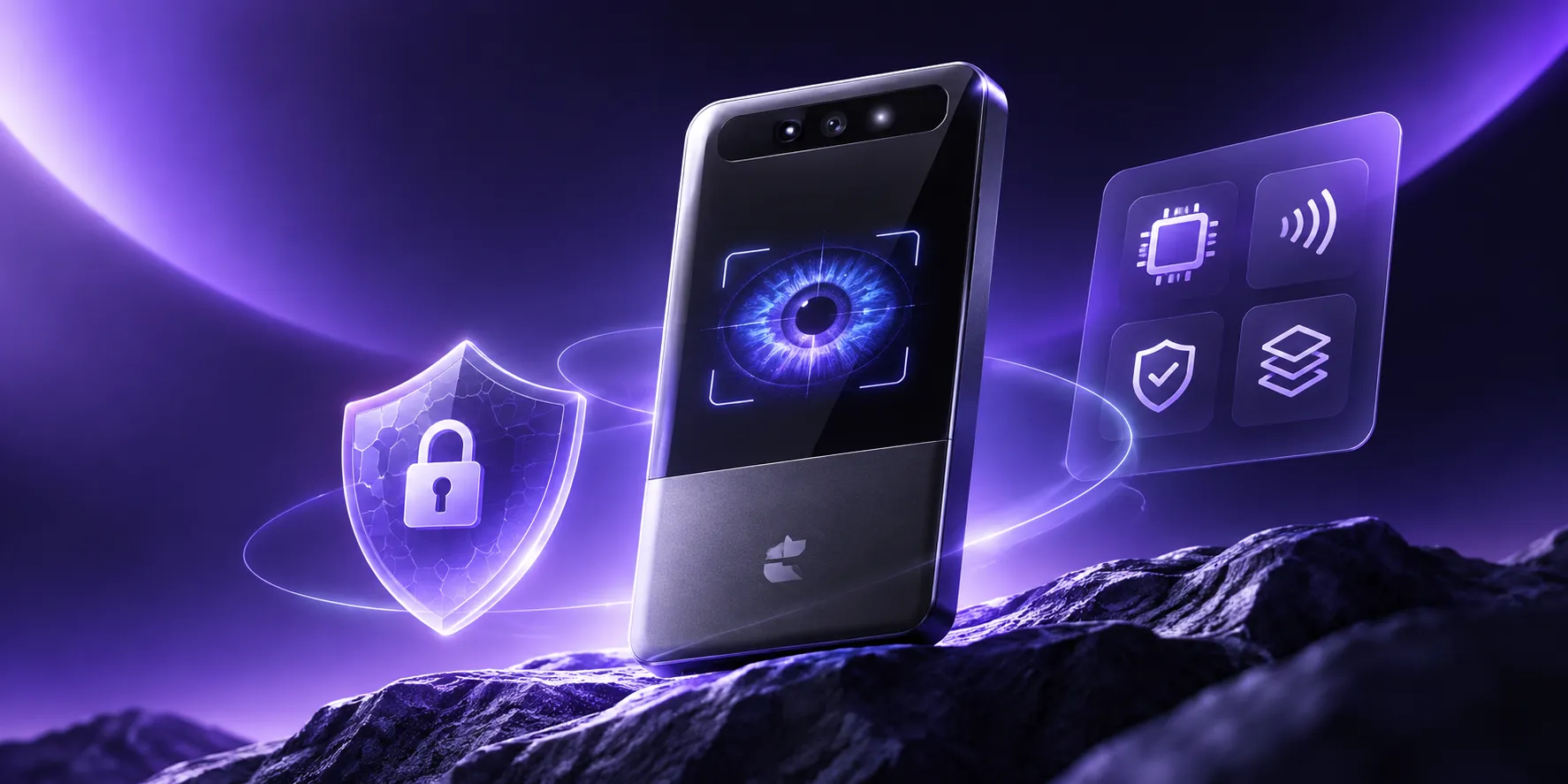
As digital assets become an increasingly important part of the global financial ecosystem, protecting cryptocurrency holdings requires more than conventional passwords and PIN codes. CoinW, in collaboration with the HPX security team, is advancing a new approach to digital asset protection through Sealer2100, a hardware cryptocurrency wallet that combines iris recognition, encrypted biometric authentication, and advanced hardware isolation.
Designed to address the evolving security challenges of Web3, Sealer2100 brings together contactless biometric verification, liveness detection, EAL6+ secure chip technology, and offline transaction authentication. The result is a security-focused wallet designed to give cryptocurrency holders greater control over access to their digital assets.
At the center of this innovation is an iris recognition system that moves beyond traditional authentication methods. According to the official Sealer2100 documentation, its biometric technology is designed to offer significant advantages over conventional PIN-based and fingerprint authentication systems.
What Is Sealer2100?
Sealer2100 is a biometric hardware cryptocurrency wallet developed through the collaboration of CoinW and the HPX security team. It is designed to protect digital assets through hardware-level security, offline private key authentication, and advanced iris recognition technology.
Unlike conventional software wallets, which operate on internet-connected devices, Sealer2100 introduces additional physical security controls to protect sensitive authentication processes. Its architecture combines biometric verification with isolated hardware components, reducing dependence on passwords and other credentials that can be exposed through phishing, malware, or unauthorized access.
Sealer2100 also supports AirGap air-signing technology, enabling offline private key authentication while allowing users to interact with the broader cryptocurrency ecosystem through the HPX Wallet application.
For cryptocurrency investors, this approach creates a complementary security solution alongside digital asset services such as CoinW Spot Trading, where users can access cryptocurrency markets, and dedicated hardware wallets, where they can manage assets using additional self-custody security controls.
Quick Summary: Six Security Advantages of Sealer2100
Advanced brute-force attack prevention: Iris authentication uses 2,048 encrypted biometric feature points. According to Sealer2100's technical documentation, this provides a claimed 400-fold security advantage over conventional PIN authentication.
Intelligent liveness detection: Infrared imaging and dynamic pupil response analysis help distinguish genuine biometric authentication from spoofing attempts. The manufacturer reports a 99.7% reduction in false acceptance rates compared with fingerprint recognition.
Contactless verification: Users can authenticate without touching a fingerprint sensor or entering a PIN, reducing exposure to fingerprint residue and credential-observation risks.
EAL6+ chip-level isolation: Encrypted iris templates are stored in a dedicated secure chip, physically separated from the main processor and designed to prevent biometric information from being exposed to internet-connected systems.
Non-reusable biometric credentials: Iris authentication is designed to prevent the reuse of biometric templates across unrelated platforms, supporting data-minimization objectives.
Encrypted audit traceability: Each iris verification generates a unique encrypted log, providing an additional mechanism for authentication accountability and security auditing.
Why Traditional Crypto Wallet Authentication Needs to Evolve
For years, cryptocurrency wallets have relied on combinations of PIN codes, passwords, recovery phrases, and fingerprint recognition. While these mechanisms remain useful, they introduce different security considerations.
PIN codes can be observed, guessed, or exposed through compromised interfaces. Passwords may be reused across services or captured through phishing attacks. Fingerprint-based authentication, meanwhile, introduces risks associated with copied fingerprint patterns, residual prints, and certain presentation attacks.
As cryptocurrency ownership expands, users increasingly need solutions that address both digital attacks and unauthorized physical access.
Sealer2100 responds to these challenges by integrating biometric authentication directly into a security-focused hardware architecture. Instead of relying exclusively on something the user knows, such as a PIN, the wallet can authenticate users through distinctive iris characteristics.
This approach reflects a broader shift toward stronger identity verification, secure hardware environments, and user-controlled cryptocurrency storage.
How Sealer2100 Iris Recognition Technology Protects Digital Assets
1. Brute-Force Attack Prevention With 2,048 Biometric Feature Points
One of Sealer2100's most significant innovations is its use of iris recognition to strengthen wallet authentication.
According to the product's technical documentation, its iris recognition module uses 2,048 encrypted biometric feature points to identify authorized users. These features create a complex biometric representation that cannot be guessed in the same manner as a conventional numerical PIN.
The manufacturer describes the system as offering a security level approximately 400 times higher than traditional PIN-based authentication. This figure is a product-reported comparison rather than an independently established universal security ratio.
By replacing password guessing with biometric verification, Sealer2100 is designed to eliminate conventional PIN-guessing and credential-stuffing attack paths from iris-based authentication.
For users protecting significant cryptocurrency holdings, reducing reliance on guessable credentials can provide an important additional security advantage.
2. Advanced Liveness Detection Against Biometric Spoofing
Biometric security depends not only on recognizing an authorized user but also on determining whether the biometric information comes from a genuine, physically present person.
Sealer2100 addresses this challenge through a combination of infrared imaging and dynamic pupil response analysis.
Infrared imaging helps capture iris characteristics, while dynamic pupil response analysis provides additional information that can help distinguish a living eye from a static imitation.
According to Sealer2100's published specifications, this technology achieves a 99.7% lower false acceptance rate than fingerprint recognition under the comparison reported by the manufacturer.
This capability is designed to defend against presentation attacks, including attempts involving fabricated biometric patterns or artificial fingerprint materials such as silicone and 3D-printed replicas.
By combining identity matching with liveness verification, Sealer2100 introduces an additional obstacle for attackers attempting to impersonate legitimate wallet owners.
3. Contactless Authentication for Greater Security and Convenience
Traditional biometric authentication frequently requires users to touch a fingerprint sensor, while PIN-based systems require interaction with physical or digital input interfaces.
Sealer2100's iris recognition module offers a different experience: contactless identity verification.
Users can authenticate through the wallet's iris scanning system without leaving fingerprint residue on a sensor or exposing a PIN through manual entry.
This approach is particularly relevant for financial security environments in which minimizing unnecessary physical interaction and credential exposure is desirable.
Sealer2100's documentation also reports an iris recognition response time of approximately 0.3 seconds, described as 40% faster than the fingerprint scanning method used in its comparison.
For everyday users, the combination of contactless authentication and rapid recognition is intended to make stronger security more convenient rather than more complicated.
EAL6+ Secure Chip Isolation: Keeping Biometric Data Protected
Biometric recognition is only one part of Sealer2100's security architecture. Equally important is how sensitive information is processed and stored.
Sealer2100 incorporates an EAL6+ certified secure chip that stores encrypted iris templates in an isolated hardware environment, according to its technical documentation.
This secure component is physically separated from the wallet's main processor, creating an additional boundary between sensitive biometric information and the systems responsible for other device functions.
The architecture is designed so that iris templates remain within the protected hardware environment rather than being transmitted to internet-connected services.
For cryptocurrency holders, this distinction is important. Even when a connected application is used to manage transactions, biometric authentication data should remain protected by the wallet's dedicated security architecture.
The EAL6+ designation refers to an Evaluation Assurance Level under the Common Criteria security evaluation framework. It indicates a high level of evaluation assurance for the certified component, although it does not independently guarantee that an entire wallet is immune to every possible attack.
AirGap Technology: Offline Authentication for Cryptocurrency Transactions
Beyond biometric authentication, Sealer2100 incorporates AirGap air-signing technology as another layer of protection.
According to HPX's product documentation, AirGap technology supports offline private key authentication and transaction signing without requiring private keys to be exposed to an internet-connected environment.
This distinction is central to hardware wallet security. Cryptocurrency transactions must ultimately be communicated to blockchain networks, but the private keys used to authorize those transactions do not need to leave a protected hardware device.
By separating private key operations from online communication, Sealer2100 is designed to reduce opportunities for remote attackers to access sensitive signing material.
Its combination of AirGap authentication, biometric access controls, and hardware isolation creates a layered security approach in which different components address different attack scenarios.
Users can continue monitoring the broader cryptocurrency market through CoinW's crypto live prices while using dedicated hardware security to manage their long-term digital asset storage strategy.
Biometric Privacy, Non-Reusability, and Encrypted Audit Trails
Protecting Biometric Identity Through Non-Reusable Credentials
Passwords can be reused across websites and applications. When a reused password is compromised, attackers may attempt to access multiple unrelated accounts using the same credentials.
Sealer2100's iris authentication system is designed to avoid this type of cross-platform credential reuse.
According to its documentation, encrypted iris features are non-exportable and cannot be copied for authentication on unrelated platforms in the same way as conventional credentials.
This design supports the principle of limiting unnecessary biometric data exposure and aligns with privacy-by-design objectives reflected in regulations such as the European Union's General Data Protection Regulation (GDPR) and China's Personal Information Protection Law (PIPL).
However, regulatory compliance depends on the complete processing environment, including consent, lawful processing, retention, transparency, and applicable security controls. Hardware isolation alone does not establish full legal compliance.
Encrypted Authentication Logs for Greater Accountability
Sealer2100 also introduces encrypted audit traceability for biometric verification events.
Each iris verification is designed to generate a unique encrypted log, creating a record of authentication activity.
These records can support security investigations, accountability, and financial-grade operational auditing when implemented within an appropriate access-control and log-management framework.
For security-conscious cryptocurrency users, the combination of protected biometric templates and encrypted authentication records provides a more structured approach to access verification.
Sealer2100 vs. PIN and Fingerprint Hardware Wallets
Sealer2100 brings together multiple technologies intended to strengthen authentication and physical wallet security. The following comparison summarizes the advantages described in the product's technical documentation.
| Security Feature | Sealer2100 Iris Recognition | Traditional PIN or Fingerprint Authentication |
|---|---|---|
| Authentication | 2,048 encrypted biometric feature points | Numerical PIN or fingerprint template |
| Brute-force resistance | Manufacturer claims 400x security advantage over PINs | PIN guessing may be possible without effective rate limiting |
| Spoofing protection | Infrared imaging and dynamic pupil analysis | Depends on sensor and anti-spoofing technology |
| False acceptance | Manufacturer reports 99.7% lower rate than fingerprint recognition | Varies by fingerprint system |
| Physical contact | Contactless iris verification | Typically requires PIN entry or sensor contact |
| Biometric storage | Encrypted templates in an isolated EAL6+ secure chip | Implementation-dependent; may use local secure hardware |
| Audit traceability | Unique encrypted authentication logs | Depends on device implementation |
| Offline signing | Supports AirGap transaction authentication | Available in some conventional hardware wallets |
The comparison illustrates Sealer2100's emphasis on combining biometric recognition, hardware isolation, and offline transaction security. Actual protection depends on the complete device implementation, user configuration, and operational security practices.
Designed for Both Everyday Crypto Users and Security-Conscious Investors
Cryptocurrency users have different security needs. Active traders may prioritize convenient access to markets, while long-term holders often focus on reducing exposure to online threats and unauthorized transactions.
Sealer2100 is designed to address the second requirement without making authentication unnecessarily difficult.
Its potential applications include:
Long-term cryptocurrency storage: Hardware-based private key protection for users holding digital assets over extended periods.
High-value wallet access: Biometric verification adds an identity-based security layer to sensitive wallet operations.
Web3 participation: Integration with the HPX Wallet application enables users to manage their hardware wallet within a broader Web3 environment.
Privacy-conscious asset management: Contactless verification and isolated biometric storage are designed to limit unnecessary exposure of sensitive information.
Layered security strategies: Users can combine hardware protection, recovery phrase management, and appropriate account security practices.
For users who also trade cryptocurrencies, the combination of an exchange account and a dedicated hardware wallet can support different approaches to liquidity and long-term asset management.
How Sealer2100 Connects With the HPX Wallet Ecosystem
Sealer2100 is designed to work with the HPX Wallet application, allowing users to configure and connect their hardware wallet through a guided setup process.
According to the official setup guide, users can initialize the device, create a new wallet, establish authentication preferences, securely back up their recovery phrase, and connect the device to the HPX Wallet application.
Sealer2100 supports PIN authentication, iris verification, or a combination of both. The official documentation recommends enabling both methods for additional protection.
The HPX Wallet application supports hardware wallet connectivity through Bluetooth and QR-code-based connection options, with device authentication used to help verify the integrity of the connected hardware.
CoinW also provides an HPX account connection and internal transfer feature. Eligible users can follow the CoinW HPX Internal Transfer Guide to learn how to connect supported accounts and transfer assets between CoinW and HPX.
Account transfers and Sealer2100 hardware wallet operations are distinct functions. Users should verify supported networks, addresses, and transaction requirements before moving assets.
How to Get Started With Sealer2100
Getting started with Sealer2100 involves configuring the hardware device, establishing authentication preferences, and connecting it to the HPX Wallet application.
Inspect the device: Check the packaging and security seals before initialization. Never use a device supplied with a preconfigured PIN or recovery phrase.
Initialize the hardware wallet: Turn on Sealer2100, select your preferred language, and follow the instructions to create a new wallet.
Configure authentication: Set up PIN verification, iris recognition, or both, according to your security preferences.
Secure your recovery phrase: Write down the recovery phrase in the correct order and store it offline in a secure location. Never photograph or upload it.
Connect the HPX Wallet application: Install the official HPX Wallet client and follow the hardware connection instructions.
Verify device authentication: Complete the device verification process and confirm that the hardware wallet has connected successfully.
For complete setup instructions, consult the official Sealer2100 Getting Started Guide.
Users should remember that biometric authentication does not replace secure recovery phrase management. Protecting recovery information remains essential for maintaining access to self-custodied cryptocurrency assets.
CoinW and HPX: Advancing the Future of Digital Asset Protection
The development of Sealer2100 reflects a broader vision for cryptocurrency security: combining accessible digital asset services with increasingly sophisticated hardware protection.
CoinW's cryptocurrency trading ecosystem provides users with access to digital asset markets, while the HPX security team's hardware wallet technology introduces additional safeguards for users seeking stronger control over private key access.
As the digital asset industry matures, security solutions must evolve alongside increasingly complex threats. Authentication technologies that reduce credential exposure, protect sensitive information at the hardware level, and support offline transaction signing are becoming increasingly relevant.
Sealer2100 represents an important step in this direction. By combining iris recognition, liveness detection, EAL6+ chip isolation, encrypted audit trails, and AirGap technology, CoinW and HPX are promoting a more comprehensive approach to cryptocurrency wallet security.
Users interested in exploring the cryptocurrency ecosystem can visit the CoinW official website for trading services and platform information, while the Sealer2100 support center provides additional technical guidance on hardware wallet protection.
Frequently Asked Questions About Sealer2100
What is the Sealer2100 crypto wallet?
Sealer2100 is a hardware cryptocurrency wallet developed through the collaboration of CoinW and the HPX security team. It combines iris recognition, secure chip isolation, and offline transaction authentication to help protect digital assets.
How does Sealer2100 iris recognition work?
The wallet uses infrared imaging and encrypted iris feature analysis to verify a user's identity. Its liveness detection technology also analyzes dynamic pupil responses to help defend against biometric spoofing.
Is iris recognition more secure than a PIN?
Iris recognition can reduce exposure to PIN guessing and credential theft. Sealer2100's manufacturer reports a 400-fold security advantage over conventional PIN authentication, although this figure should be understood as a manufacturer-reported comparison rather than a universal security guarantee.
Does Sealer2100 store biometric information online?
According to its technical documentation, Sealer2100 stores encrypted iris templates within an isolated EAL6+ secure chip, designed to keep biometric information separated from internet-connected systems.
Can Sealer2100 be used without iris recognition?
Yes. The official setup documentation describes PIN verification, iris authentication, and combined PIN-plus-iris authentication options.
Does Sealer2100 support offline cryptocurrency transactions?
Sealer2100 supports AirGap air-signing technology for offline private key authentication and transaction signing. Signed transaction information can subsequently be communicated to the relevant blockchain network through the supported workflow.
Can I connect Sealer2100 to HPX Wallet?
Yes. Sealer2100 supports integration with the HPX Wallet application, including Bluetooth and QR-code-based connection options described in its setup documentation.
Conclusion: A New Standard for Biometric Crypto Wallet Security
Securing cryptocurrency assets requires an approach that addresses both digital threats and physical access risks. With Sealer2100, CoinW and the HPX security team are bringing advanced biometric authentication and hardware-level protection together in a dedicated cryptocurrency wallet.
Its combination of 2,048 encrypted iris feature points, infrared liveness detection, contactless authentication, EAL6+ secure chip isolation, encrypted audit trails, and AirGap signing technology demonstrates how hardware wallet security can move beyond conventional authentication methods.
While no single technology can eliminate every security risk, Sealer2100's layered architecture is designed to make unauthorized access more difficult while maintaining a convenient experience for legitimate users.
With Sealer2100, CoinW and HPX are helping shape a future in which advanced security and everyday cryptocurrency accessibility work together.
References / Sources