Navigating Digital Asset Investment: Risk Awareness and Compliance Guide for CWC Holders
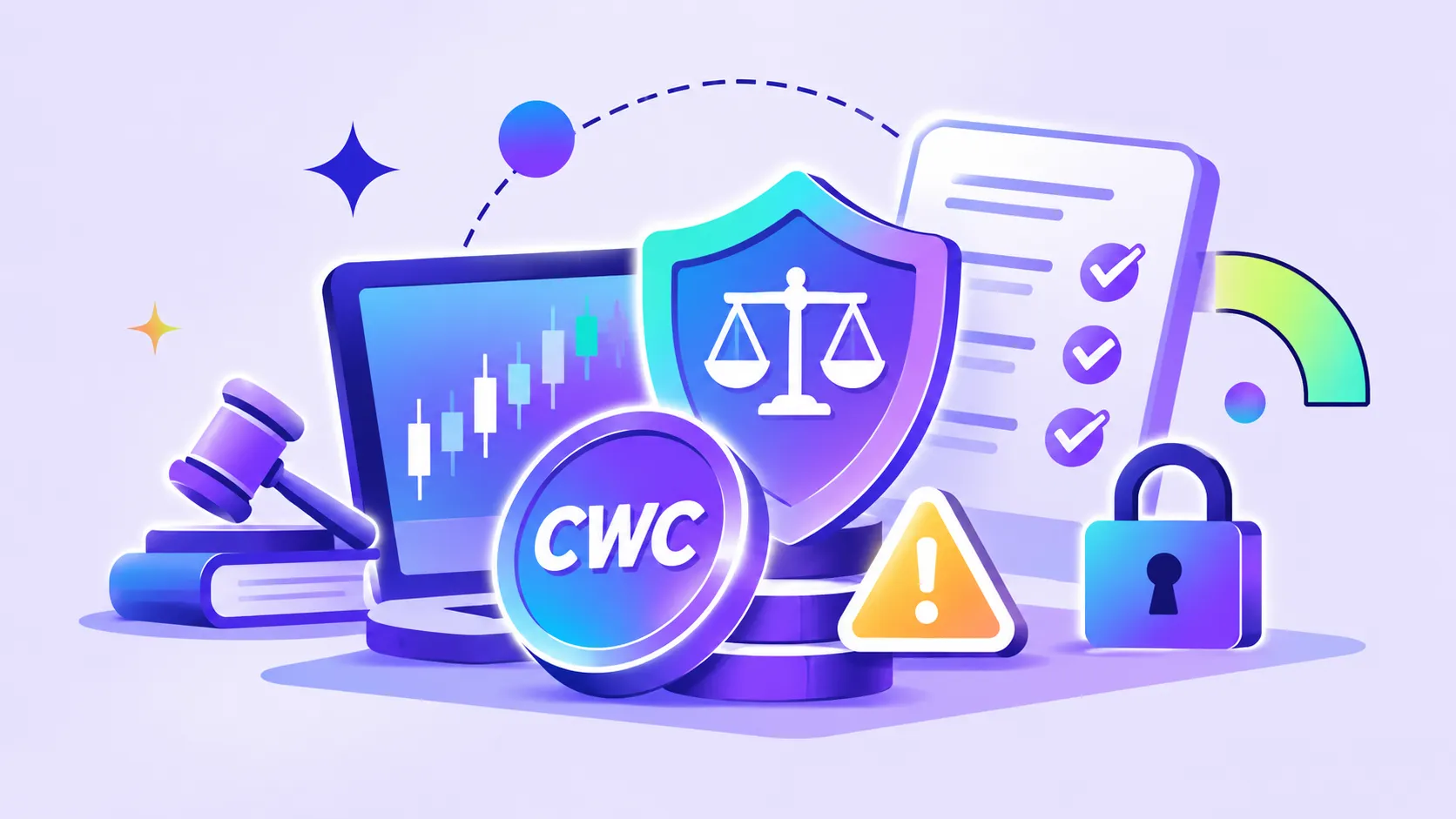
Digital assets have introduced new opportunities for financial innovation, technological development, and participation in global digital economies. However, these opportunities also come with significant risks, including market volatility, liquidity constraints, cybersecurity threats, and evolving regulatory requirements.
As the CoinW ecosystem continues to evolve, CWC (CoinW Coin) serves as a utility token designed to connect users with selected platform services, AI-powered trading capabilities, and ecosystem benefits.
At CoinW, we believe that responsible digital asset participation begins with informed decision-making, transparent risk disclosures, and compliance awareness. Understanding the relationship between token utility, market performance, and personal financial circumstances is essential for every CWC holder.
This guide explains the principal risks associated with digital asset participation, the importance of regulatory compliance, and practical measures CWC holders can adopt to manage their exposure prudently.
Quick Summary
CWC is a utility token: Its primary purpose is to provide access to selected services, features, and benefits within the CoinW ecosystem.
Digital assets carry significant risks: Market fluctuations may result in the partial or complete loss of invested capital.
Utility does not guarantee appreciation: Platform development, token burns, ecosystem incentives, and user adoption do not guarantee positive price performance.
Compliance is essential: Users must observe applicable regulatory requirements, platform policies, and eligibility conditions.
Personal risk management matters: Participants should establish financial limits, avoid excessive exposure, and make independent decisions.
Independent research is fundamental: Users should rely on official documentation and verified information rather than speculation or unsubstantiated price predictions.
What Is CWC and What Should Holders Understand?
CWC, or CoinW Coin, is the utility token of the CoinW ecosystem. It is designed to facilitate access to selected platform functionalities and support participation in CoinW's evolving digital asset and AI-powered service environment.
The CWC utility framework encompasses trading-related privileges, premium platform features, ecosystem participation, and AI-powered services, subject to applicable product conditions and eligibility requirements.
However, users should distinguish between the practical utility of CWC and its market value. Holding a token that provides access to ecosystem services does not necessarily mean that its market price will increase.
Token Utility vs. Investment Returns
| Aspect | What CWC May Provide | What CWC Does Not Guarantee |
|---|---|---|
| Platform utility | Access to selected services and ecosystem benefits | Permanent availability of every benefit |
| Market participation | Exposure to market-based price movements | Price appreciation or guaranteed liquidity |
| Tokenomics | Supply management and ecosystem mechanisms | A minimum token price or capital protection |
| Ecosystem incentives | Conditional rewards and participation benefits | Fixed income or risk-free returns |
| AI-powered services | Analytical and trading assistance | Accurate predictions or profitable trading outcomes |
CWC holders should evaluate these characteristics independently. Token ownership should not be interpreted as a guarantee of financial returns, profit distributions, or ownership rights in CoinW.
Understanding the Main Risks of Digital Asset Investment
Digital asset markets operate within a rapidly evolving technological and economic environment. Unlike certain traditional financial products, crypto-assets may experience substantial price movements within relatively short periods and may not benefit from equivalent legal or financial protections.
The European Supervisory Authorities highlighted these concerns in their October 2025 consumer warning on crypto-assets, emphasizing that consumers should assess product risks, verify service providers, and secure their digital assets before participating.
1. Market Volatility Risk
Volatility describes the extent to which an asset's price fluctuates over time. Digital assets can experience pronounced price movements due to changes in economic conditions, investor sentiment, trading activity, and regulatory developments.
Even established cryptocurrencies such as Bitcoin (BTC) and Ethereum (ETH) can experience significant market corrections despite their adoption and established ecosystems.
CWC is also exposed to market volatility. Its trading price may rise or fall independently of developments within the CoinW ecosystem, and participants should be prepared for adverse market movements.
2. Liquidity Risk
Liquidity refers to the ability to purchase or sell an asset without significantly affecting its market price. During periods of uncertainty or reduced trading activity, users may encounter difficulties executing transactions at their preferred prices.
Potential consequences of insufficient liquidity include:
Wider differences between buying and selling prices.
Increased slippage when executing orders.
Partial execution of larger transactions.
Greater difficulty reducing exposure during market downturns.
A quoted market price does not guarantee that a transaction can be completed at that price. Users should consider available market depth and trading conditions before making decisions.
3. Regulatory and Compliance Risk
Digital asset regulations differ across jurisdictions and continue to develop. Changes in legislation, regulatory interpretation, or enforcement policies may affect token availability, trading services, ecosystem benefits, and user eligibility.
Users should understand that access to a digital asset or platform service at one point in time does not guarantee its continued availability in every jurisdiction.
4. Cybersecurity and Operational Risk
Digital asset participation requires interaction with online platforms, wallets, authentication systems, and blockchain infrastructure. These systems may be exposed to technical failures, malicious activity, unauthorized access, or operational disruptions.
Users should recognize that account protection and secure transaction practices are essential components of digital asset risk management.
5. Concentration Risk
Concentration risk arises when a substantial proportion of an individual's financial resources is allocated to a single asset, platform, product category, or closely correlated group of assets.
Holding multiple cryptocurrencies does not necessarily eliminate concentration risk because digital assets can respond similarly to broader market developments.
CWC holders should assess their overall financial exposure rather than evaluating their token holdings in isolation.
6. Ecosystem and Product Development Risk
The usefulness of platform tokens depends partly on the continued development, operation, and adoption of their associated ecosystems.
Changes to product functionality, commercial strategies, eligibility requirements, or technological infrastructure may affect how users interact with CWC.
Planned features and ecosystem development objectives should not be interpreted as unconditional commitments regarding future availability or financial performance.
7. AI-Powered Trading and Automation Risk
Artificial intelligence can assist users in processing market information, identifying patterns, and automating selected processes. Nevertheless, AI-generated analysis and automated strategies may produce inaccurate, incomplete, or outdated results.
CWC holders using AI-powered services should review their outputs independently, understand execution permissions, and consider the consequences of automated trading decisions. Historical backtesting results do not guarantee future profitability.
How Should CWC Holders Interpret Market Fluctuations?
Market fluctuations are an inherent characteristic of digital asset markets. Short-term price movements should be interpreted within a broader context rather than treated as definitive indicators of an asset's future performance.
At CoinW, we encourage users to approach market movements rationally, assess available information objectively, and avoid making decisions solely in response to temporary market sentiment.
Understand the Factors Behind Price Movements
Digital asset prices may be influenced by a combination of interconnected factors:
Macroeconomic conditions: Interest rates, inflation, economic growth, and global liquidity may affect demand for risk-sensitive assets.
Market sentiment: News, social media discussions, and investor expectations can influence short-term trading behavior.
Supply and demand: Token availability, trading activity, and changes in market participation may affect prices.
Ecosystem developments: Product launches and changes in token functionality may influence user expectations.
Regulatory developments: New legislation or enforcement actions can affect market confidence and asset accessibility.
External market movements: Changes across the broader cryptocurrency market may influence individual digital assets.
Users can monitor crypto live prices to understand broader market conditions and assess whether individual token movements coincide with wider market developments.
Nevertheless, market data describes current or historical conditions and cannot reliably determine future price movements.
Avoid Emotional Decision-Making
Emotional responses to market fluctuations can lead to impulsive decisions, excessive trading, and greater financial exposure.
| Behavioral Risk | Description | Prudent Response |
|---|---|---|
| FOMO | Buying because of fear of missing potential gains | Evaluate risks independently before participating |
| Panic selling | Reacting impulsively to falling prices | Review financial circumstances and predetermined risk limits |
| Loss chasing | Increasing exposure to recover previous losses | Avoid escalating financial commitments |
| Overconfidence | Underestimating risks after successful trades | Maintain consistent exposure limits |
| Herd behavior | Following popular narratives without independent research | Consult official documentation and verified information |
| Confirmation bias | Considering only information that supports existing expectations | Evaluate both favorable and unfavorable scenarios |
Responsible decision-making does not require users to ignore market losses or maintain positions regardless of changing circumstances. Instead, it requires evaluating decisions against personal financial objectives, available information, and the ability to withstand further losses.
Understanding CWC Tokenomics Without Unrealistic Expectations
Tokenomics describes the economic structure of a digital asset, including its issuance, distribution, supply management, utility, and incentive mechanisms.
Understanding these characteristics can help CWC holders assess the token's ecosystem role. However, tokenomics alone cannot establish an asset's future market value.
CWC Buyback and Burn Mechanisms
CWC's economic framework incorporates discretionary buybacks and token burns. These mechanisms form part of CoinW's approach to managing the token ecosystem.
While permanently burning tokens reduces total supply, market prices depend on additional factors, including demand, liquidity, economic conditions, and participant behavior.
CWC holders should understand that:
A reduction in token supply does not automatically result in higher prices.
Buybacks do not establish a minimum trading price.
Token burns do not guarantee positive investment returns.
Buyback and burn arrangements may be affected by regulatory, commercial, and risk management considerations.
Ecosystem allocations and incentive programs do not constitute guarantees of capital recovery.
Lock-Up Periods and Token Vesting
Lock-up and vesting arrangements influence when tokens become accessible or enter circulation. These mechanisms can affect users' ability to manage liquidity and respond to changing market conditions.
Before participating in a CWC subscription or another program involving restricted access to tokens, users should review the applicable lock-up period, release conditions, exit restrictions, and associated risks.
Capital that may be required for short-term financial obligations should not be committed to arrangements that restrict access to funds.
Ecosystem Benefits Are Not Guaranteed Financial Returns
Platform benefits should be assessed according to their practical usefulness and applicable participation requirements. Users should not increase their CWC exposure solely to obtain additional privileges without assessing whether the potential benefits justify the associated financial risks.
Any applicable rewards, discounts, protection arrangements, or promotional incentives remain subject to their specific conditions. They should not be treated as substitutes for independent risk management.
Digital Asset Compliance: What CWC Holders Need to Know
Regulatory compliance plays an important role in supporting market integrity, preventing financial crime, and improving transparency within the digital asset industry.
At CoinW, our commitment is to reinforce applicable compliance requirements and risk disclosures as part of responsible ecosystem development. Participation in CWC-related activities must remain consistent with applicable laws, regulatory obligations, and platform rules.
Know Your Customer (KYC) and Identity Verification
Know Your Customer, commonly referred to as KYC, encompasses procedures used to establish and verify a user's identity and assess relevant compliance risks.
Depending on applicable requirements and individual circumstances, users may be asked to provide identification documents, residency information, or additional supporting documentation.
CWC holders should:
Provide accurate and up-to-date information during verification procedures.
Use accounts registered under their own identity.
Cooperate with legitimate compliance-related information requests.
Keep personal and residency information updated where required.
Submit sensitive documents exclusively through verified official channels.
Anti-Money Laundering (AML) and Counter-Terrorist Financing (CTF)
AML and CTF frameworks aim to prevent financial services from being used to facilitate money laundering, terrorist financing, and related illicit activities.
The Financial Action Task Force's guidance for virtual assets and virtual asset service providers outlines a risk-based approach to addressing financial crime risks within the digital asset sector.
Depending on local implementation and applicable obligations, compliance procedures may involve customer due diligence, transaction monitoring, sanctions screening, reporting requirements, and requests concerning the origin of funds.
Users should maintain appropriate documentation concerning their digital asset activities and avoid transactions involving unknown or suspicious counterparties.
The Travel Rule and Digital Asset Transfers
The Travel Rule establishes requirements for relevant financial service providers to collect and transmit specified information concerning the originating and receiving parties of certain transactions.
Within digital asset markets, implementation may require users to provide additional information when depositing or withdrawing assets. Requirements vary according to jurisdiction, transaction characteristics, and applicable regulations.
CWC holders should ensure that transaction information is accurate and cooperate with legitimate verification procedures without attempting to circumvent applicable controls.
Understanding Regional Regulatory Requirements
Digital asset regulation is not uniform worldwide. Some jurisdictions have introduced comprehensive frameworks governing token issuance and crypto-asset services, while others impose different licensing, disclosure, or accessibility requirements.
In the European Union, the Markets in Crypto-Assets Regulation (MiCA) establishes requirements for covered crypto-assets, issuers, and service providers.
Users can learn more about the framework through CoinW Academy's guide to MiCA Regulation: What CoinW Users Need to Know and consult the official Regulation (EU) 2023/1114 for the underlying legal framework.
The existence of a regulatory framework does not mean that every digital asset or service is authorized in every jurisdiction. Users should independently verify the regulatory status of the relevant service provider and the availability of specific products in their place of residence.
Taxation and Record-Keeping Responsibilities
Digital asset transactions may create tax reporting or payment obligations depending on the user's jurisdiction and personal circumstances.
Potentially relevant activities may include token purchases, sales, conversions, transfers, rewards, and participation in digital asset incentive programs.
Users should maintain accurate transaction records, review applicable tax requirements, and consult qualified professionals when necessary. Participation in a digital asset ecosystem does not remove personal tax responsibilities.
How to Manage Personal Financial Risk as a CWC Holder
Effective digital asset risk management involves understanding potential losses, evaluating personal financial circumstances, and establishing clear boundaries before committing capital.
No individual strategy can eliminate every risk associated with digital assets. Nevertheless, disciplined financial practices can help users avoid exposure that exceeds their ability to absorb losses.
1. Establish a Personal Risk Budget
A risk budget represents the amount of financial exposure an individual can reasonably accept without compromising essential expenses, financial obligations, or long-term financial stability.
Before acquiring or increasing exposure to CWC, consider whether a substantial decline in its market value would affect:
Housing, food, utilities, and other essential living expenses.
Emergency savings and financial reserves.
Outstanding debts and repayment obligations.
Family responsibilities and anticipated expenses.
Long-term savings and retirement objectives.
If a potential loss would materially affect any of these areas, reducing or avoiding digital asset exposure may be appropriate.
2. Understand the Relationship Between Losses and Recovery
Percentage losses and percentage gains are not symmetrical. When an asset loses value, the percentage increase required to recover its original value becomes progressively larger.
| Initial Exposure | Market Decline | Remaining Value | Gain Required to Recover |
|---|---|---|---|
| $1,000 | 10% | $900 | 11.11% |
| $1,000 | 20% | $800 | 25% |
| $1,000 | 30% | $700 | 42.86% |
| $1,000 | 50% | $500 | 100% |
| $1,000 | 75% | $250 | 300% |
| $1,000 | 90% | $100 | 900% |
| $1,000 | 100% | $0 | Not possible from a zero-value position through percentage gains alone |
These hypothetical examples are provided for educational purposes only. They exclude fees and taxes and do not represent historical CWC performance or forecasts of future price movements.
The examples demonstrate why limiting potential losses is an important consideration when evaluating digital asset exposure. Users should not assume that every market decline will eventually be followed by a recovery.
3. Avoid Excessive Exposure to a Single Asset
Allocating a disproportionate amount of personal capital to a single token increases dependence on that asset's market performance and associated ecosystem.
Users should evaluate their complete financial circumstances, including exposure to other digital assets, platform-related products, and traditional financial commitments.
Diversification may help reduce certain concentration risks, although it cannot eliminate market losses or guarantee positive returns.
4. Avoid Using Borrowed Funds for Speculative Participation
Using borrowed funds to acquire volatile digital assets introduces additional financial obligations. The value of a token may decline substantially while loan repayments and interest obligations remain unchanged.
Similarly, leveraged trading can amplify losses and introduce liquidation risks that differ from those associated with unleveraged spot holdings.
Users should avoid financial commitments they cannot afford to lose and should not assume that future token appreciation will cover repayment obligations.
5. Establish Clear Decision-Making Criteria
Before participating in digital asset markets, users should identify the circumstances under which they would reduce, maintain, or reconsider their exposure.
These criteria may include changes in personal financial circumstances, token functionality, regulatory requirements, liquidity, or individual risk tolerance.
Predetermined decision-making criteria can help reduce impulsive reactions during periods of heightened market uncertainty.
6. Review Risk Exposure Regularly
Financial circumstances and market conditions change over time. A level of exposure that was previously manageable may become inappropriate following changes in income, expenses, employment, or financial obligations.
CWC holders should periodically reassess their holdings and determine whether continued participation remains consistent with their personal circumstances.
Digital Asset Security: Protecting Your Account and Holdings
Financial risk management extends beyond market price movements. Unauthorized account access, phishing attacks, fraudulent applications, and transaction errors may also result in significant losses.
Users should adopt appropriate security practices and remain vigilant when interacting with digital asset platforms or third-party services.
Strengthen Account Security
Enable two-factor authentication whenever available.
Use strong and unique passwords for digital asset accounts.
Never disclose passwords, authentication codes, private keys, or recovery phrases.
Keep operating systems, browsers, and security applications updated.
Review account activity and security notifications regularly.
Limit third-party application permissions to those genuinely required.
Recognize Common Digital Asset Scams
| Potential Threat | Common Warning Signs | Protective Action |
|---|---|---|
| Phishing websites | Imitation websites and suspicious login requests | Verify website addresses independently |
| Fake token promotions | Unverified airdrops or misleading promotional offers | Consult official announcements |
| Impersonation | Individuals claiming to represent platform employees | Verify communication channels |
| Guaranteed return schemes | Promises of fixed or risk-free cryptocurrency profits | Reject unverifiable financial promises |
| Malicious AI trading tools | Unrealistic performance claims or requests for excessive account access | Verify providers and restrict permissions |
| Fraudulent support requests | Requests for passwords, private keys, or advance payments | Contact official customer support independently |
Users can access CoinW Verify to help verify official communication channels and reduce exposure to impersonation attempts.
Exercise Caution When Transferring Digital Assets
Blockchain transactions are generally difficult or impossible to reverse after confirmation. Sending assets to an incorrect address, using an unsupported network, or omitting required transaction information may result in permanent losses.
Before initiating a transfer, independently verify the destination address, supported network, asset identity, and applicable transaction requirements. Where appropriate, consider a small test transaction before transferring a larger amount.
Risk Disclosure and Compliance: CoinW's Commitment to Responsible Participation
Responsible ecosystem development requires clear communication about both product functionality and potential risks. CoinW recognizes the importance of ensuring that users understand the conditions associated with digital asset participation.
As the CWC ecosystem develops, our approach emphasizes applicable compliance requirements, transparent product information, risk awareness, and informed user participation.
Enforcing Applicable Compliance Requirements
CoinW will enforce applicable compliance requirements through relevant platform policies and procedures. Users may be required to complete verification processes, provide additional documentation, or satisfy jurisdiction-specific eligibility conditions before accessing certain services.
Compliance-related restrictions or additional reviews should be understood within the context of applicable legal obligations, financial crime prevention, platform security, and responsible risk management.
Reinforcing Clear Risk Disclosures
Risk disclosures are an essential component of informed digital asset participation. Users should review the characteristics, limitations, eligibility requirements, and potential risks associated with each product before participating.
CWC-related communications should not be interpreted as an assurance of future token appreciation, guaranteed liquidity, principal protection, or investment profitability.
Users are encouraged to consult CoinW's Risk Disclosure Statement and User Agreement alongside the specific terms governing individual products and services.
Promoting Financial Education and Risk Awareness
Education can help users better understand the relationship between digital asset opportunities and financial risks. Nevertheless, access to educational resources does not eliminate uncertainty or replace independent financial judgment.
Through CoinW Academy, users can explore educational resources covering blockchain technology, cryptocurrency fundamentals, regulatory developments, trading mechanisms, and digital asset market risks.
Our objective is to encourage users to develop realistic expectations, evaluate information independently, and approach digital asset participation with an appropriate understanding of potential outcomes.
What Should CWC Holders Do During Periods of Market Uncertainty?
Periods of heightened volatility can create uncertainty and emotional pressure. A structured approach can help users evaluate their circumstances without relying exclusively on short-term market sentiment.
Verify available information: Consult official announcements and reliable sources before reacting to market rumors or social media discussions.
Review broader market conditions: Determine whether price movements are associated with market-wide changes or developments specific to an individual asset.
Reassess personal exposure: Consider whether further losses would compromise financial stability or essential obligations.
Evaluate liquidity requirements: Identify whether funds may be needed in the near future and whether any withdrawal or lock-up restrictions apply.
Avoid escalating risk impulsively: Do not assume that increasing exposure following a price decline will necessarily lead to financial recovery.
Review applicable requirements: Stay informed about regulatory developments, product conditions, and platform announcements.
Make independent decisions: Evaluate whether continued participation, reduced exposure, or exiting a position is consistent with personal financial circumstances.
Neither a market downturn nor a period of rapid appreciation creates an obligation to buy, sell, or continue holding CWC. Each participant must determine their own course of action based on an independent assessment of the associated risks.
CWC Holder Risk Management and Compliance Checklist
Before acquiring CWC, increasing existing holdings, or participating in additional ecosystem activities, users should consider the following questions.
| Risk Category | Questions to Consider |
|---|---|
| Financial capacity | Can I afford to lose the entire amount committed without affecting essential expenses? |
| Product understanding | Do I understand CWC's utility, limitations, and participation requirements? |
| Market expectations | Am I avoiding assumptions about guaranteed appreciation or future returns? |
| Liquidity | Have I reviewed liquidity conditions and any applicable lock-up restrictions? |
| Concentration | Would a substantial decline in CWC materially affect my overall financial position? |
| Compliance | Am I permitted to access the relevant services under applicable local requirements? |
| Security | Have I implemented appropriate account and transaction security measures? |
| Taxation | Am I maintaining appropriate transaction records and understanding relevant tax obligations? |
| Independent research | Have I reviewed reliable information rather than relying solely on promotional materials? |
| Emotional discipline | Is my decision based on personal circumstances rather than fear, speculation, or social pressure? |
This checklist is an educational framework rather than a formal assessment of investment suitability. Completing it does not establish that digital asset participation is appropriate or risk-free.
Frequently Asked Questions About CWC Risk and Compliance
Is CWC a guaranteed investment?
No. CWC is a utility token within the CoinW ecosystem. Its market price may fluctuate, and holders may lose part or all of their committed capital. CoinW does not guarantee token appreciation, financial returns, or principal protection.
Can CWC lose its market value?
Yes. Like other digital assets, CWC is exposed to market, liquidity, regulatory, operational, and ecosystem-related risks. Severe adverse developments could result in substantial or complete loss of value.
Do CWC buybacks and burns guarantee price increases?
No. Buybacks and burns are ecosystem mechanisms that may influence token supply. Market prices remain dependent on demand, liquidity, economic conditions, and other factors. These mechanisms do not guarantee price appreciation or establish a minimum price.
Does CWC's issuance price establish a minimum market value?
No. An issuance price represents the specified price associated with an issuance arrangement. It does not establish a minimum secondary-market price, guaranteed redemption value, or protection against future losses.
Do CWC ecosystem rewards provide guaranteed income?
No. Any applicable rewards or ecosystem benefits are subject to specific product conditions, eligibility requirements, and relevant regulations. They should not be interpreted as guaranteed investment income or protection against market losses.
Are CWC holders required to complete KYC verification?
Users must comply with applicable identity verification and eligibility requirements associated with the services they access. Additional verification may be required depending on jurisdiction, transaction characteristics, and relevant compliance obligations.
Does regulatory compliance eliminate digital asset investment risk?
No. Regulatory compliance can support market integrity and provide certain protections where applicable, but it does not eliminate volatility, liquidity constraints, operational risks, or the possibility of financial losses.
Does holding CWC provide ownership rights in CoinW?
CWC is designed as a platform utility token rather than an instrument representing corporate ownership. Participation in selected community feedback or voting mechanisms does not establish shareholder rights or binding control over CoinW's corporate decisions.
Can CWC-related AI services guarantee successful trades?
No. AI-powered services may assist users in interpreting information or executing selected processes, but they can produce incorrect or incomplete results. Users remain responsible for independently evaluating trading decisions and associated risks.
Should I purchase more CWC when its price declines?
A price decline alone does not establish whether increasing exposure is appropriate. Users should evaluate their financial circumstances, existing holdings, risk tolerance, liquidity requirements, and available information. Further losses remain possible.
Are CWC-related services available in every jurisdiction?
Not necessarily. Product and service availability may depend on applicable legislation, regulatory requirements, platform policies, and individual eligibility conditions. Users should verify whether participation is permitted in their jurisdiction.
Where can CWC holders find reliable information?
Users should prioritize official CoinW documentation, product announcements, applicable terms and conditions, educational resources, and publications from relevant regulatory authorities. Unverified price predictions and unofficial promotional claims should not be treated as authoritative information.
Conclusion: Building a Responsible and Informed CWC Ecosystem
The continued development of digital asset ecosystems requires more than technological innovation and expanding token functionality. It also requires transparent communication, regulatory awareness, disciplined risk management, and informed participation.
CWC represents a utility-focused component of CoinW's evolving ecosystem. However, its functionality and associated benefits must be understood separately from its market performance and potential financial outcomes.
At CoinW, we are committed to reinforcing applicable compliance requirements, communicating relevant risk disclosures, and encouraging users to approach digital asset markets rationally.
We encourage all CWC holders to conduct independent research, maintain realistic expectations, protect their financial resources, and regularly evaluate whether their participation remains consistent with their personal circumstances.
Responsible digital asset participation means recognizing that uncertainty cannot be eliminated, financial losses are possible, and informed decisions are more important than short-term market speculation.
Understanding the risks is not separate from participating in the digital asset ecosystem. It is a fundamental part of responsible participation.
Risk Disclaimer
The information provided in this article is intended exclusively for general educational and informational purposes. It does not constitute investment advice, financial advice, legal advice, tax advice, an offer, a solicitation, or a recommendation to purchase, sell, or hold CWC or any other digital asset.
Digital assets are subject to significant risks, including but not limited to market volatility, liquidity risk, regulatory risk, cybersecurity risk, operational risk, and the potential partial or complete loss of committed capital.
CWC is a utility token within the CoinW ecosystem. CoinW does not guarantee CWC's market price, future appreciation, liquidity, investment returns, profit distribution, or principal protection. Token buybacks, burns, ecosystem allocations, rewards, subsidies, and other mechanisms do not constitute assurances of financial performance.
Any CWC-related products, services, privileges, rewards, or protection arrangements are subject to applicable product rules, eligibility criteria, risk disclosures, and relevant laws and regulations. Such arrangements may be modified, restricted, suspended, or discontinued in accordance with applicable requirements and governing terms.
AI-powered features and automated tools may have limitations and may produce inaccurate, incomplete, or delayed information. Their use does not remove trading risks or guarantee successful outcomes.
Users should independently assess their financial circumstances, risk tolerance, and applicable legal obligations before participating in digital asset activities. Where appropriate, users should seek advice from qualified independent financial, legal, or tax professionals.
Past performance is not a reliable indicator of future results. Users should not commit funds they cannot afford to lose.
References / Sources
CoinW: CWC (CoinW Coin) Official Introduction, Tokenomics, Utility and Risk Disclosures
CoinW: Risk Disclosure Statement
-
CoinW Academy: MiCA Regulation — What CoinW Users Need to Know
European Supervisory Authorities: Warning on Crypto-Assets (October 2025)
European Supervisory Authorities: Crypto-Assets Explained — What MiCA Means for You as a Consumer
European Union: Regulation (EU) 2023/1114 on Markets in Crypto-Assets (MiCA)
-