What Is a Memecoin? Risks, Rewards, and Community Hype
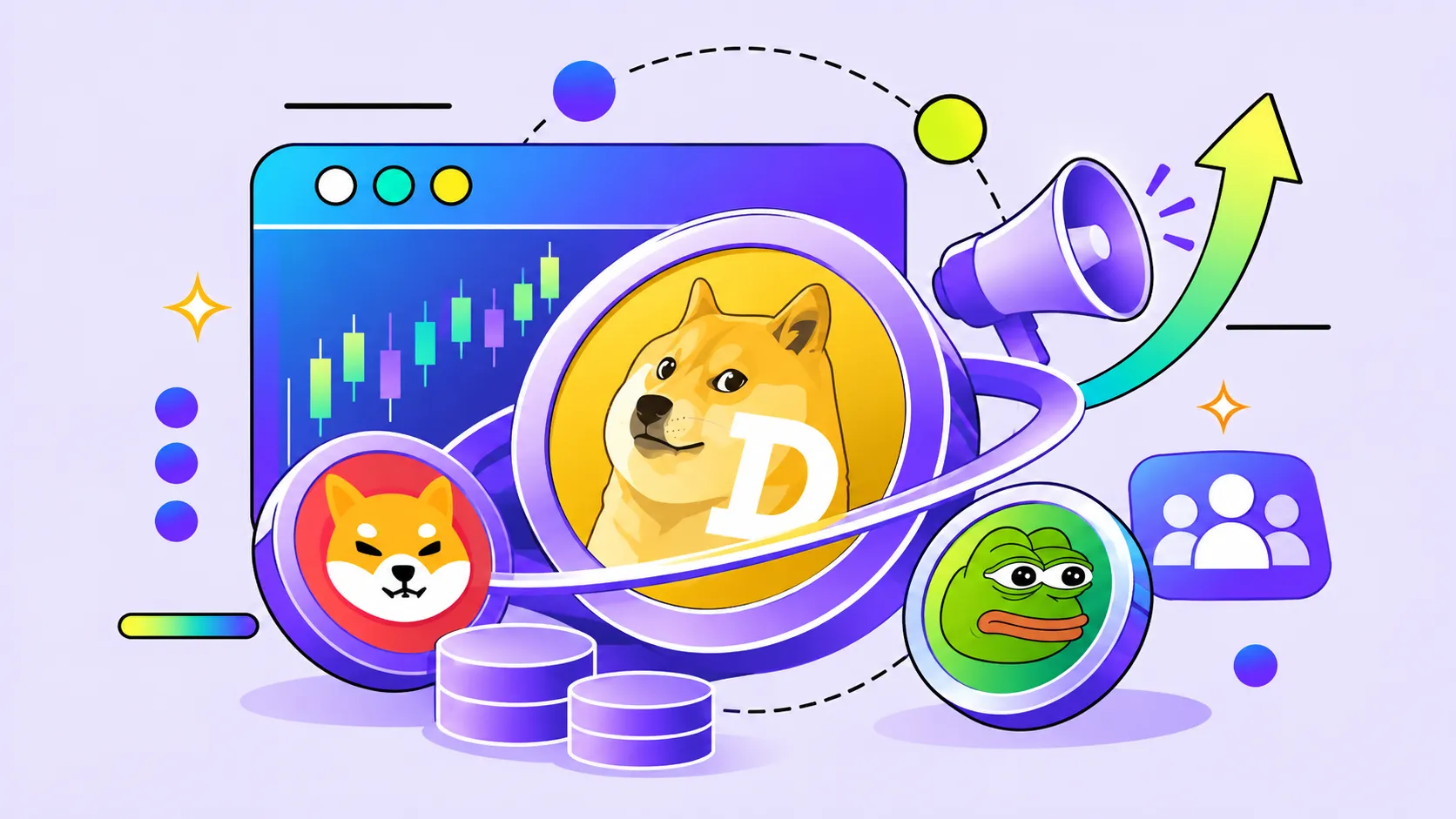
What is a Memecoin?
A memecoin is a cryptocurrency inspired by internet memes, popular characters, social media trends, or online communities. Unlike cryptocurrencies primarily designed to provide blockchain infrastructure or financial services, memecoins typically derive much of their market value from cultural relevance, community enthusiasm, and speculative demand.
The best-known example is Dogecoin (DOGE), launched in December 2013 as a humorous alternative to more serious cryptocurrency projects. Since then, memecoins have evolved into a recognizable category of digital assets, including Shiba Inu (SHIB), Pepe (PEPE), and numerous smaller community-driven tokens.
According to the U.S. Securities and Exchange Commission's 2025 staff statement on meme coins, these assets are commonly associated with entertainment, social interaction, and speculation rather than extensive functional utility. However, some memecoins have developed payment applications, blockchain infrastructure, and broader ecosystems.
This guide explains how memecoins work, why Dogecoin became influential, how online communities affect prices, and the potential rewards and risks of trading meme-based cryptocurrencies.
Quick Summary
Definition: A memecoin is a cryptocurrency associated with internet culture, viral trends, or community-driven narratives.
Historical example: Dogecoin, launched in 2013, helped establish the memecoin category.
Popular examples: Dogecoin (DOGE), Shiba Inu (SHIB), and Pepe (PEPE).
Primary value drivers: Community engagement, market sentiment, liquidity, social media attention, and speculative trading.
Potential rewards: Rapid price appreciation during periods of strong demand, community participation, and opportunities for speculative traders.
Main risks: Extreme volatility, market manipulation, rug pulls, concentrated ownership, and sudden losses of liquidity.
Market monitoring: Traders can follow crypto live prices on CoinW to compare price movements and trading activity.
Background & Entry Into Crypto
How Did Memecoins Begin?
The history of memecoins is closely connected to the creation of Dogecoin. Software developers Billy Markus and Jackson Palmer launched Dogecoin on December 6, 2013, drawing inspiration from the popular Doge internet meme featuring a Shiba Inu dog.
According to the official Dogecoin history, the project was initially conceived as a joke about the cryptocurrency industry's seriousness and speculative culture.
Despite its humorous origins, Dogecoin quickly attracted an active online following. Reddit users adopted DOGE for tipping, while community fundraising initiatives demonstrated that a cryptocurrency built around humor could also support collective action.
In 2014, the Dogecoin community helped raise funds for the Jamaican bobsled team's participation in the Winter Olympics and supported clean-water initiatives in Kenya.
These activities helped establish an important characteristic of memecoins: community identity can become a central part of a cryptocurrency's appeal.
How Memecoins Evolved Beyond Dogecoin
Following Dogecoin's success, other cryptocurrency projects adopted similar approaches combining recognizable internet imagery with digital tokens.
Shiba Inu emerged in 2020 as an Ethereum-based memecoin inspired by the same dog breed associated with Dogecoin. Its ecosystem subsequently expanded into decentralized finance and blockchain applications.
Pepe, another widely recognized memecoin, adopted imagery associated with Pepe the Frog and emphasized internet culture, community participation, and speculative trading.
These developments demonstrated that memecoins could follow different paths: some remained primarily speculative assets, while others attempted to establish additional utility and infrastructure.
Major Contributions & Impact
Memecoins have influenced cryptocurrency adoption by introducing a model in which online culture, recognizable branding, and social participation can attract users to blockchain networks.
Their major contributions include:
Accessible cultural identity: Familiar memes and humorous branding can make cryptocurrency communities approachable to newcomers.
Community-led promotion: Users create content, organize discussions, and promote projects without relying exclusively on conventional advertising.
Social experimentation: Memecoins demonstrate how digital assets can function as shared symbols of identity and online participation.
Fundraising and payments: Dogecoin's history includes charitable fundraising, tipping, and peer-to-peer transactions.
Market experimentation: Memecoins illustrate how collective sentiment and attention can influence the demand for digital assets.
However, cultural popularity should not be confused with sustainable economic value. A large online following does not necessarily indicate strong token utility, decentralized ownership, or long-term financial viability.
Influence on the Crypto Industry
Memecoins have highlighted the relationship between online communities and cryptocurrency markets. Unlike projects whose adoption may depend heavily on technical functionality, memecoin adoption can accelerate through social networks, viral content, and shared cultural references.
They have also encouraged discussion about the role of speculation in digital asset markets, particularly when token prices move significantly without corresponding changes in underlying technology or utility.
For example, traders may compare the performance of memecoins with established cryptocurrencies such as Bitcoin (BTC) and Ethereum (ETH) to evaluate broader market conditions.
Memecoins also create challenges for exchanges, regulators, and investors because rapidly changing demand can amplify liquidity problems, misinformation, and market manipulation.
Role
The primary role of a memecoin depends on its design and community. Some function mainly as speculative tokens or cultural collectibles, while others support payments, tipping, decentralized applications, or participation in broader ecosystems.
Dogecoin, for example, operates on its own blockchain and supports peer-to-peer transfers. Other memecoins are tokens deployed on existing blockchain networks.
| Feature | Memecoins | Utility-Focused Cryptocurrencies |
|---|---|---|
| Primary appeal | Community identity, internet culture, speculation | Network functionality, applications, infrastructure |
| Value drivers | Social attention, demand, liquidity, sentiment | Adoption, network activity, utility, demand |
| Typical utility | Trading, tipping, community participation; varies by project | Transactions, computation, governance, network services |
| Major risks | Hype cycles, manipulation, concentrated ownership | Technical failures, adoption risk, competition, volatility |
| Examples | DOGE, SHIB, PEPE | ETH, LINK |
These categories are not mutually exclusive. Some memecoins develop functional applications, while utility-focused cryptocurrencies can also experience speculative trading and sentiment-driven volatility.
How Does a Memecoin Work?
A memecoin uses blockchain technology to record ownership and transfers, but its technical structure varies.
Blockchain creation: A memecoin may operate on an independent blockchain, like Dogecoin, or be issued as a token on an existing network.
Token distribution: Tokens can be distributed through launches, liquidity pools, sales, mining, or other mechanisms depending on the project.
Community participation: Holders and supporters share memes, discuss developments, and promote the cryptocurrency online.
Market trading: Buyers and sellers determine market prices through exchange order books or decentralized liquidity pools.
Price discovery: Demand, supply, liquidity, and market expectations influence the token's trading price.
Why Does Community Hype Matter for Memecoins?
Community hype refers to heightened enthusiasm and attention surrounding a cryptocurrency, often amplified through social media, online discussions, influencers, and viral content.
For memecoins, this attention can become an important source of demand. When more people discover a token and decide to purchase it, buying pressure may increase its price, particularly when available liquidity is limited.
The Memecoin Hype Cycle
Discovery: A meme, token launch, or community narrative attracts initial attention.
Viral expansion: Social media activity introduces the token to a wider audience.
Speculative demand: Traders buy the token in anticipation of further price appreciation.
Peak enthusiasm: Increased attention may coincide with substantial trading activity and elevated valuations.
Correction or stabilization: Demand may weaken, causing prices to fall, or the project may establish a more sustainable community.
This sequence is an illustrative model rather than a guaranteed pattern. Not every memecoin becomes popular, and many projects lose attention before developing meaningful trading activity.
Can Social Media Influence Memecoin Prices?
Yes. Social media can influence memecoin prices by changing market awareness, expectations, and trading behavior.
Posts by influential accounts, viral memes, and trending discussions may attract speculative demand. However, social media engagement does not guarantee price appreciation, and coordinated promotional campaigns may create misleading impressions of genuine interest.
Investors should distinguish between authentic community participation and artificially manufactured hype.
What Are the Most Popular Examples of Memecoins?
Several cryptocurrencies illustrate the different approaches within the memecoin category.
Dogecoin (DOGE)
Dogecoin is one of the earliest and most recognizable memecoins. Created in 2013, DOGE combines internet humor with an independent blockchain that supports peer-to-peer payments.
Its history includes community tipping, fundraising, and efforts to promote everyday cryptocurrency transactions.
Dogecoin's official documentation is available at Dogecoin.com.
Shiba Inu (SHIB)
Shiba Inu is an Ethereum-based memecoin launched in 2020. While its origins are closely associated with meme culture, the project has expanded toward decentralized finance and blockchain infrastructure.
Its ecosystem includes ShibaSwap and Shibarium, demonstrating how some meme-based projects attempt to develop additional functionality.
Readers can explore Shiba Inu's price and market information on CoinW.
Pepe (PEPE)
Pepe is an Ethereum-based memecoin inspired by Pepe the Frog. Its popularity is associated with recognizable internet imagery, community-driven promotion, and speculative trading.
Unlike projects primarily designed to provide infrastructure services, PEPE emphasizes cultural relevance and token trading.
For additional background, see CoinW Academy's guide to Pepe (PEPE) or explore the PEPE price page.
What Are the Potential Rewards of Memecoins?
Memecoins attract speculative traders partly because rapidly increasing demand can produce substantial price movements. However, potential rewards should always be considered alongside the possibility of severe financial losses.
Potential Price Appreciation
When a memecoin attracts significant new demand, its market price can rise rapidly. Traders who purchase before an increase and successfully sell at a higher price may realize profits.
Nevertheless, predicting the timing or duration of these movements is difficult. Past price appreciation does not establish future performance.
Community Participation
Memecoin communities may provide opportunities to participate in online events, charitable initiatives, educational discussions, and collaborative projects.
Dogecoin's historical fundraising activities demonstrate that community participation can extend beyond speculation.
Exposure to Emerging Crypto Trends
Memecoins can provide exposure to developments in internet culture, token creation, and blockchain-based communities.
However, exposure to an emerging trend is not equivalent to ownership of a productive business or an asset generating predictable cash flows.
What Are the Main Risks of Investing in Memecoins?
Memecoins are generally highly speculative assets. Their prices can change dramatically as online attention, liquidity, and market expectations shift.
SEC disclosures concerning meme-based crypto assets identify volatility, limited utility, fraud, and market manipulation among their significant risks.
Extreme Price Volatility
Memecoin prices may experience sharp increases followed by equally dramatic declines. When market enthusiasm fades, holders can suffer substantial losses, potentially including their entire investment.
Pump-and-Dump Schemes
A pump-and-dump scheme involves artificially promoting or manipulating an asset's price before selling holdings into the resulting demand.
Late buyers may be left holding tokens whose prices collapse after the promoters exit their positions.
Rug Pulls and Smart Contract Risks
A rug pull occurs when project insiders or liquidity providers exploit their control over a token or its market, potentially leaving investors with substantial losses.
Other risks include malicious smart contract permissions, unauthorized token creation, transfer restrictions, and vulnerabilities in decentralized applications.
Concentrated Token Ownership
When a small number of wallets control a large percentage of a token's supply, their trading activity can have a disproportionate impact on market prices.
Large holders may be able to sell significant quantities, creating downward pressure and potentially triggering additional selling.
Low Liquidity and Slippage
Liquidity refers to the ability to buy or sell an asset without significantly affecting its price.
Some memecoins have limited liquidity, meaning that large orders may execute at prices substantially different from those initially displayed. This difference is known as slippage.
Limited Utility and Regulatory Uncertainty
Many memecoins lack substantial functionality beyond trading and community participation. Their long-term demand may therefore depend heavily on sustained attention.
Regulatory treatment also depends on the asset's characteristics, the circumstances of its distribution, and the applicable jurisdiction.
The SEC's 2025 staff statement expressed a view about certain meme coin transactions under U.S. federal securities laws, but it was not a binding rule or a blanket exemption for every token. Subsequent SEC guidance has further discussed the classification of meme coins and other crypto assets.
How Can Traders Evaluate a Memecoin Before Buying?
Before purchasing a memecoin, traders should examine more than social media popularity or recent price increases.
Verify the project: Identify official websites, documentation, blockchain networks, and contract addresses.
Review tokenomics: Examine total supply, circulating supply, emissions, token allocation, and potential insider holdings.
Assess liquidity: Check trading volume, order book depth, liquidity pools, and potential slippage.
Examine holder distribution: Determine whether a small number of wallets control substantial portions of the supply.
Evaluate community activity: Look for consistent engagement rather than sudden, unexplained increases in promotional activity.
Investigate security: Review smart contract audits where available and investigate privileged contract permissions.
Manage exposure: Consider position sizing, potential losses, and whether the investment fits personal financial circumstances.
No checklist can eliminate the risks associated with speculative cryptocurrency trading. Even projects with transparent documentation and active communities may experience severe losses.
How Do Memecoin Tokenomics Affect Prices?
Tokenomics describes the supply, distribution, issuance, and economic incentives associated with a cryptocurrency.
For memecoins, understanding tokenomics is particularly important because low nominal token prices can create misleading impressions of affordability.
For example, a token priced at $0.00001 is not necessarily cheaper in valuation terms than a token priced at $1. The circulating supply and market capitalization must also be considered.
Market capitalization = Token price × Circulating supply.
A memecoin with one trillion circulating tokens and a price of $0.00001 would have a market capitalization of $10 million.
Other relevant factors include token burns, future issuance, vesting schedules, and ownership concentration.
Dogecoin, for instance, uses an ongoing issuance model rather than a fixed maximum supply. Other memecoins may have fixed supplies or mechanisms that remove tokens from circulation.
Token burns can reduce supply, but they do not automatically increase market prices. Demand and liquidity remain essential.
How to Get Started with Memecoins on CoinW
Users interested in exploring memecoins can begin by researching established projects and reviewing available market information.
Research the cryptocurrency: Read official documentation and understand the token's history, supply, and risks.
Monitor market conditions: Use CoinW's cryptocurrency market data to examine prices, trading volume, and recent price movements.
Compare available markets: Review supported trading pairs and their liquidity before placing an order.
Choose an appropriate order type: Understand the differences between market orders and limit orders, including execution and slippage risks.
Apply risk management: Avoid investing funds needed for essential expenses and consider the possibility of losing the entire amount committed.
For example, CoinW provides spot markets such as DOGE/USDT, SHIB/USDT, and PEPE/USDT.
Trading availability may vary by jurisdiction and market conditions. Users should verify current listings and eligibility before trading.
Futures trading introduces additional risks, including leverage-related liquidation. Beginners should understand these mechanisms before considering derivatives.
FAQs
What is a memecoin in cryptocurrency?
A memecoin is a cryptocurrency inspired by internet memes, cultural trends, or online communities. Its value is often influenced by social engagement, market demand, and speculation.
Is Dogecoin a memecoin?
Yes. Dogecoin is one of the earliest and most recognizable memecoins. It launched in December 2013 and operates as an independent peer-to-peer cryptocurrency.
Why do memecoins increase in value?
Memecoin prices can increase when buying demand exceeds available selling liquidity. Viral attention, community growth, exchange activity, and market sentiment may contribute to this demand.
Are memecoins a good investment?
Memecoins are highly speculative and may not suit investors seeking predictable returns or capital preservation. Potential gains are accompanied by significant risks, including total loss.
What is the difference between Dogecoin and Shiba Inu?
Dogecoin operates on its own blockchain and supports peer-to-peer transactions. Shiba Inu originated as an Ethereum-based token and has expanded into an ecosystem involving decentralized finance and blockchain applications.
Can a memecoin have real utility?
Yes. Although many memecoins begin with limited functionality, some develop payment capabilities, decentralized applications, or other ecosystem services. Dogecoin is an example of a meme-origin cryptocurrency used for payments and tipping.
What is a memecoin rug pull?
A rug pull is a form of crypto fraud or abusive project exit in which insiders exploit control over tokens, funds, or liquidity, potentially leaving other holders with substantial losses.
How can I identify a risky memecoin?
Warning signs include anonymous or unverifiable project claims, concentrated ownership, unclear tokenomics, suspicious smart contract permissions, low liquidity, and promises of guaranteed profits.
Where can I trade memecoins?
Memecoins may be available through centralized exchanges and decentralized trading platforms. CoinW offers markets for selected meme-based cryptocurrencies, subject to availability and applicable restrictions.
Conclusion
Memecoins demonstrate how internet culture, online communities, and speculative demand can influence cryptocurrency markets. From Dogecoin's humorous beginnings to the development of projects such as Shiba Inu and Pepe, meme-based cryptocurrencies have become a recognizable part of the digital asset ecosystem.
Their appeal lies in accessible branding, community participation, and the possibility of rapid price appreciation. However, these characteristics also expose traders to extreme volatility, market manipulation, liquidity problems, and substantial financial losses.
Understanding a memecoin's tokenomics, community dynamics, liquidity, and security is essential before participating in its market. Community enthusiasm may attract attention, but it cannot guarantee sustainable value or investment returns.
References / Sources
Dogecoin: The History of Dogecoin — Official project history and origins.
Dogecoin: What Is Dogecoin? — Official explanation of Dogecoin's technology and community.
SEC Division of Corporation Finance: Staff Statement on Meme Coins (2025) — Characteristics and speculative nature of meme coins.
SEC: Application of Federal Securities Laws to Certain Types of Crypto Assets (2026) — Regulatory interpretation discussing meme coins and other digital assets.
CoinW Academy: What Is Pepe (PEPE)? — Educational overview of PEPE and its risks.
CoinW: Shiba Inu (SHIB) Market Information — SHIB market data and ecosystem overview.
CoinW: Pepe (PEPE) Market Information — PEPE market data and project background.