DRV Through Citrini’s “Breaking the Wall” Thesis: On-Chain Derivatives as Fee-Generating Gateways in the AI and RWA Era
CoinW Research
Abstract
Citrini Research's "Breaking The Wall" report placed DRV in the highest allocation tier of its model portfolio, drawing market attention to the on-chain options sector. As AI Agents drive automated trading and RWA expands the range of on-chain assets, options and risk management protocols could become important revenue-generating infrastructure in on-chain finance. Derive accounted for approximately 90.4% of on-chain options premium trading volume in Q3 2026, demonstrating a strong position in this niche market. Its mechanism to allocate 35% of protocol revenue to DRV buybacks also supports token value capture. However, the theoretical annualized buyback amount represents only about 0.6% of DRV's circulating market capitalization, while competition from centralized exchanges, token unlocks, and valuation pressure remain key challenges. Citrini's attention has created a short-term revaluation opportunity for DRV, but whether Derive can convert its leading position in on-chain options into sustainable business value remains to be proven.
1.Citrini's "Breaking The Wall" Report Draws Attention: Why DRV?
On October 8, Citrini Research published "Breaking The Wall," examining whether traditional financial trading and settlement systems can meet emerging market demands as AI Agents begin managing capital around the clock and real-world assets (RWA), including stocks and bonds, increasingly move on-chain. Citrini argues that blockchain is evolving into financial infrastructure that operates 24/7 and can be accessed automatically by software. Rather than simply expressing a bullish view on the entire crypto market, the report seeks to identify the real beneficiaries of on-chain finance. As more assets and capital move onto blockchains, which protocols can generate recurring revenue from trading, lending, settlement, and risk management? In its publicly disclosed model portfolio, Derive (DRV), Lighter (LIT), and Ether.fi (ETHFI) each received a target allocation of approximately 10%, placing them in the highest allocation tier. However, these are target weights in a hypothetical portfolio and do not indicate that Citrini has established actual positions at these levels. Following the report's release, DRV quickly attracted secondary market attention. On October 9, DRV's 24-hour gain briefly reached approximately 25%. As of October 10, CoinMarketCap showed DRV trading at around USD 0.55, with 24-hour trading volume exceeding USD 100 million. Although the rally cannot be attributed entirely to Citrini, market interest in on-chain derivatives has clearly increased. Why did DRV enter Citrini's investment framework, and can its underlying business support current market expectations?
2.From AI Agents to RWA: Why On-Chain Derivatives Could Become a Revenue Gateway
Citrini's thesis is built around two major trends. On one hand, real-world assets such as stocks, bonds, gold, and credit products are gradually moving on-chain, expanding the range of tradable assets. On the other hand, AI Agents are developing the ability to independently search for information, compare prices, and execute trades, potentially becoming a new class of traders capable of operating around the clock and automatically adjusting positions. As more assets move on-chain, market demand will extend beyond basic buying and selling toward risk management. Investors need to hedge price fluctuations, lock in future costs, or manage risk without selling existing positions, creating greater opportunities for derivatives such as options and perpetual futures. AI Agents may also automatically execute trading and hedging strategies based on market volatility, account risk, and price movements. In this process, RWA expands asset supply, AI Agents may increase trading frequency, and derivatives protocols serve the resulting demand for pricing, margin management, hedging, and settlement. These services can generate recurring fees, giving trading infrastructure long-term revenue potential. Protocols offering deeper liquidity, reliable risk controls, and convenient trading experiences will be better positioned to capture fees within on-chain finance. However, options involve different strike prices, expiration dates, and volatility levels, making market making and risk management more complex than spot trading. Participation barriers are also higher for retail users. Therefore, while the sector offers considerable growth potential, its ability to scale ultimately depends on genuine trading demand and product competitiveness.
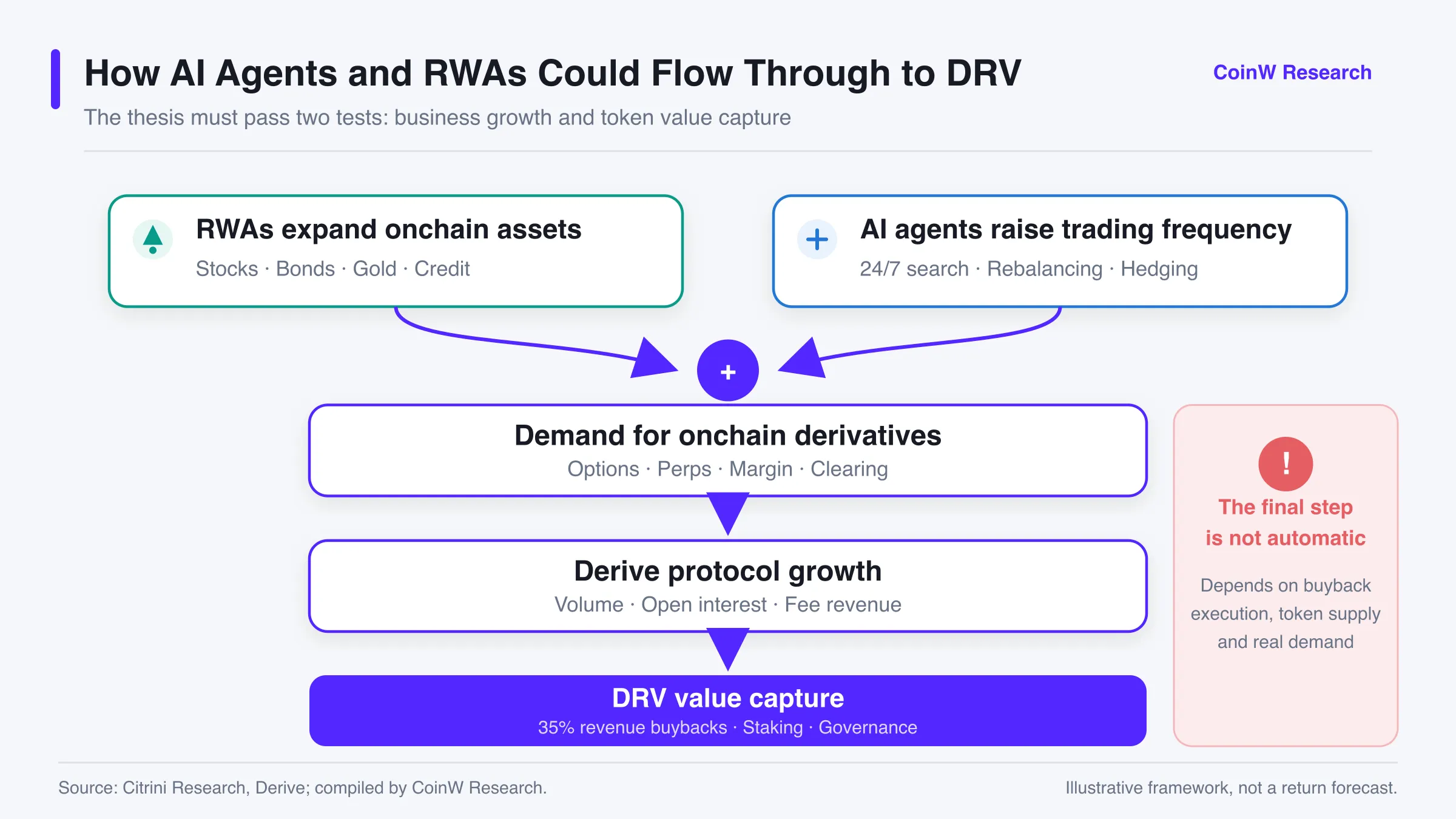
Figure 1. Value Transmission Mechanism Between AI Agents, RWA, and DRV. Source: CoinW Research.
3.What Is Derive? Where Does Its Competitive Advantage Lie in On-Chain Options?
Derive originated from Lyra, an on-chain options protocol launched in 2021. After several years of development, it has evolved from a standalone options platform into a comprehensive derivatives protocol covering options, perpetual futures, and spot trading. Its main distinguishing feature is on-chain options trading. Compared with perpetual futures, which are primarily used to take long or short positions, options offer more flexible risk management. For example, an investor holding ETH who is concerned about a short-term decline but does not want to sell can pay a premium to purchase a put option, adding downside protection to the position. Derive also supports portfolio margin, cross-margin, and multi-asset collateral, allowing users to calculate risks across different positions and improve capital efficiency. Technically, Derive's core trading operations run on Derive Chain, built using the OP Stack, while users can transfer assets from networks including Ethereum, Arbitrum, Base, and Optimism. The protocol uses an off-chain matching and on-chain settlement model. Orders are matched quickly off-chain, while margin management, liquidation, and final settlement are handled through on-chain protocols. This improves trading efficiency while allowing users to retain control of their assets. However, the protocol still depends on the reliable operation of off-chain matching systems, oracles, and market makers.
Business data shows that Derive has established a leading position in the on-chain options market. As of October 10, DeFiLlama reported approximately USD 4.44 billion in options notional trading volume over the past 30 days, around USD 80.82 million in options premium trading volume, and approximately USD 111 million in total value locked (TVL). In Q3 2026, Derive accounted for approximately 90.4% of on-chain options premium trading volume, demonstrating strong competitiveness in its niche market. However, leadership on-chain does not mean it can compete equally with centralized giants. According to Alea Research, among platforms including Deribit, OKX, Bybit, Binance, and Derive, Derive accounted for only about 3.1% of total open interest options, while Deribit's open interest remained approximately 25 times larger. Derive's advantages include self-custody, transparent settlement, and composability with DeFi protocols, but its liquidity depth and market-making capacity still lag behind established centralized platforms. Its future expansion will depend on both the growth of the broader sector and its ability to narrow the gap with centralized competitors.
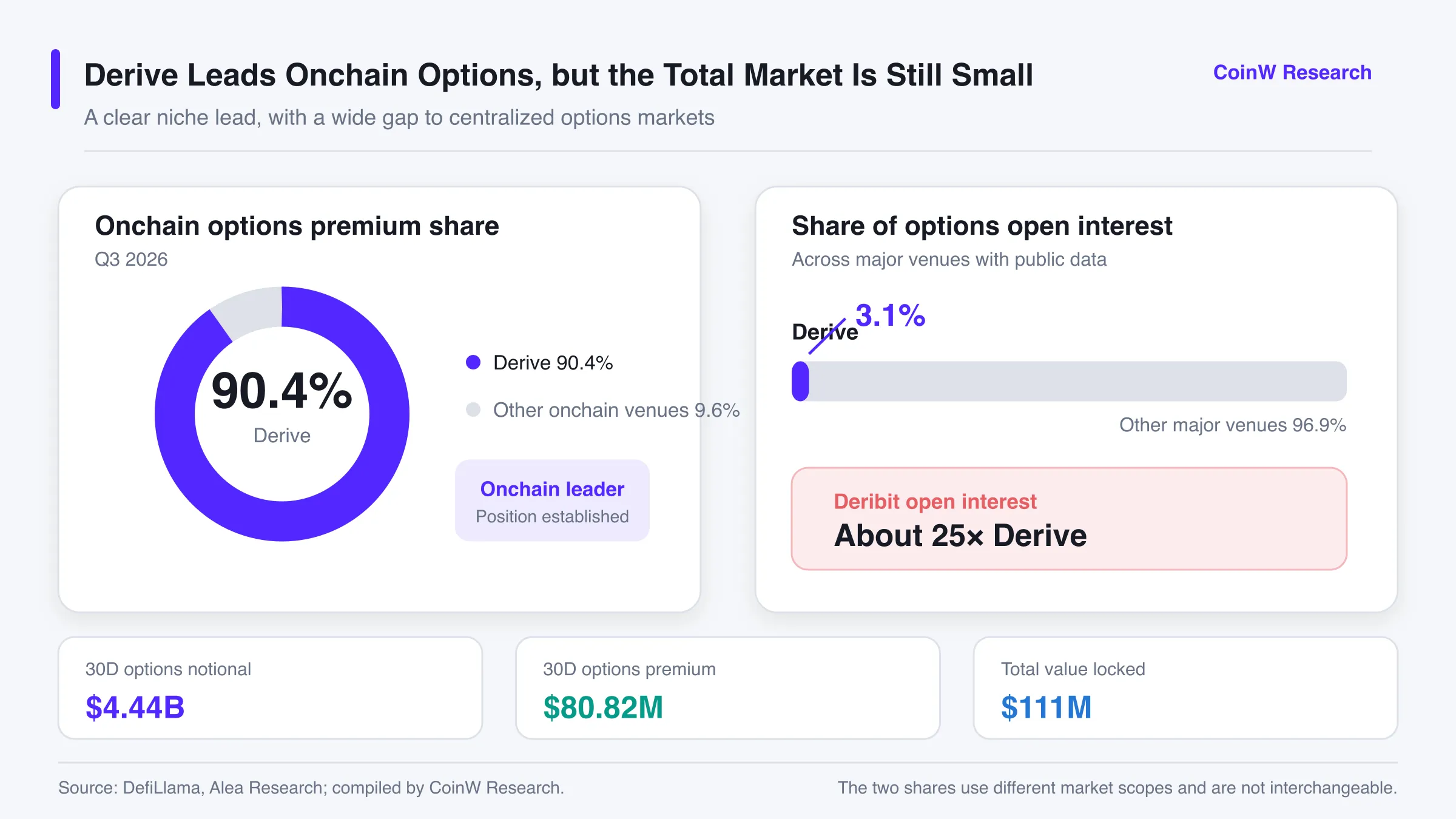
Figure 2. Derive's Dual Position: Leading On-Chain, but Still Small in the Overall Options Market. Source: CoinW Research
4.From Protocol Revenue to DRV: Can the Value Capture Flywheel Work?
Growth in Derive's business does not necessarily translate into a corresponding increase in DRV's price. Evaluating the token's long-term value requires examining the relationship between protocol revenue, buyback mechanisms, and token supply. As of October 10, DeFiLlama reported approximately USD 714,000 in total fees over the past 30 days, including around USD 574,000 in protocol revenue. Although business activity expanded significantly in 2026 compared with 2025, options trading is highly sensitive to market volatility and large institutional orders, meaning short-term volume spikes may not be sustainable. Compared with notional trading volume, actual protocol revenue and whether users continue trading after incentives decline provide a more reliable measure of business quality.
35% Revenue Allocation to Buybacks: How Much Support Can It Provide for DRV?
DRV is primarily used for staking, governance, and ecosystem incentives. Holders can stake DRV to receive stDRV, participate in protocol governance, and earn rewards. In April 2026, Derive DAO approved governance changes that increased the share of protocol revenue allocated to DRV buybacks from 25% to 35%, reduced weekly staking rewards from 250,000 to 100,000 DRV, and shortened the unstaking waiting period from 28 days to 7 days. This established a clearer value transmission mechanism. As trading activity increases, protocol revenue grows, with 35% available for DRV market buybacks, creating potential buying demand. But how substantial is this demand? Annualizing approximately USD 574,000 in protocol revenue over the past 30 days gives an estimated annual revenue of USD 6.888 million, corresponding to theoretical annual buybacks of approximately USD 2.41 million. Compared with DRV's current circulating market capitalization of around USD 400 million, annualized buybacks represent only about 0.6%. This indicates that while the buyback mechanism is in place, current revenue levels are insufficient to independently support DRV's market valuation. Furthermore, buybacks do not necessarily mean token burns or direct dividend distributions. Repurchased DRV may be held or redistributed as incentives under governance arrangements. Derive continues to distribute approximately 100,000 DRV in weekly staking rewards, equivalent to around 5.2 million tokens annually. Therefore, beyond the buyback amount, investors should monitor how repurchased tokens are used and whether buyback demand can offset additional circulating supply.
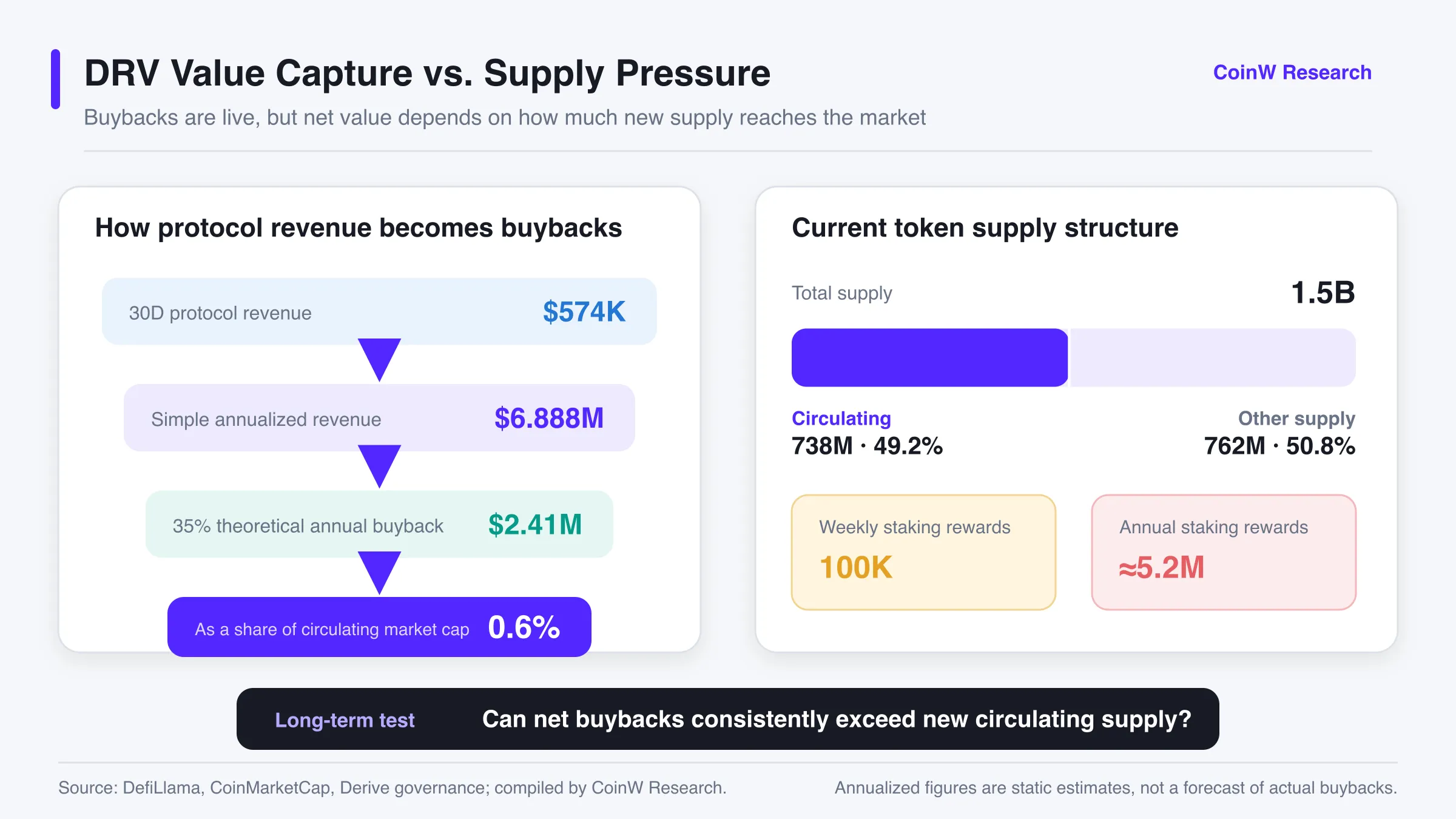
Figure 3. DRV Value Capture and Token Supply Pressure. Source: CoinW Research Institute.
Can Token Supply and Valuation Support Market Expectations?
DRV initially inherited LYRA's supply of 1 billion tokens, but governance approved an additional 500 million tokens in 2025 for contributor incentives, institutional partnerships, market making, and ecosystem development, increasing total supply to 1.5 billion. This means DRV's supply is not entirely fixed and may still be affected by future governance decisions. As of October 10, CoinMarketCap reported approximately 738 million DRV in circulation, representing 49.2% of total supply, with a circulating market capitalization of around USD 404 million and a fully diluted valuation (FDV) of approximately USD 821 million. Less than half of the total token supply is currently circulating. Future releases of contributor, foundation, and ecosystem incentive tokens could create additional selling pressure. Circulating supply figures also vary across data platforms, making it necessary to monitor official unlock schedules and on-chain wallet movements. DRV has established a value transmission mechanism linking trading growth, protocol revenue, and token buybacks, but the current buyback scale remains limited. Only when revenue grows sustainably and gradually offsets new supply from token unlocks and incentives will Derive's business advantages be more likely to translate into long-term value for DRV.
5.Long-Term Value Capture, Short-Term Capital Flows and Valuation
Citrini's report has brought renewed market attention to DRV, but short-term price movements have significantly outpaced changes in protocol fundamentals. Its 24-hour trading volume represents approximately 27% of circulating market capitalization, indicating active capital flows while also making the price more sensitive to news, market sentiment, and leveraged trading. The current rally requires distinguishing between short-term narrative-driven momentum and long-term fundamental improvement. If DRV's price increase is primarily driven by the report's circulation, without corresponding growth in Derive's options trading volume, open interest, and protocol revenue, the market is largely pricing in future expectations ahead of actual performance. Conversely, sustained improvement in business metrics would indicate that market attention is gradually translating into genuine demand. Over the longer term, as RWA expands the range of on-chain assets and AI Agents accelerate automated trading, demand for options hedging, portfolio margin, and risk management could increase further. Derive offers programmatic trading interfaces and automated strategy products, positioning it as a potential underlying trading infrastructure for AI Agents executing complex derivatives strategies. However, Derive has not yet clearly launched a native AI Agent trading product, and its ability to capture this incremental demand remains unproven. It also faces competition from centralized platforms with deeper liquidity, rival protocols, and ongoing token supply pressure. The four most important indicators to monitor for DRV are actual trading demand, protocol revenue, buyback execution, and additional circulating supply. In the short term, trading volume, leverage, and market sentiment also deserve attention. Citrini has provided an investment framework for identifying revenue-generating infrastructure in on-chain finance, but whether DRV can fulfill this thesis will ultimately depend on Derive's ability to generate sustainable revenue and convert that revenue into real token demand.
This article is intended solely for market research and informational analysis and does not constitute investment or trading advice.
References
1. Citrini Research | Breaking The Wall: https://www.citriniresearch.com/p/breaking-the-wall
2. CoinMarketCap | Derive (DRV) Price, Market Capitalization, and Circulating Supply: https://coinmarketcap.com/currencies/derive/
3. Derive Official Blog | Announcing Lyra V2 (Protocol Architecture and Product Mechanisms): https://blog.derive.xyz/announcing-lyra-v2
4. DeFiLlama | Derive Protocol Data (Options Trading Volume, TVL, Fees, and Revenue): https://defillama.com/protocol/derive
5. Alea Research | Twice the Exposure, a Quarter Cheaper (Competitive Landscape Between Derive and Centralized Options Exchanges): https://alearesearch.io/newsletters/twice-the-exposure-a-quarter-cheaper
6. Derive DAO Governance Proposal | Adjustments to DRV Buyback Allocation, Staking Rewards, and Unstaking Rules: https://governance.alearesearch.io/item/cdb5099b-0882-4da1-87a0-e7ccdf5a0e92
7. Blockworks | Derive Token Transparency (DRV Token Supply and Allocation Mechanisms): https://blockworks.com/token-transparency/filing/derive