
CoinW vs Arkham & Nansen: 5 Advantages for Finding Smart Money
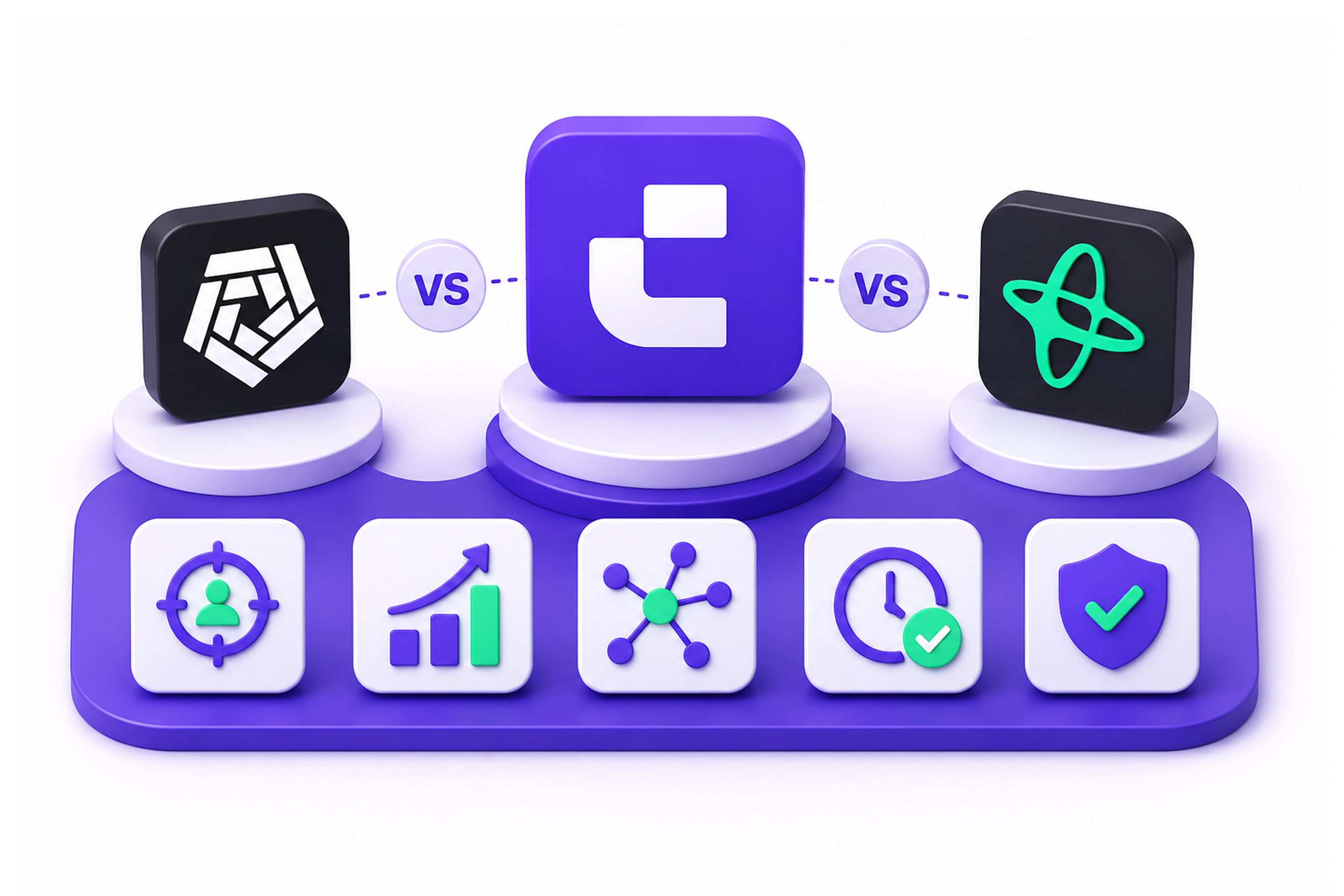
CoinW vs Arkham & Nansen: 5 Advantages for Finding Smart Money (and 3 User Profiles)
CoinW vs Arkham smart money is not a simple “which tool is better?” question. CoinW, Arkham, and Nansen serve different parts of the smart money workflow. Arkham and Nansen are analytics-first platforms built for wallet intelligence, entity tracking, and on-chain research. CoinW is an exchange and copy-trading platform where users can move from market discovery to execution.
For retail traders, the real question is not only where to find smart money signals, but how to act on them responsibly. This smart money tools comparison explains the difference between on-chain analytics vs exchange workflows, where CoinW has practical advantages, and which type of user may benefit from each platform.
Quick Summary
Arkham is useful for entity-level wallet tracking, fund-flow visibility, and labeled wallet intelligence.
Nansen is useful for smart money labels, wallet activity tracking, and accumulation analysis.
CoinW is useful for users who want to move from signals to trading execution, copy trading, and market participation.
CoinW smart money vs Arkham is best understood as execution layer vs intelligence layer.
CoinW smart money vs Nansen is best understood as beginner-accessible trading workflow vs advanced analytics research workflow.
What Is Smart Money in Crypto?
Smart money in crypto refers to wallets, traders, or entities that appear to make informed decisions based on timing, market structure, liquidity, and historical performance. These participants may include professional traders, funds, DeFi power users, whales, early ecosystem participants, or wallets with consistently strong behavior.
However, smart money is not simply a large wallet. A whale can still make poor decisions. Strong smart money analysis usually looks at realized performance, accumulation behavior, exit discipline, wallet consistency, and risk management.
CoinW vs Arkham vs Nansen: The Core Difference
The core difference is that Arkham and Nansen help users research smart money, while CoinW helps users act within a trading environment. This distinction matters because many traders do not only need more data; they need a practical workflow for turning insights into controlled trading decisions.
| Main Role
|
Trading, copy trading, market access, and execution.
|
Entity-level wallet intelligence and fund-flow tracking.
|
Wallet labels, smart money dashboards, and on-chain analytics.
|
| Best For
|
Users who want signal-to-action trading workflows.
|
Users who want to inspect wallet entities and fund movements.
|
Users who want advanced wallet classification and smart money research.
|
| Execution Layer
|
Yes, through spot, futures, and copy trading.
|
No, primarily analytics and intelligence.
|
No, primarily analytics and research.
|
| Beginner Accessibility
|
High for users who want a simplified trading workflow.
|
Moderate, depending on wallet-analysis experience.
|
Moderate to advanced, depending on analytics experience.
|
Advantage 1: CoinW Connects Smart Money Discovery With Trading Execution
The biggest CoinW advantage is that it operates as a trading platform, not only a research dashboard. Users can study markets and then access trading products in the same broader ecosystem.
Arkham and Nansen are powerful for finding wallet activity, but they are not primarily designed as execution venues. CoinW, by contrast, gives users access to spot trading, futures trading, and copy-trading tools.
This matters because smart money signals are time-sensitive. A signal is only useful if the user can evaluate it, manage risk, and execute responsibly.
Advantage 2: CoinW Makes Copy Trading More Accessible
Many retail traders do not have the time or experience to manually analyze dozens of wallet dashboards. CoinW offers a more accessible path through CoinW smart money vs Nansen workflows focused on trader discovery, strategy-following, and performance review.
This does not mean users should copy blindly. Copy trading still requires risk management, position sizing, and trader selection. But compared with pure analytics platforms, CoinW can make the smart money follow process easier for users who prefer structured trading tools.
Advantage 3: CoinW Is Built for Action, Not Only Observation
Arkham and Nansen help users observe wallet behavior. That is valuable, especially for advanced traders. But many retail users struggle with the next step: deciding how to act.
CoinW’s advantage is actionability. Users can monitor market opportunities, compare prices, review available trading products, and follow trader strategies from a more execution-focused environment.
For example, a user researching smart money flows into large-cap assets such as Bitcoin, Ethereum, or USDT can also check market access and trading conditions directly through CoinW.
Advantage 4: CoinW Helps Beginners Avoid Analytics Overload
On-chain analytics can become overwhelming. Arkham, Nansen, Dune, and DeFiLlama can reveal wallet flows, labeled entities, dashboards, TVL changes, protocol activity, and capital migration. For professionals, this depth is useful. For beginners, it can be confusing.
CoinW is better suited for users who want a simpler path: monitor markets, review traders, understand performance, and decide whether to trade or follow a strategy.
This is where the comparison between on-chain analytics vs exchange becomes important. Analytics tools help users discover information. Exchanges help users manage market participation.
Advantage 5: CoinW Combines Market Access With Platform Trust Features
Smart money trading is not only about finding signals. Users also need a platform where they can manage assets, access markets, and understand platform security practices.
CoinW provides a Proof of Reserves page, giving users an additional trust reference when evaluating the platform. For traders comparing research tools and trading venues, this transparency can be part of the decision-making process.
Users can also monitor crypto live prices when comparing smart money signals with current market movement.
Where Arkham Has an Edge
Arkham is especially useful for users who want entity-level wallet intelligence. It can help traders investigate labeled wallets, fund movements, exchange-related flows, and relationships between blockchain addresses.
For advanced researchers, Arkham can be valuable when the goal is to understand who may be moving capital, where funds are going, and how wallet clusters behave over time.
In short, Arkham is strong when the user wants to investigate wallet identity and capital movement, while CoinW is stronger when the user wants to move from market view to trading action.
Where Nansen Has an Edge
Nansen is especially useful for smart money labels, wallet behavior, accumulation tracking, and on-chain dashboards. It helps users identify wallets that may be historically profitable or behaviorally significant.
For users who want deep wallet analysis, Nansen can be a strong research layer. It is useful for identifying which wallets to study, how they behave, and whether accumulation or distribution is forming around a token or sector.
In short, Nansen is strong when the user wants advanced smart money classification, while CoinW is stronger when the user wants a more trading-centered smart money workflow.
Where Dune and DeFiLlama Fit In
Dune and DeFiLlama are useful supporting tools in a complete smart money workflow. Dune helps users explore custom dashboards, cohort analysis, protocol data, and wallet-related metrics. DeFiLlama helps users monitor TVL, protocol growth, chain activity, and liquidity migration.
These tools are not direct replacements for CoinW, Arkham, or Nansen. Instead, they help users understand the broader context behind smart money behavior.
3 User Profiles: Which Tool Fits Best?
| Beginner Retail Trader
|
CoinW
|
More accessible trading and copy-trading workflow.
|
| On-Chain Researcher
|
Arkham or Nansen
|
Better for deep wallet investigation, labels, and fund-flow analysis.
|
| Advanced Multi-Tool Trader
|
CoinW + Arkham + Nansen + Dune + DeFiLlama
|
Combines analytics, liquidity context, wallet research, and execution.
|
How to Build a Practical Smart Money Workflow
A balanced workflow does not require choosing only one tool. Advanced users often combine analytics platforms and exchanges to move from discovery to execution.
Use Nansen to identify smart money behavior: study labels, wallet activity, accumulation, and historical performance.
Use Arkham to investigate entities: review wallet clusters, fund movements, and labeled address activity.
Use Dune and DeFiLlama for context: compare wallet signals with protocol activity, liquidity, and ecosystem growth.
Use CoinW for market access: evaluate whether a signal fits your trading plan, risk limits, and available products.
Common Mistakes When Comparing Smart Money Tools
Assuming analytics equals profit: more data does not automatically create better decisions.
Ignoring execution risk: a good signal can still fail if entry timing or liquidity is poor.
Copying wallets blindly: smart money may use hidden hedges, multiple wallets, or off-chain strategies.
Choosing tools by popularity only: the best tool depends on user profile and trading style.
Overlooking risk controls: position sizing and exits matter as much as signal discovery.
FAQs
What is the difference between CoinW and Arkham for smart money?
Arkham is mainly an on-chain intelligence platform for entity and wallet tracking. CoinW is a trading platform where users can access markets, copy trading, and execution tools.
What is the difference between CoinW and Nansen?
Nansen focuses on smart money labels, wallet analytics, and on-chain research. CoinW focuses on trading access, copy trading, and market participation.
Which platform is better for beginners?
Beginners may find CoinW more accessible because it offers a more direct trading and copy-trading workflow. Advanced researchers may prefer Arkham or Nansen for deeper wallet analysis.
Can CoinW replace Arkham or Nansen?
No. CoinW, Arkham, and Nansen serve different purposes. CoinW is stronger for execution and copy trading, while Arkham and Nansen are stronger for on-chain intelligence and wallet research.
What is the best smart money setup?
A strong setup may combine Nansen for labels, Arkham for entity tracking, Dune and DeFiLlama for broader analytics, and CoinW for trading access and execution.
Conclusion
The CoinW vs Arkham smart money comparison is really a comparison between trading execution and on-chain intelligence. Arkham helps users investigate entities and wallet flows. Nansen helps users classify and monitor smart money behavior. CoinW helps users move from market insight to trading action.
For beginners, CoinW may offer a more accessible smart money workflow through copy trading and market access. For researchers, Arkham and Nansen provide deeper analytics. For advanced traders, the strongest approach may be to combine all three: research with analytics tools, validate with broader market data, and execute through a disciplined trading platform.
References / Sources
CoinW Academy: Follow Me! A Practical Manual for Copying Smart Money On-Chain
-
-
Nansen: Who Counts as Smart Money in Crypto?
Nansen: How to Monitor Wallet Activity and Track Smart Money in Crypto
Nansen: How to Track Smart Money Crypto Accumulation
-
-
Chainalysis: On-Chain User Segmentation Guide
-
-
-
You May Also Like
Copying Smart Money ≠ Blind All-In: 7 Common Pitfalls to Avoid
Discover 7 common smart money copy trading mistakes and learn how to avoid late entries, liquidity risks, and poor risk management.


How Retail Traders Can Track On-Chain Smart Money: 3 Simple Steps
Learn how to track on-chain smart money and understand where experienced wallets move capital. Discover key signals, tools, and strategies for smarter crypto trading decisions.