What Is DOG•GO•TO•THE•MOON (DOG)? Bitcoin Runes Meme Coin Guide
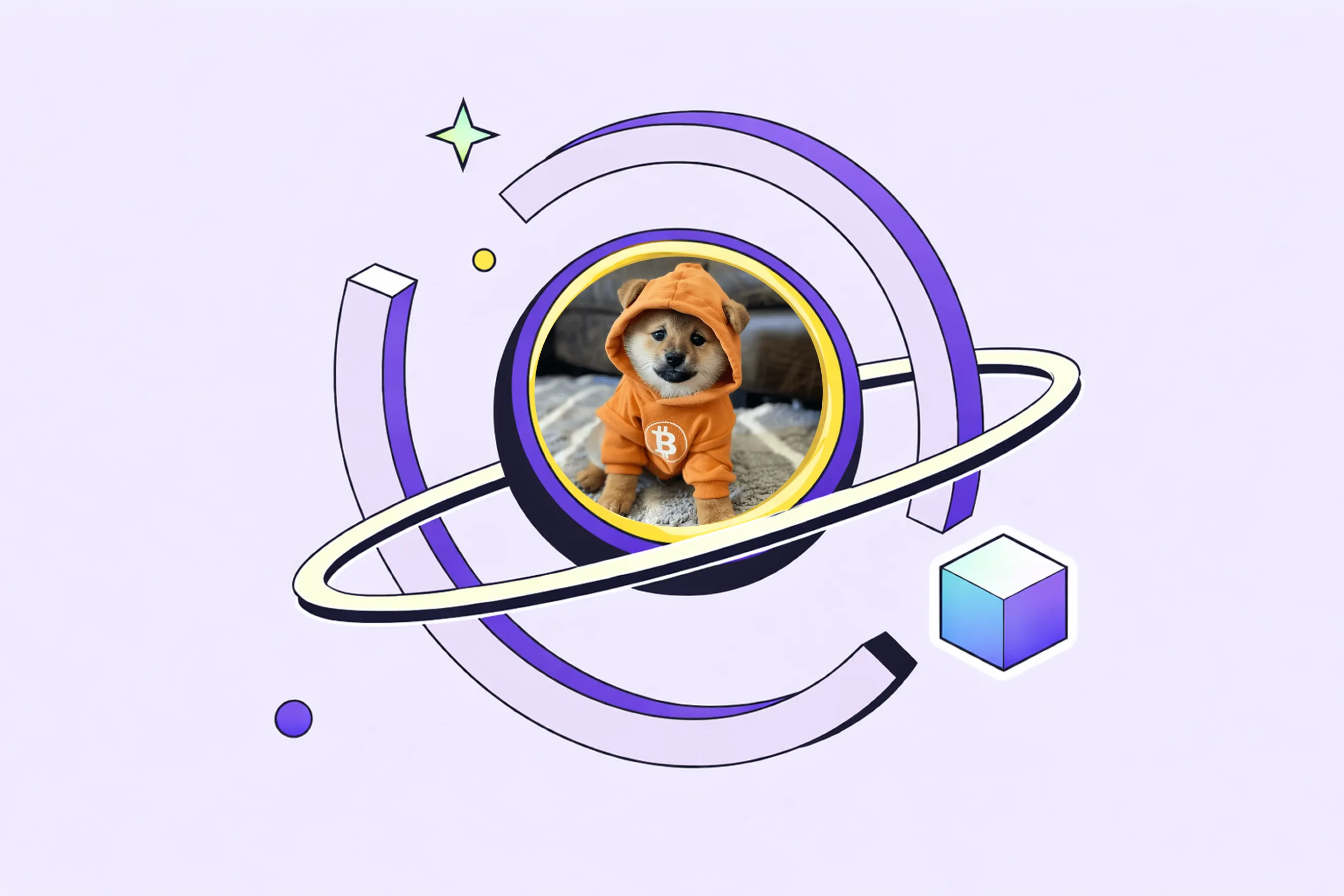
What is DOG•GO•TO•THE•MOON (DOG)?
DOG•GO•TO•THE•MOON (DOG), also branded as Dog (Bitcoin), is a community-driven meme coin built natively on Bitcoin through the Runes protocol. DOG originated from the Runestone Ordinals project and was distributed entirely through an airdrop rather than a presale, private investment round, or team allocation.
According to the official DOG website, the project combines meme-coin culture with Bitcoin's infrastructure and emphasizes free distribution, community ownership, decentralization, and a lack of privileged insider allocations.
DOG was etched during the launch of Bitcoin Runes in April 2024 and secured Rune #3. Its complete supply of 100 billion DOG was allocated to Runestone holders, with no tokens reserved for a team or presale.
The project traces its origins to Runestone, an Ordinals initiative led by Leonidas. More than 112,000 Runestones were originally distributed to qualifying early users of the Bitcoin Ordinals protocol. These Runestone holders subsequently became the recipients of DOG.
Unlike utility tokens designed around staking, governance, lending, or protocol fees, DOG was launched primarily as a Bitcoin-native community and meme asset. The CoinW DOG•GO•TO•THE•MOON Project Analysis explicitly listed no separate token utility at launch.
Quick Summary
Full name: DOG•GO•TO•THE•MOON.
Current branding: Dog (Bitcoin).
Ticker: DOG, also identified as DOG(RUNE) on CoinW.
Blockchain: Bitcoin.
Protocol: Bitcoin Runes.
Rune: Rune #3.
Launch: April 2024 alongside the early Runes ecosystem.
Origin: DOG was distributed to holders of Runestone Ordinal inscriptions.
Total supply: 100 billion DOG.
Circulating supply: the official DOG website reports the complete 100 billion supply as circulating.
Presale: none.
Team allocation: none.
Distribution: 100% of the supply was distributed through the Runestone community.
Original utility: CoinW's April 2024 analysis listed no specific token utility.
Core identity: a community-driven Bitcoin meme coin emphasizing fair distribution and Bitcoin-native culture.
Background & Entry Into Crypto
DOG's history begins with the development of Bitcoin Ordinals and the Runestone project.
Bitcoin Ordinals introduced a method for inscribing digital content onto individual satoshis, creating a new ecosystem of Bitcoin-native digital collectibles.
Runestone emerged from this ecosystem as a community-focused Ordinals project initiated by Leonidas, a prominent participant in the Bitcoin Ordinals community.
The Runestone distribution targeted early adopters of Ordinals. According to the official DOG website, qualifying addresses needed to have three inscriptions during the first 12 months of the Ordinals protocol.
More than 112,000 Runestone inscriptions were distributed, creating a large community before DOG itself existed.
The next major development came with Bitcoin Runes, a fungible-token protocol created for Bitcoin.
Runes launched at Bitcoin's 2024 halving, introducing a more Bitcoin-native mechanism for issuing fungible assets using Bitcoin's UTXO model.
DOG was etched during this early Runes period and secured the designation Rune #3.
A snapshot of Runestone holders was taken at Bitcoin block height 840,269. CoinW's April 25, 2024 analysis stated that each qualifying Runestone would receive approximately 889,806 DOG.
The distribution was automatic. Eligible users did not need to complete a separate claim process or pay a claiming fee.
Ultimately, the complete 100 billion DOG supply was distributed to the Runestone community.
This sequence is important to DOG's identity: the community existed before the fungible token, and the token was distributed to that pre-existing community rather than sold to investors.
Major Contributions & Impact
DOG's primary significance comes from combining Bitcoin Runes, Ordinals culture, meme-coin economics, and a community-first distribution model.
Runestone Community Distribution
Runestone provided the foundation for DOG's launch.
Instead of creating DOG and then attempting to attract a community, the project first established a large network of Runestone holders through the Ordinals ecosystem.
Those holders subsequently received DOG automatically.
This reversed the conventional sequence used by many cryptocurrency projects, where a token is created first and community-building begins afterward.
The model gave DOG an existing holder base from its earliest days as a transferable Rune.
Bitcoin Rune #3
DOG secured Rune #3 during the launch of the Bitcoin Runes protocol.
Runes provide a method for creating fungible tokens natively on Bitcoin. Unlike ERC-20 tokens, which operate through Ethereum smart contracts, Runes use Bitcoin's own UTXO-based transaction model.
DOG's early Rune number gives it a historical connection with the launch of this new category of Bitcoin-native fungible assets.
This distinguishes DOG from meme coins created on smart contract networks such as Ethereum or Solana.
100% Community Distribution
DOG's token distribution is one of its defining characteristics.
The official DOG website states that the project had no presale, no team allocation, no insider allocation, and no paid distribution to key opinion leaders.
The entire supply was distributed through the Runestone community.
CoinW's original project analysis likewise stated that the 100 billion DOG supply had no team allocation or presale and that 100% of the tokens were designated for Runestone holders.
This structure means DOG did not begin with a conventional venture-capital allocation or token sale.
No Claim Required
The DOG distribution was structured as a genuine airdrop rather than a claim-based campaign.
CoinW's project analysis specifically emphasized that qualifying holders did not need to visit a claiming website or pay a fee.
The tokens were sent automatically according to the Runestone snapshot.
This reduced the risk of users interacting with fraudulent claiming websites pretending to distribute DOG.
Bitcoin-Native Meme Coin
DOG helped demonstrate that meme-coin culture could develop directly on Bitcoin rather than being limited to smart contract networks.
The official project describes DOG as a community-driven meme coin combining the culture of meme assets with the security and recognition of Bitcoin.
Its emergence coincided with the growth of a wider Bitcoin-native asset ecosystem involving Ordinals, inscriptions, BRC-20 tokens, and Runes.
DOG became one of the most visible early examples of a Runes-based meme asset.
Community-Led Development
DOG emphasizes community rather than conventional corporate ownership.
The official project materials describe Leonidas as a key figure behind Runestone and DOG, while the broader DOG ecosystem is promoted through community contributors and the DOG Army.
The absence of a team token allocation reinforces this community-focused positioning.
However, community-driven development also means that DOG should not be evaluated like a conventional company with centralized management, corporate revenues, or a traditional product roadmap.
Influence on the Crypto Industry
DOG became an early demonstration of how meme-coin culture could migrate onto Bitcoin through the Runes protocol.
Before Runes, most high-profile meme coins operated on smart contract platforms such as Ethereum and Solana.
The emergence of Runes expanded Bitcoin's role as an asset-issuance environment, and DOG became one of the most visible community assets associated with that transition.
DOG's distribution also attracted attention because it avoided several mechanisms commonly criticized in cryptocurrency launches.
There was no presale giving early buyers preferential pricing, no separate team allocation, and no venture-capital round described in the supplied project materials.
Instead, ownership was distributed through the Runestone community.
The project therefore became an example of a meme coin whose cultural narrative centers not only on its mascot but also on its distribution structure.
DOG also illustrates the increasing overlap between Bitcoin Ordinals and fungible tokens. Runestone began as an Ordinals project, while DOG extended the same community into the Runes ecosystem.
Traders researching DOG can monitor crypto live prices to compare the asset with broader trends affecting Bitcoin, Runes, meme coins, and the cryptocurrency market.
Role
DOG primarily functions as a Bitcoin-native community and meme asset.
CoinW's April 2024 project analysis explicitly listed the token's utility as “None” at launch.
This distinction is important because DOG should not be described as a governance, staking, lending, or protocol-revenue token without evidence of such functionality.
Its role instead centers on community identity, Bitcoin-native meme culture, transferable ownership, market trading, and participation in the wider Runes ecosystem.
DOG's fair-distribution narrative is itself an important component of its role within the community. Every token originated from the Runestone distribution rather than a separate team or investor allocation.
| Bitcoin Meme Coin | Represents meme culture within the Bitcoin ecosystem |
| Runes Asset | Operates natively through the Bitcoin Runes protocol as Rune #3 |
| Community Asset | Connects the Runestone and DOG communities through shared ownership and culture |
| Value Transfer | Can be transferred between compatible Bitcoin Runes wallets |
| Trading | Can be traded through supported centralized and decentralized markets |
| Original Protocol Utility | None documented by CoinW at launch |
How DOG Works in Practice
DOG exists through Bitcoin Runes: it is a Bitcoin-native fungible asset rather than an ERC-20 or SPL token.
Runestone created the original community: more than 112,000 Runestones were distributed to qualifying Ordinals users.
A snapshot determined eligibility: Runestone holdings were recorded at Bitcoin block 840,269.
DOG was automatically distributed: eligible holders did not need to complete a separate claim process.
The full supply entered the community: all 100 billion DOG were allocated through the Runestone distribution.
No team allocation exists: the project states that no portion of the supply was reserved for a team or insiders.
Users can self-custody DOG: compatible Bitcoin wallets with Runes support can hold the asset.
DOG can be traded: holders can exchange DOG through markets supporting the Bitcoin Rune.
Notable Quotes
The official DOG website describes the project as “The #1 Meme Coin on Bitcoin.”
It also summarizes DOG as a “community-driven meme coin with a mission to go to the moon.”
The project's distribution philosophy is summarized by its description of DOG as “100% distributed free and fair.”
These statements capture the project's central identity: a Bitcoin-native meme coin whose narrative is built around community ownership and an absence of presale, team, and insider allocations.
Legacy, Net Worth, and Future Outlook
Legacy: DOG is closely associated with the launch period of Bitcoin Runes and the expansion of Bitcoin-native fungible assets.
Its Rune #3 designation gives it a historical connection with the earliest stage of the Runes ecosystem.
The project also connects two important Bitcoin-native trends: Ordinals and Runes. Runestone established the original holder community through Ordinal inscriptions, while DOG extended that community into a fungible Rune.
DOG's distribution remains another defining part of its history. The entire 100 billion-token supply was directed toward Runestone holders rather than divided between public users, investors, and a founding team.
Net worth: DOG is a decentralized community meme asset rather than a conventional company, so corporate net worth is not an appropriate valuation metric.
More relevant indicators include DOG's market capitalization, liquidity, trading volume, number of holders, exchange availability, Bitcoin Runes activity, and community participation.
These figures can change rapidly and should be evaluated using current market and blockchain information.
Future outlook: DOG's future is closely tied to its ability to maintain cultural relevance and community activity while the wider Bitcoin asset ecosystem develops.
Unlike a utility token whose demand can potentially be connected with protocol fees or staking requirements, DOG's original project documentation does not establish comparable protocol utility.
Its long-term demand may therefore depend more heavily on community strength, meme-coin sentiment, Bitcoin adoption, Runes infrastructure, exchange availability, liquidity, integrations, and the cultural relevance of the DOG and Runestone ecosystems.
Key Aspects of DOG’s Tokenomics
DOG has particularly simple tokenomics compared with projects using complex vesting schedules, staking emissions, private funding rounds, or team allocations.
The total supply is 100,000,000,000 DOG.
The official DOG website also reports a circulating supply of 100 billion DOG, meaning the entire supply is considered distributed.
CoinW's April 2024 analysis confirms that the token had no team allocation and no presale and that 100% of DOG was allocated to Runestone holders.
| Full Name | DOG•GO•TO•THE•MOON |
| Current Branding | Dog (Bitcoin) |
| Blockchain | Bitcoin |
| Protocol | Runes |
| Rune Number | Rune #3 |
| Total Supply | 100,000,000,000 DOG |
| Officially Reported Circulating Supply | 100,000,000,000 DOG |
| Community Distribution | 100% |
| Team Allocation | 0% |
| Presale | None |
| Original Token Utility | None documented by CoinW |
DOG Total Supply
The complete DOG supply consists of 100 billion tokens.
The official project website reports both total supply and circulating supply as 100 billion DOG.
This means DOG does not have a conventional vesting schedule where substantial team or investor allocations are scheduled to unlock progressively.
The absence of future team unlocks reduces one category of dilution risk, although it does not eliminate market risks associated with existing holders selling their tokens.
DOG Runestone Airdrop
The DOG supply was distributed through the Runestone community.
CoinW's April 2024 analysis states that a snapshot was taken at Bitcoin block height 840,269.
Each qualifying Runestone was allocated approximately 889,806 DOG under the distribution described by CoinW.
Holding multiple Runestones at one address did not prevent users from receiving the corresponding allocation for each qualifying Runestone.
No separate claiming process was required because the distribution was sent directly to eligible holders.
No Presale or Team Allocation
DOG's supply structure did not include a conventional presale.
The official project website states that there was also no team allocation and no insider allocation.
CoinW's project analysis independently describes the tokenomics in the same way, stating that neither Runestone nor DOG had team allocations or presales and that 100% of DOG was intended for Runestone holders.
This distribution model is a major part of DOG's fair-launch narrative.
DOG and Bitcoin Runes
DOG is not a conventional smart contract token.
It exists through the Bitcoin Runes protocol, which represents fungible token balances using Bitcoin's UTXO model.
DOG's identifier is associated with Rune #3, linking it directly with the earliest stage of Runes issuance.
Because DOG is Bitcoin-native, users should use wallets, exchanges, and infrastructure that explicitly support Bitcoin Runes rather than assuming compatibility with ordinary Ethereum or other smart contract wallets.
What Are DOG’s Main Use Cases?
Community participation: DOG acts as a shared asset for the DOG and Runestone communities.
Bitcoin meme culture: DOG represents meme-coin activity within the Bitcoin ecosystem.
Runes participation: DOG provides exposure to one of the earliest fungible assets created through the Bitcoin Runes protocol.
Value transfer: DOG can be transferred between compatible Bitcoin Runes wallets.
Self-custody: users can hold DOG directly using compatible Bitcoin wallets rather than relying exclusively on centralized platforms.
Collective identity: DOG functions as a cultural asset associated with the Runestone community and DOG Army.
Market speculation: traders can gain exposure to DOG's price movements and the broader Bitcoin meme-coin sector.
Trading: DOG can be bought and sold through supported cryptocurrency markets.
These community and market uses should be distinguished from formal protocol utility. CoinW's original project analysis explicitly listed no token utility for DOG at launch.
What Are the Risks and Ethical Concerns of DOG?
Meme-coin volatility: DOG can experience rapid and substantial price movements driven by sentiment, attention, and speculation.
Limited protocol utility: CoinW's original analysis listed no specific token utility, meaning demand may depend heavily on community and market interest.
Community dependence: DOG's relevance is strongly connected with continued participation by the DOG, Runestone, Bitcoin Ordinals, and Runes communities.
Liquidity risk: market depth can vary significantly between trading venues and over time.
Holder concentration: a fair initial distribution does not guarantee that ownership remains evenly distributed after secondary-market trading.
Runes infrastructure risk: users depend on compatible wallets, marketplaces, indexers, and exchanges correctly interpreting Bitcoin Runes balances and transactions.
User-error risk: sending DOG through unsupported infrastructure or misunderstanding Bitcoin UTXOs can result in asset loss.
Impersonation risk: popular meme coins can attract counterfeit tokens, fake websites, fraudulent airdrops, and phishing campaigns.
No team allocation does not eliminate risk: fair-launch tokenomics do not guarantee future development, adoption, liquidity, or price appreciation.
Competition: DOG competes for attention with other Bitcoin Runes, Bitcoin-native assets, and thousands of meme coins across multiple blockchains.
Regulatory risk: cryptocurrency trading and meme assets may face changing regulatory treatment across jurisdictions.
How to Get Started with DOG
Research the relationship between Runestone, Bitcoin Ordinals, the Runes protocol, and DOG before acquiring the asset.
Review the DOG(RUNE) price page on CoinW for information about the asset and its market.
Understand that DOG is a Bitcoin Rune rather than an ERC-20, SPL, or conventional smart contract token.
If using self-custody, select a Bitcoin wallet that explicitly supports Runes and learn how the wallet manages Bitcoin UTXOs.
Verify that any DOG asset you interact with corresponds to the authentic DOG•GO•TO•THE•MOON Rune rather than an unrelated token using a similar ticker.
Trade DOG through DOG(RUNE)/USDT on CoinW Spot.
Before withdrawing DOG, confirm that the receiving wallet or platform supports Bitcoin Runes and verify all deposit requirements.
Monitor DOG liquidity, trading volume, holder activity, Runes adoption, Bitcoin ecosystem development, community participation, and broader meme-coin sentiment.
FAQs
What is DOG•GO•TO•THE•MOON?
DOG•GO•TO•THE•MOON, also branded as Dog (Bitcoin), is a community-driven Bitcoin meme coin created through the Runes protocol and distributed to holders of Runestone Ordinal inscriptions.
What is DOG(RUNE)?
DOG(RUNE) is the CoinW ticker designation for DOG•GO•TO•THE•MOON, helping distinguish the Bitcoin Rune asset from other cryptocurrencies using DOG as a ticker.
Is DOG built on Bitcoin?
Yes. DOG is a Bitcoin-native fungible asset created through the Runes protocol.
What Rune number is DOG?
DOG•GO•TO•THE•MOON is Rune #3, giving it a historical connection with the early launch of Bitcoin Runes.
What is Runestone?
Runestone is an Ordinals project initiated by Leonidas that distributed more than 112,000 inscriptions to qualifying early Ordinals participants. Runestone holders later received the entire DOG token supply.
How was DOG distributed?
A snapshot of Runestone holders was taken at Bitcoin block 840,269. Eligible holders subsequently received DOG automatically without needing to complete a separate claiming transaction.
How much DOG did each Runestone receive?
CoinW's April 2024 project analysis stated that each qualifying Runestone would receive approximately 889,806 DOG.
What is DOG's total supply?
DOG has a total supply of 100 billion tokens.
Is the full DOG supply circulating?
The official DOG website reports both total supply and circulating supply as 100 billion DOG and states that the token was 100% distributed.
Did DOG have a presale?
No. Both the official DOG website and CoinW's project analysis state that DOG had no presale.
Does DOG have a team allocation?
No. The project states that no DOG supply was reserved as a team allocation.
What is DOG used for?
DOG primarily functions as a Bitcoin-native meme and community asset that can be held, transferred, and traded. CoinW's original April 2024 analysis listed no formal protocol utility for the token.
What drives DOG's value?
Potential factors include community growth, Bitcoin and Runes adoption, meme-coin sentiment, liquidity, exchange availability, cultural relevance, holder activity, and broader cryptocurrency-market conditions.
Where can I trade DOG?
DOG can be traded through the DOG(RUNE)/USDT spot market on CoinW.
Conclusion
DOG•GO•TO•THE•MOON is a community-driven Bitcoin meme coin whose history connects the Ordinals and Runes ecosystems.
The project originated from Runestone, which distributed more than 112,000 Ordinal inscriptions to early participants in the Bitcoin Ordinals ecosystem.
When Bitcoin Runes launched in April 2024, DOG secured Rune #3 and the entire 100 billion-token supply was distributed to the Runestone community.
DOG's tokenomics are unusually straightforward: 100 billion total tokens, no presale, no team allocation, and a distribution model that placed the complete supply into the community.
The official DOG website reports the full 100 billion-token supply as circulating.
DOG should nevertheless be distinguished from tokens built around governance, staking, or protocol revenue. CoinW's original project analysis explicitly documented no formal token utility at launch.
Its value proposition instead centers on Bitcoin-native meme culture, community participation, historical significance within Runes, fair-distribution principles, and continued growth of the DOG and Runestone communities.
DOG's long-term relevance will therefore depend heavily on community strength, liquidity, exchange support, Bitcoin Runes adoption, cultural relevance, and the broader development of Bitcoin-native digital assets.
References / Sources
You May Also Like
What Is DIA (DIA)? Blockchain Oracle Network and Token Guide
Discover how DIA uses Lumina and Lasernet to deliver verifiable blockchain oracle data, plus its token utility, staking, tokenomics, and risks.
What Is Dextrust (DETS)? Tokenomics, Governance and Uses
Discover Dextrust (DETS), an Ethereum-based governance token designed for decentralized trading, DAO voting, liquidity, and staking. Explore its tokenomics, use cases, and risks.
What Is Dego Finance (DEGO)? Tokenomics, Staking & Use Cases
Discover Dego Finance (DEGO), a modular DeFi ecosystem. Explore its governance token, staking, liquidity, tokenomics, use cases, and risks.