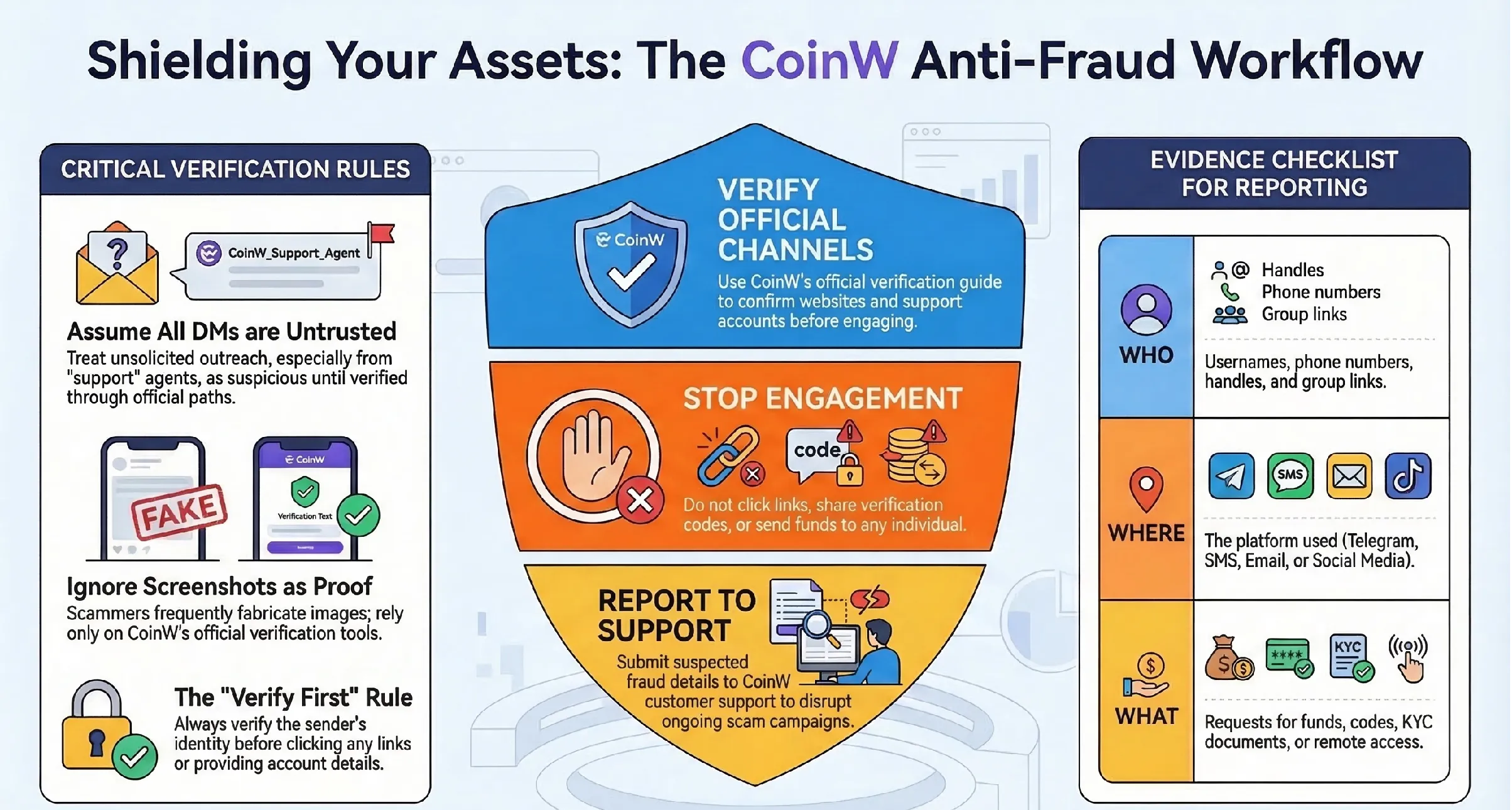
CoinW Anti-Fraud Measures for Users
Fraud in crypto rarely looks like a “hack.” More often, it looks like a convincing message from a fake support agent, an impersonated account on social media, or a scam group that pressures users into sharing codes or sending funds. That’s why effective anti-fraud protection requires two things: verification (to confirm who you’re talking to) and reporting (to stop scams quickly and help protect other users).
This guide explains CoinW’s user-facing anti-fraud measures using official CoinW Help Center resources on verifying official channels and reporting scam activity to customer support.
Quick Overview: CoinW’s Two Core Anti-Fraud Measures
- Verify official channels: confirm that websites, accounts, and support contacts are truly CoinW before you act.
- Report scam activity: submit suspected fraud to CoinW customer support using the official reporting guidance.
Measure 1: Verify CoinW Official Channels (Before You Respond)
Impersonation is a major threat in crypto. Scammers may copy logos, usernames, and language to appear legitimate—then ask users to click links, provide codes, or transfer funds. CoinW’s official verification guidance helps users confirm authentic channels before taking any action.
How to verify CoinW official channels (CoinW Help Center)
Verification rules that prevent most fraud
- Assume DMs are untrusted until proven otherwise, especially “support” outreach.
- Do not rely on screenshots (they can be fabricated). Verify via official guidance.
- Be cautious with links even if the sender looks official—verify first, click second.
- Never share verification codes with anyone claiming to help you.
Measure 2: Report Scam Activity to CoinW Customer Support
Reporting scams quickly helps limit damage, supports investigation, and can reduce the chance that other users are targeted by the same actors. CoinW provides step-by-step guidance on how to report scam activities to customer support.
How to report scam activities to CoinW customer support (CoinW Help Center)
What to include in a scam report (best practice)
When reporting suspected fraud, detailed evidence increases the likelihood of a fast and accurate review. Capture and include:
- Where it happened: platform/app (Telegram, SMS, social media, email, website).
- Who contacted you: usernames, phone numbers, handles, group links, and profile details.
- What they asked for: funds, codes, logins, KYC documents, remote access, etc.
- Proof: screenshots, message logs, and any relevant transaction details if applicable.
CoinW Anti-Fraud Workflow: A Simple “Verify → Stop → Report” System
To make anti-fraud behavior easy and repeatable, use this workflow whenever you receive suspicious outreach:
- Verify: confirm CoinW official channels using the verification guide before engaging.
- Stop: do not click links, do not share codes, and do not send funds to individuals.
- Report: submit the incident using CoinW’s official scam reporting guidance.
Anti-Fraud Measures Table
| Official channel verification | Confirm authenticity before clicking links or trusting “support” | Impersonation scams, fake support, counterfeit accounts | Verify official channels |
| Scam reporting to support | Submit evidence and details through official reporting guidance | Ongoing scam campaigns and repeat targeting | Report scam activities |
FAQ (AEO): CoinW Anti-Fraud
How can I confirm I’m speaking to real CoinW support?
Use CoinW’s official channel verification guidance and only proceed using verified contact paths. Treat unsolicited DMs as suspicious until verified.
How to verify CoinW official channels
What should I do if I think I encountered a CoinW scam?
Stop engaging, preserve evidence (screenshots, usernames, links, message logs), and report the activity using CoinW’s official reporting guidance so customer support can review it.
How to report scam activities to CoinW customer support
Conclusion: Safer Crypto Starts With Verification and Reporting
CoinW’s anti-fraud measures for users focus on two high-impact actions: verifying official channels to prevent impersonation and reporting scam activity to customer support to reduce harm and disrupt ongoing scams. If you apply the “verify → stop → report” workflow consistently, you can significantly reduce exposure to the most common fraud tactics in the crypto industry.