Get Started in 3 Steps: A Complete Beginner's Guide to Reverse Copy Trading
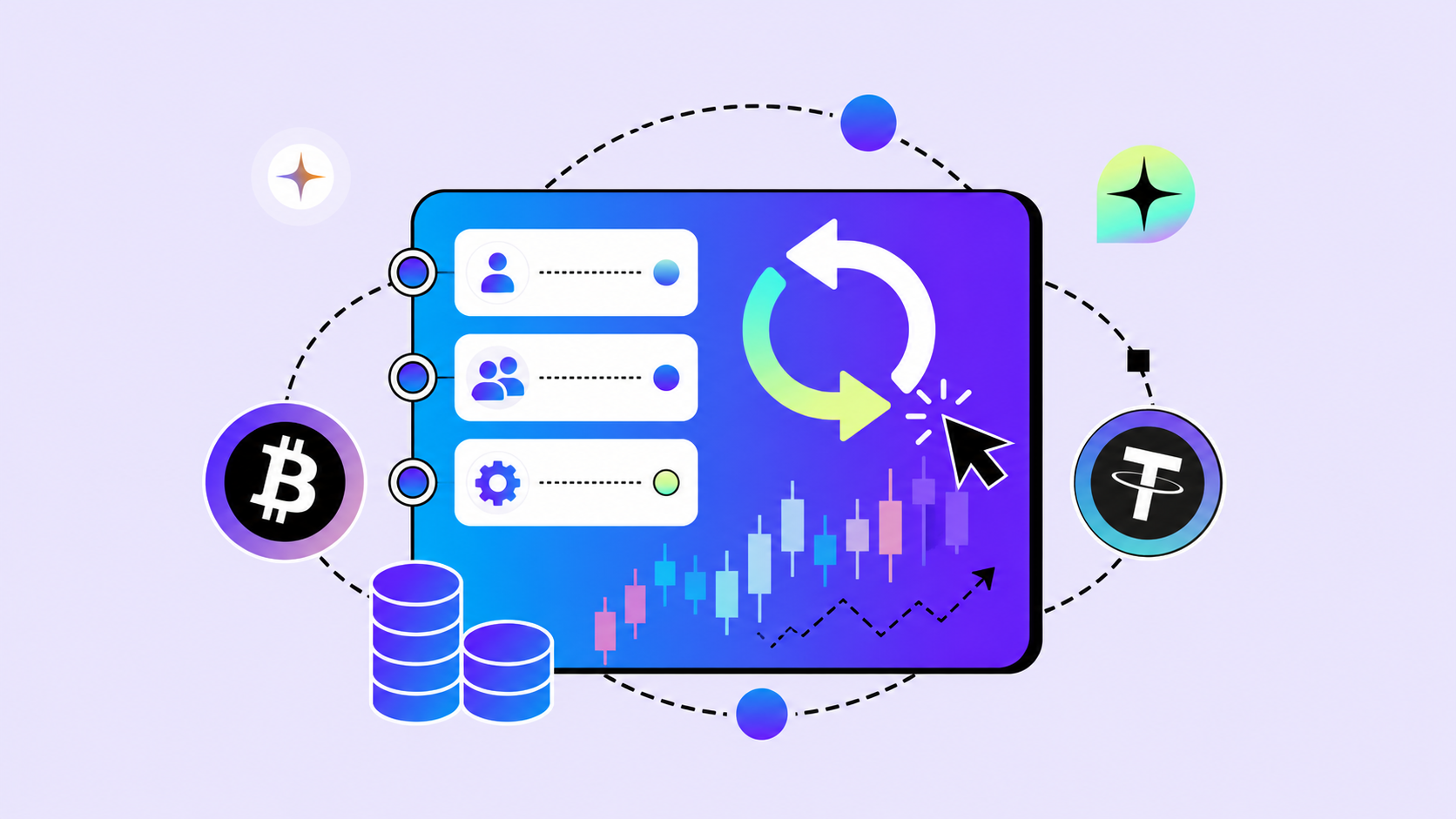
What Is Reverse Copy Trading?
When they go long, you go short. When they go short, you go long. Instead of following profitable traders, you're taking the opposite side of traders with a long track record of losing money.
Smart Money Copy Trading tracks experienced on-chain traders (often called whales) and automatically mirrors their trades. Reverse Copy Trading works the opposite way — the system tracks selected traders with a history of poor performance, and when they go long, you automatically go short.
Get Started in 3 Easy Steps
Step 1: Find On-Chain Smart Money Copy Trading
Go to the CoinW website or app. Click Copy Trading in the top navigation menu and select On-Chain Smart Money. This takes you to the Smart Money Copy Trading homepage.
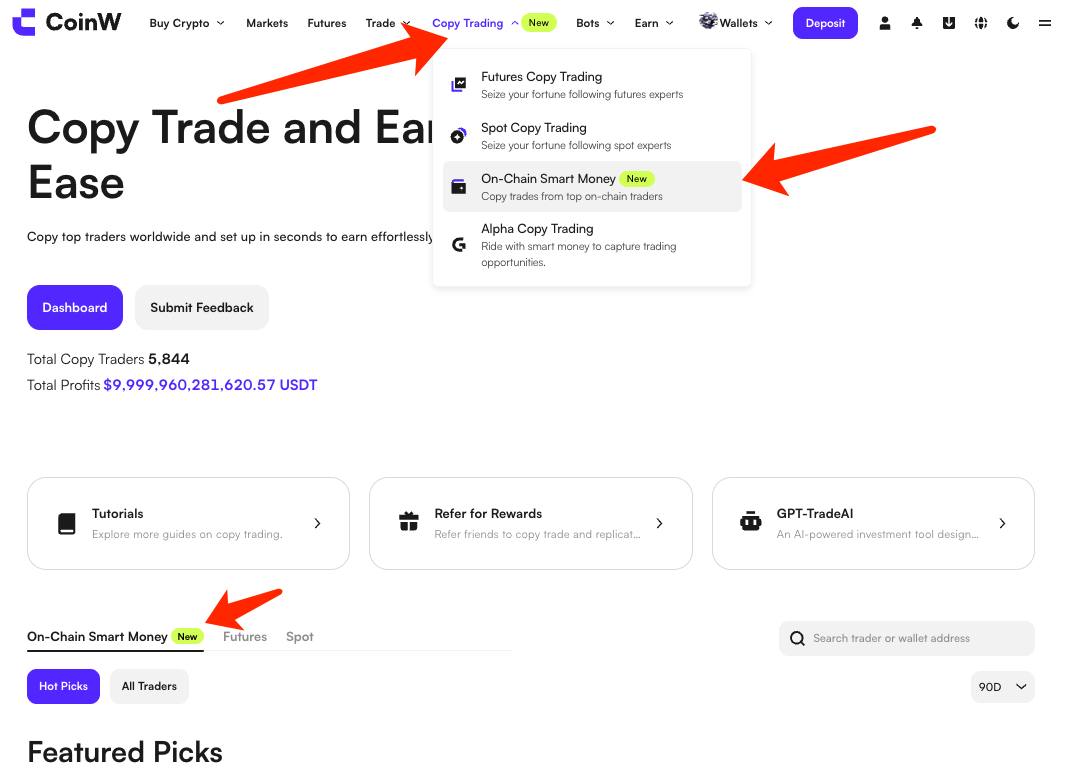
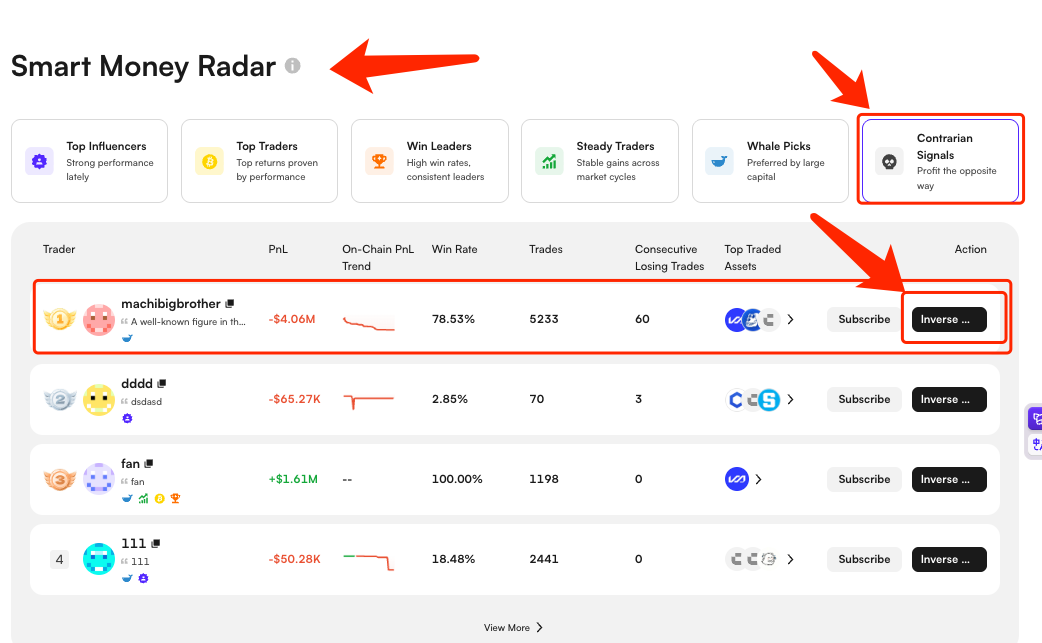
Step 2: Select a reverse signal provider from Smart Money Radar
On the Smart Money Copy Trading homepage, scroll down to the Smart Money Radar module. Tap the Contrarian Signals tab on the right side. The system will display a list of reverse signal providers — addresses with persistent losses and low win rates. Review each address's win rate, cumulative losses, and liquidation count. Select the address you want to reverse-follow and tap Reverse Copy Trade.
Step 3: Set your parameters and confirm
On the copy settings page, fill in the following parameters:
Copy Trading Capital: The total amount you want to allocate to this reverse copy trade. Minimum 20 USDT.
Margin per Order: The margin used for each position the system opens automatically. Minimum 2 USDT per order.
Reverse Copy Trading toggle: Enabled by default. Confirm it shows as active (blue).
Margin Type: Options include "Reference trader" (follows the signal provider's margin mode), "Cross," or "Isolated." Beginners are recommended to select "Reference trader."
Leverage: Options include "Reference trader" or "Fixed Leverage." Beginners are recommended to select "Reference trader" — do not manually increase leverage.
Slippage: The acceptable price deviation percentage when opening positions. The default of 0.5% is appropriate for most users.
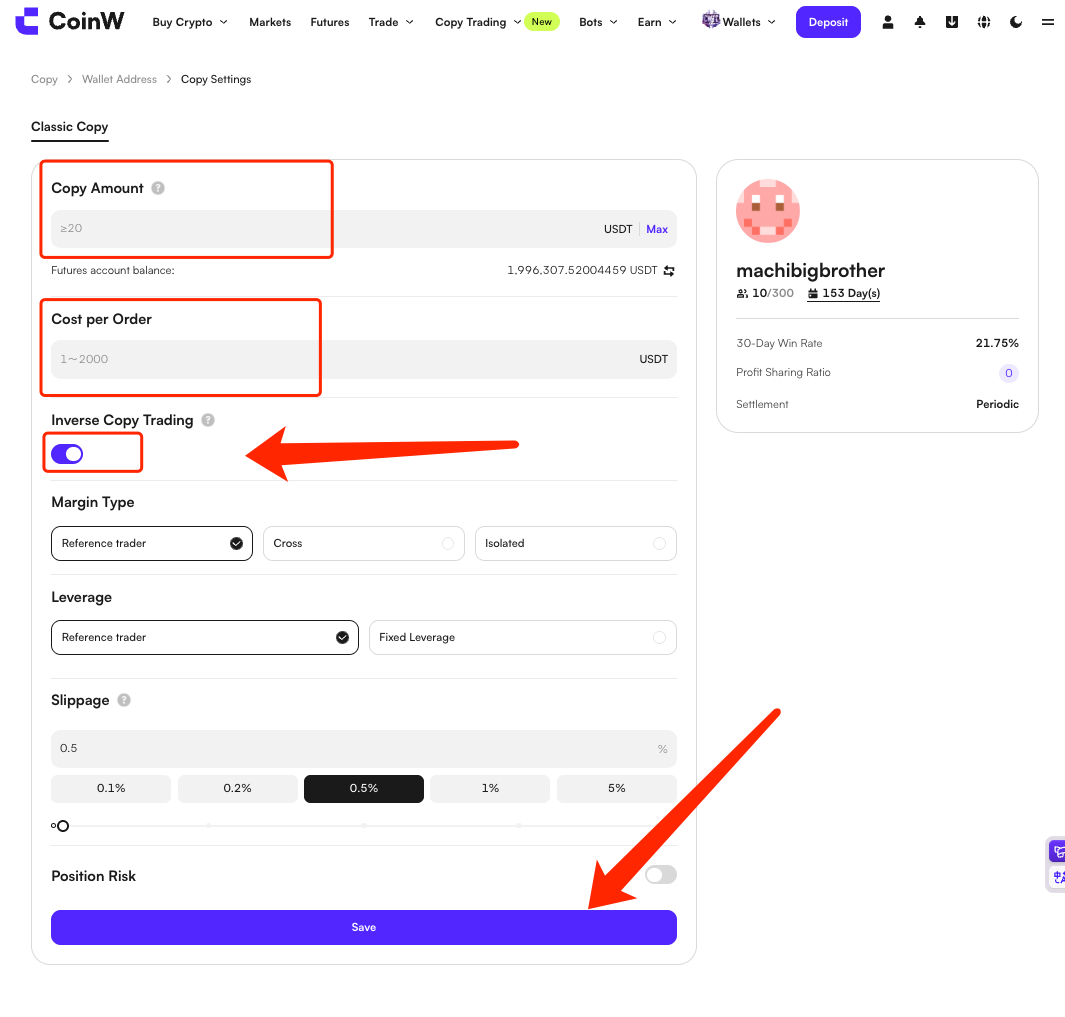
After confirming all parameters, tap Save. Reverse copy trading is now active. The system will automatically monitor every trade made by the signal provider and execute the opposite direction.
Reverse Copy Trading operates independently from standard copy trading — it will not affect your existing copy trading settings.
Available Reverse Signal Providers
The platform has launched multiple reverse signal providers, with data updated in real time:
Machi Big Brother — 25x ETH Long Trader, 78M USDT cumulative losses, 335+ liquidations
James Wynn — 40x BTC Trader, account balance declined from 100M USDT to 900 USDT
Qwatio — Frequent 50x Short Trader, cumulative losses exceeding 10M USDT
Aguila Trades — Cumulative losses exceeding 10M USDT
Additional reverse signal providers will be added regularly.
Frequently Asked Questions (FAQ)
What's the minimum amount required to start?
You can start copy trading for as little as 20 USDT. The minimum margin per position is only 2 USDT. A small amount is enough to experience how reverse copy trading works.
Do I need to watch the market or place orders manually?
No. The system automatically monitors every trade made by your selected signal provider. They open a long → you open a short. They open a short → you open a long. Everything is executed automatically based on your settings. Once it's enabled, the system does the work for you.
Can Reverse Copy Trading actually make money?
No strategy guarantees profits. However, the idea behind reverse copy trading is simple: some traders consistently make poor decisions, use excessive leverage, or repeatedly get liquidated. For example, Machi Big Brother reportedly lost more than $78 million through a series of highly leveraged ETH long positions. When you reverse-follow — he goes long, you go short — and ETH falls. He gets liquidated while your short position generates a profit. The position sizes may differ, but the directional logic remains the same.
What happens if the signal provider starts making money?
Then your reverse position may lose money. Reverse Copy Trading is not a guaranteed-profit strategy. Its effectiveness depends on whether the signal provider continues to make poor trading decisions over time. To help maintain signal quality, CoinW continuously evaluates signal providers. Providers that become inactive or no longer meet the platform's selection criteria may be removed from the reverse trading pool and replaced with new candidates.
Is there a profit limit?
No. There is no fixed profit cap for reverse copy trading. Potential returns depend on market conditions, position sizing, leverage settings, and the performance of the signal provider. As with any trading strategy, profits and losses can both occur, and past performance does not guarantee future results.
Can I use Reverse Copy Trading and standard copy trading at the same time?
Yes. Reverse Copy Trading can be managed independently from standard copy trading without affecting your existing copy trading settings.
Is the data trustworthy?
All reverse signal providers' trading data comes from on-chain derivatives platforms like Hyperliquid. Every transaction is recorded immutably on-chain and cannot be altered. Key metrics such as win rate, cumulative losses, and liquidation history are publicly displayed and independently verifiable by any user.
Risk Warning
Reverse Copy Trading is a high-risk feature. Losses incurred by a signal provider do not guarantee profits from reverse trading.
Actual results may differ due to factors such as position sizing calculations and funding fees. Historical performance does not guarantee future results.
Please carefully assess your risk tolerance before participating.
Go to Smart Money Copy Trading and start Reverse Copy Trading →
We don't just bring you the latest in crypto — we're committed to building a professional, systematic crypto education for every learner. Join CoinW Academy and learn alongside our top researchers.
You May Also Like

What Is AMLR? EU Anti-Money Laundering Rules for Crypto Explained
Learn what the EU Anti-Money Laundering Regulation (AMLR) means for crypto, including KYC, CASPs, self-hosted wallets, anonymous accounts, and compliance.
What Is DAC8? EU Crypto Tax Reporting Rules Explained
Learn how DAC8 affects crypto users and service providers, including EU tax reporting, transaction data, RCASPs, MiCA, and the rules applying from 2026.

CoinW Beginner's Guide: From Registration to Your First Trade, All in One Place
Using CoinW for the first time and not sure where to start? This article helps you understand what each entry point on the website is for and which one to click when you run into a problem, and strings the six key steps—registration → identity verification → deposit → buy crypto → trade → withdraw—into one clear path to getting started.