Using On-Chain Smart Money to Build Your Trading System
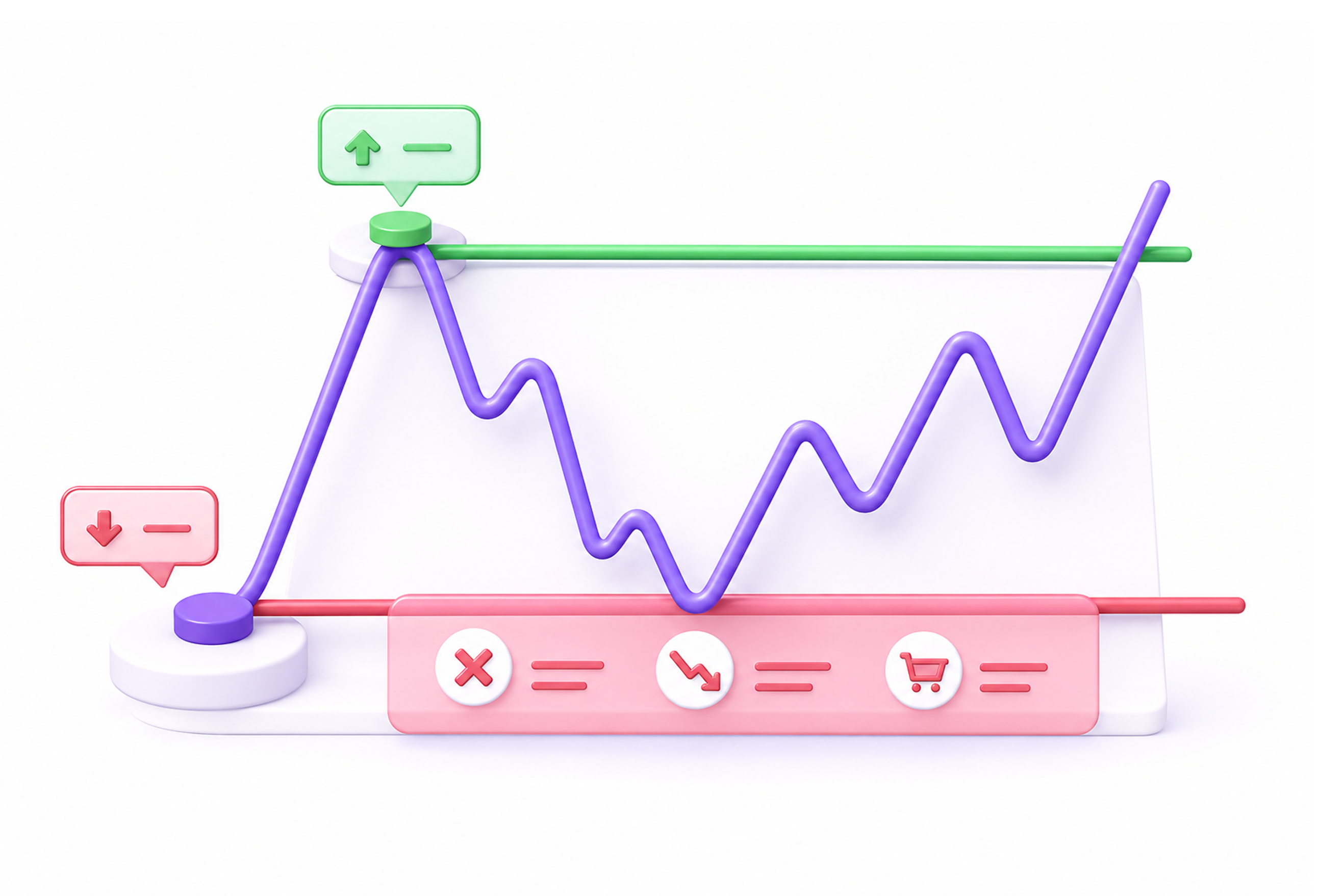
Using On-Chain Smart Money to Build Your Own Trading System
A smart money trading system is not about blindly copying every wallet that looks profitable. It is about using on-chain smart money data to build a repeatable process for finding signals, filtering risk, managing entries, and reviewing results over time.
In crypto, public blockchain data allows traders to observe wallet behavior, token accumulation, stablecoin movement, exchange flows, and ecosystem activity. Instead of reacting only to social media narratives, traders can learn from smart money by studying how experienced wallets behave before, during, and after market moves.
This guide explains how to build trading system with smart money data, how to design a practical smart money strategy, and how long-term copy can support learning without replacing personal risk management.
Quick Summary
A smart money trading system turns wallet data into structured trading rules.
Strong systems combine smart money signals, liquidity filters, market context, and risk controls.
Traders should learn from smart money instead of blindly copying every wallet movement.
Trading system optimization depends on reviewing results, reducing emotional decisions, and improving rules over time.
What Is a Smart Money Trading System?
A smart money trading system is a rules-based framework that uses on-chain data to identify potential market opportunities. The system may track high-quality wallets, accumulation patterns, stablecoin deployment, token flows, exchange transfers, and ecosystem growth.
The goal is not to predict every move perfectly. The goal is to create a repeatable decision process. Good systems help traders avoid emotional entries, random signals, oversized positions, and late-stage hype.
For example, instead of buying a token simply because one whale bought it, a trader may require several conditions: multiple quality wallets accumulating, improving liquidity, positive ecosystem data, and a clear exit plan.
Why Build a Trading System With Smart Money?
Retail traders often lose consistency because they react to noise. They may enter after social media hype, chase price pumps, ignore exits, or change strategy too often. A smart money strategy helps turn scattered information into a clear process.
On-chain smart money data can help traders answer practical questions:
Which wallets are worth studying?
Which tokens are being accumulated?
Is buying early or already crowded?
Is liquidity strong enough for safe entry and exit?
Are smart wallets holding, adding, or distributing?
The Core Components of a Smart Money Strategy
A smart money strategy should include signal rules, confirmation rules, risk rules, and review rules. Without these components, traders may still fall into emotional copy trading.
| Wallet Filter
|
Identify which wallets are worth tracking.
|
Track only wallets with repeated successful entries and disciplined exits.
|
| Signal Filter
|
Separate meaningful activity from random transactions.
|
Require repeated accumulation, not one isolated buy.
|
| Market Filter
|
Confirm whether broader conditions support the trade.
|
Check liquidity, volatility, price trend, and ecosystem activity.
|
| Risk Rule
|
Prevent one bad trade from causing major damage.
|
Limit exposure per copied idea and define exits before entry.
|
| Review Rule
|
Improve the system over time.
|
Review all trades weekly and compare outcomes with original signals.
|
Step 1: Build a Wallet Watchlist
The first step is identifying wallets worth studying. A strong wallet watchlist should not be based only on wallet size. It should focus on behavior quality.
Useful wallet traits may include early entries, consistent strategy, realized profit, controlled drawdowns, and clear exit discipline. A wallet that made one large winning trade is not necessarily smart money. A wallet that repeatedly makes strong decisions is more useful for smart money strategy learning.
Wallet Watchlist Criteria
Consistency: the wallet shows repeated good decisions across different trades.
Timing: the wallet often enters before public hype accelerates.
Exit behavior: the wallet reduces risk before sentiment reverses.
Strategy focus: the wallet appears to specialize in specific sectors or market types.
Step 2: Define Smart Money Signals
After building a wallet watchlist, traders need clear signal rules. Not every wallet transaction should become a trade. A strong signal usually requires repeated activity and confirmation from other data.
Common smart money signals include:
Accumulation: quality wallets gradually increase exposure to a token.
Distribution: quality wallets reduce exposure during strong demand.
Stablecoin deployment: capital moves from stablecoins into risk assets.
Exchange flows: deposits and withdrawals may indicate potential selling or holding behavior.
Protocol interaction: wallets interact early with new DeFi protocols or ecosystems.
Step 3: Add Liquidity and Ecosystem Filters
Even strong smart money signals can fail if liquidity is poor or the market context is weak. This is why a smart money trading system should include market filters.
Liquidity filters help traders avoid tokens that are difficult to enter or exit. Ecosystem filters help confirm whether the token’s broader environment is improving.
For example, if smart wallets are accumulating a token while its ecosystem shows rising activity, improving liquidity, and stronger user demand, the signal may be more meaningful than a single wallet buy in an inactive market.
Step 4: Connect Signals to Execution Rules
A trading system must define what happens after a signal appears. This includes entry rules, position sizing, stop conditions, take-profit logic, and review timing.
Users can monitor crypto live prices alongside smart money data to compare wallet activity with current market movement.
Large-cap assets such as Bitcoin, Ethereum, and USDT can also help traders understand broader liquidity conditions before acting on smaller market signals.
Step 5: Use Long-Term Copy as a Learning Tool
Long-term copy does not mean blindly following a trader forever. It means observing experienced traders over time to learn how they handle entries, exits, losses, position sizing, and changing market conditions.
Copy trading can support learning when users treat it as a structured observation process. The goal is to understand why a trader acts, not only what the trader buys or sells.
Beginners should avoid copying too many strategies at once. A better approach is to follow fewer strategies, review outcomes carefully, and gradually refine personal rules.
How CoinW Users Can Apply a Smart Money System
CoinW users can use smart money data as one layer of market research before entering trades. A practical workflow may include identifying smart money signals, checking live market prices, evaluating liquidity, and deciding whether a trade fits personal risk limits.
Instead of treating copy trading as a shortcut, users can use it as part of trading system optimization. This means reviewing trader performance, comparing copied trades with market context, and adjusting risk settings over time.
Example Smart Money Trading System
| Discovery
|
Track only wallets with repeated strong behavior.
|
Avoid random whale copying.
|
| Signal
|
Require multiple accumulation events or wallet confirmation.
|
Reduce false signals.
|
| Confirmation
|
Check liquidity, volume, and ecosystem activity.
|
Confirm that the signal has market support.
|
| Execution
|
Use controlled position sizing and defined exits.
|
Protect capital from oversized losses.
|
| Review
|
Track results and adjust rules after enough data.
|
Improve the system over time.
|
Common Mistakes When Building a Smart Money Strategy
Copying without rules: a system needs clear entry, exit, and risk criteria.
Tracking too many wallets: too much data can create confusion instead of clarity.
Ignoring liquidity: a strong signal can still fail if the market cannot support execution.
Focusing only on buys: exits and distribution signals are just as important.
Changing rules too quickly: systems need enough data before optimization.
FAQs
What is a smart money trading system?
A smart money trading system is a rules-based process that uses on-chain wallet data, accumulation signals, liquidity filters, and risk controls to support trading decisions.
How can I build trading system with smart money?
You can build one by selecting quality wallets, defining smart money signals, adding market filters, setting risk rules, and reviewing results over time.
What is a smart money strategy?
A smart money strategy uses wallet behavior and on-chain data to identify potential opportunities while applying structured risk management.
Can beginners learn from smart money?
Yes. Beginners can learn from smart money by studying how experienced wallets enter, exit, manage risk, and respond to changing market conditions.
Is long-term copy useful?
Long-term copy can be useful as a learning tool when users review trader behavior carefully, manage position size, and avoid blind imitation.
Conclusion
Using on-chain smart money to build a trading system is about structure, not shortcuts. The strongest traders do not simply copy every wallet movement. They define rules, filter signals, manage risk, and review performance over time.
A smart money trading system can help users move from emotional trading to a more disciplined process. By combining wallet analysis, market context, liquidity filters, and long-term strategy learning, traders can use smart money data as a foundation for better decision-making.
References / Sources
CoinW Academy: Follow Me! A Practical Manual for Copying Smart Money On-Chain
Nansen: How to Monitor Wallet Activity and Track Smart Money in Crypto
Nansen: How to Track Smart Money Crypto Accumulation
Nansen: Who Counts as Smart Money in Crypto?
-
-
Chainalysis: On-Chain User Segmentation Guide
Investopedia: Trading Strategy
-
You May Also Like

CoinW Smart Money: Using Three Core Modules to Make Reverse Copy Trading a Data-Driven Decision
The logic behind reverse copy trading is sound, but its execution depends on identifying truly 'stable and predictable' loss signal sources. This is precisely the step that is most difficult for ordinary users to complete independently. CoinW Smart Money Copy Trading transforms this step into a one-click operation through the collaborative operation of three core modules—not by eliminating risk, but by systematically lowering the threshold for filtering on-chain data, making decisions evidence-based.
From Platform Leaderboards to On-Chain Addresses: The Fundamental Difference Between Two Types of Copy Trading Signals
In copy trading, the signal source determines everything. KOLs on traditional CEX copy trading leaderboards know people are following them — that single fact creates an irresolvable conflict of interest. Trading addresses on on-chain derivatives platforms like Hyperliquid operate under entirely different conditions: anonymous traders compete with real capital, their performance is recorded immutably on-chain, and they have no idea who is tracking them — no audience, no incentive to perform. CoinW Smart Money copy trading connects these on-chain addresses to a CEX account, letting users follow real track records rather than curated personas, without ever touching a wallet.

In 2026, Understand On-Chain Smart Money to Let AI Pick Better Coins
Learn how on-chain smart money improves AI coin picking using wallet behavior, liquidity data, and risk management.