What Is a Layer 2 Blockchain? A Beginner's Guide to Using L2 Networks
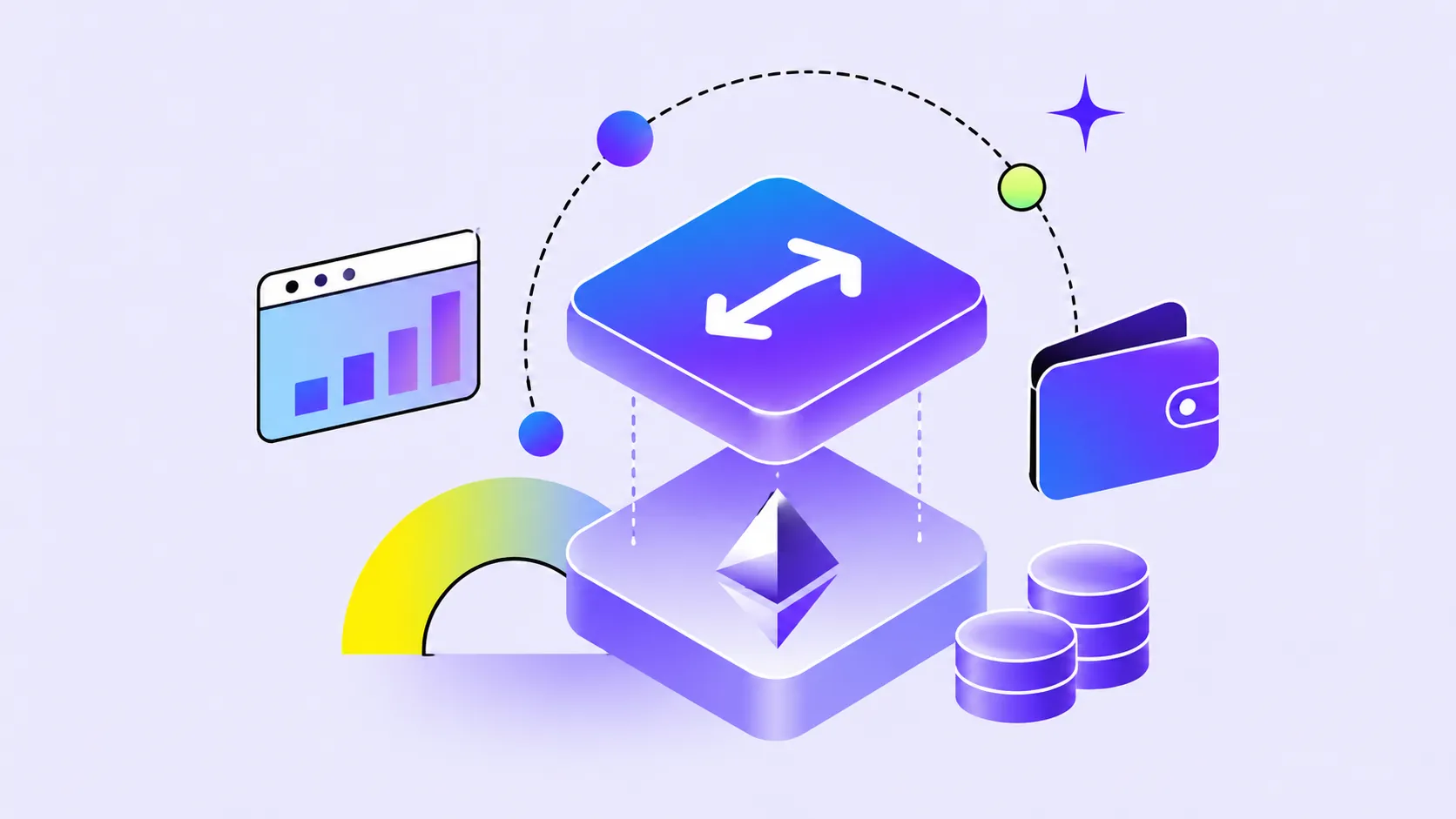
What Is a Layer 2 Blockchain?
A Layer 2 blockchain (L2) is a scaling network built to make transactions on an underlying blockchain more efficient. Ethereum Layer 2 networks such as Arbitrum and Optimism allow users to transfer cryptocurrencies, interact with decentralized applications, and access blockchain services without executing every transaction directly on Ethereum Mainnet.
For beginners, understanding Layer 2 technology is not just about learning how blockchains scale. It is also about knowing which network to select, how to pay transaction fees, how to transfer assets safely, and what happens when moving funds between blockchains.
In this CoinW Academy guide, we explain the practical side of Layer 2 networks, from choosing your first network to understanding transaction confirmations, bridging risks, and the difference between L2 tokens and gas fees.
For a broader technical introduction, readers can explore our existing CoinW Academy guide to Layer 2 technology.
Quick Summary
What Layer 2 does: Enables transactions on networks designed to improve the scalability of an underlying blockchain.
How beginners use it: Select a compatible wallet, obtain assets on the correct network, and interact with supported applications.
Popular Ethereum L2s: Arbitrum, Optimism, Base, Starknet, and zkSync Era.
Gas fees: Often paid in ETH on Ethereum-based rollups, even when the network has a separate governance token.
Moving funds: Assets can be transferred using supported bridges or exchange withdrawal networks.
Main precaution: Always confirm the destination network, token contract, and receiving platform's compatibility.
Why Would Someone Use a Layer 2 Network?
Ethereum supports a wide range of decentralized applications, including lending protocols, decentralized exchanges, NFT marketplaces, and blockchain games. However, using Ethereum Mainnet directly can become expensive when network demand increases.
Layer 2 networks provide an alternative environment for many of these activities. Users can interact with compatible applications while generally paying lower transaction fees than they would on Ethereum Mainnet.
Consider a user who wants to exchange a small amount of cryptocurrency through a decentralized exchange. If the transaction costs several dollars in network fees, the expense may represent a significant percentage of the transaction.
On a Layer 2 network, the same type of operation may cost considerably less, although actual fees depend on the network, application, and current conditions.
Common reasons for using Layer 2 include:
Token transfers: Sending supported cryptocurrencies between wallets at potentially lower costs.
Decentralized trading: Exchanging assets through applications deployed on L2 networks.
DeFi participation: Accessing lending, borrowing, and liquidity protocols.
Blockchain gaming: Performing frequent in-game transactions without paying Ethereum Mainnet fees for every action.
Digital payments: Using supported networks for relatively inexpensive cryptocurrency transfers.
Which Layer 2 Blockchain Should Beginners Choose?
There is no single Layer 2 network that is best for every user. The appropriate choice depends on the applications someone wants to access, the assets they hold, the available wallet infrastructure, and the network's security characteristics.
For Ethereum users, several established ecosystems are worth understanding.
Arbitrum: Ethereum-Compatible Applications
Arbitrum One is an Ethereum Layer 2 network based on optimistic rollup technology. It supports Ethereum-compatible smart contracts and a range of decentralized financial applications.
Users familiar with Ethereum wallets can generally interact with Arbitrum One using compatible EVM wallet software.
The ecosystem's governance token is ARB, but standard transaction fees on Arbitrum One are paid in ETH.
Learn more about the ecosystem through Arbitrum (ARB) market information and the CoinW Institute's Arbitrum analysis.
Optimism: An Ethereum Scaling Ecosystem
OP Mainnet is an Ethereum Layer 2 network built using optimistic rollup technology. Its infrastructure is associated with the OP Stack, an open-source framework for developing compatible blockchain networks.
Optimism supports decentralized applications and uses ETH for transaction fees on OP Mainnet. Its OP token is associated with governance rather than serving as the standard gas asset.
Readers interested in its associated cryptocurrency can explore Optimism (OP) price information.
Base: An Ethereum Layer 2 Built with the OP Stack
Base is an Ethereum Layer 2 network built using the OP Stack. It supports Ethereum-compatible applications and uses ETH to pay transaction fees.
Base is an example of a Layer 2 network that does not require a separate native governance token for users to transact.
Beginners should be particularly careful with tokens claiming to be official Base network assets, since a network's popularity can attract misleading or fraudulent token promotions.
Starknet: A Different Smart Contract Environment
Starknet uses STARK-based cryptographic validity proofs to scale Ethereum transactions.
Unlike many EVM-compatible networks, Starknet uses a specialized execution environment and programming tools. Users may therefore need a Starknet-compatible wallet.
The STRK token supports functions including transaction fees, staking, and governance.
Explore Starknet (STRK) market information for more information about its associated token.
How to Start Using a Layer 2 Blockchain
Getting started with an Ethereum Layer 2 network generally requires a compatible wallet, assets on the correct network, and enough cryptocurrency to cover transaction fees.
The following steps describe a typical beginner workflow.
Step 1: Select the Network You Want to Use
Begin by identifying the application or service you want to access. Check which Layer 2 networks it supports and whether your intended cryptocurrency is available on those networks.
For example, an application deployed on Arbitrum One cannot automatically be accessed through a wallet connected only to OP Mainnet.
Both networks may support Ethereum-compatible addresses, but they maintain separate transaction histories and balances.
Step 2: Prepare a Compatible Cryptocurrency Wallet
Choose a wallet that supports your selected network. Ethereum-compatible Layer 2 networks commonly work with EVM wallets, while other ecosystems may require specialized software.
When configuring a wallet, obtain network details from official documentation rather than copying unverified settings from social media or unfamiliar websites.
Never disclose your recovery phrase or private keys to a website, application, or individual.
Step 3: Obtain Assets on the Correct Network
Users can typically obtain assets on Layer 2 through a supported exchange withdrawal or a blockchain bridge.
For example, someone holding ETH on Ethereum Mainnet may use a compatible bridge to transfer ETH to Arbitrum One.
Alternatively, a cryptocurrency exchange may support direct withdrawals to a particular Layer 2 network.
Important: Network availability varies by exchange, asset, region, and time. Always confirm that the withdrawal network is supported before submitting a transfer.
Step 4: Keep Enough Cryptocurrency for Gas Fees
Before using decentralized applications, make sure your wallet contains the asset required to pay transaction fees.
On Arbitrum One, OP Mainnet, and Base, this is normally ETH. Holding ARB or OP alone does not automatically provide the ETH needed for transaction fees.
Other Layer 2 networks may use different fee assets or support multiple payment options.
Step 5: Connect to a Supported Application
Once your wallet is funded, you can connect it to a decentralized application deployed on the chosen network.
Always verify the application's official website and carefully review transaction requests before approving them.
For beginners, starting with a small test transaction can help confirm that the wallet, network, and receiving address are configured correctly.
How Do You Transfer Cryptocurrency Between Ethereum and Layer 2?
Moving cryptocurrency between Ethereum Mainnet and a Layer 2 network usually requires a blockchain bridge or another supported transfer service.
A bridge connects separate blockchain environments and coordinates asset transfers between them.
For example, a user transferring ETH from Ethereum Mainnet to Arbitrum One through a canonical bridge generally deposits assets into a smart contract on Ethereum. The corresponding balance is then made available on Arbitrum according to the bridge's rules.
To transfer assets safely, users should follow these precautions:
Verify the official bridge website through the network's documentation.
Confirm the source blockchain and destination blockchain.
Check the cryptocurrency and its contract address when applicable.
Review the estimated network fees and transfer amount.
Check the expected completion time, particularly for withdrawals back to Ethereum.
Consider making a small test transfer before moving a larger amount.
Ethereum provides an official guide to bridging tokens to Layer 2 that explains the basic transfer process.
What Happens If You Select the Wrong Blockchain Network?
Selecting an incorrect network is one of the most important mistakes beginners should avoid when transferring cryptocurrency.
For example, Ethereum Mainnet, Arbitrum One, Optimism, and Base may use similarly formatted wallet addresses, but they are separate blockchain networks.
If a user withdraws an asset to Arbitrum while expecting it to arrive on Ethereum Mainnet, the funds may exist on Arbitrum instead of the intended network.
Whether the assets can be recovered depends on the receiving address, wallet control, exchange support, and transaction circumstances.
When sending cryptocurrency to an exchange deposit address, never assume that an identical address format means every network is supported.
CoinW recommends verifying the selected deposit or withdrawal network and its compatibility before confirming any cryptocurrency transfer.
How Much Do Layer 2 Transaction Fees Cost?
Layer 2 transaction fees vary according to the network, transaction complexity, and demand for blockchain resources.
On Ethereum rollups, fees can include the cost of executing transactions on Layer 2 and publishing the necessary transaction information to Ethereum.
Although Layer 2 fees are generally lower than comparable Ethereum Mainnet fees, they are not fixed and can increase during periods of congestion.
Different actions also require different amounts of computation. A simple token transfer may cost less than a complex smart contract interaction.
| Activity | Potential fee components | What beginners should check |
|---|---|---|
| Sending tokens | L2 execution and data costs | Gas asset and network |
| Swapping tokens | Network fee and trading fees | Slippage, liquidity, and total cost |
| Bridging from Ethereum | L1 gas and possible service fees | Total received and bridge security |
| Withdrawing to Ethereum | L2 fees and possible L1 claim fees | Settlement delay and final cost |
| Using DeFi | Contract execution and protocol fees | Smart contract risks and approvals |
Users should compare the complete cost of an operation rather than looking only at the displayed network gas fee.
Why Do Layer 2 Withdrawals Sometimes Take Longer?
A transaction can receive a fast confirmation on Layer 2 without immediately achieving final settlement on Ethereum.
This distinction becomes particularly important when withdrawing assets from an optimistic rollup through its canonical bridge.
Optimistic rollups generally include a challenge period during which potentially incorrect state transitions can be disputed.
Consequently, canonical withdrawals from some optimistic rollups may take approximately seven days before assets can be claimed on Ethereum Mainnet.
Third-party liquidity bridges may provide faster transfers, but these introduce their own fees, liquidity requirements, and security assumptions.
ZK-rollups use validity proofs rather than optimistic fraud-challenge periods, although their withdrawal times still depend on proof generation, verification, and network implementation.
Before transferring assets, users should distinguish between transaction confirmation, bridge completion, and final settlement.
Do You Need ARB, OP, or Another Layer 2 Token to Use the Network?
Not necessarily. One of the most common misconceptions about Layer 2 blockchains is that users must own the network's associated governance token to pay transaction fees.
On several major Ethereum Layer 2 networks, ETH remains the primary gas asset.
| Network | Associated token | Standard gas asset |
|---|---|---|
| Arbitrum One | ARB | ETH |
| OP Mainnet | OP | ETH |
| Base | No separate native network token | ETH |
| Starknet | STRK | STRK or ETH, depending on support |
Governance tokens may provide voting rights or other ecosystem functions, but they should not automatically be treated as the network's required transaction currency.
At CoinW, users can monitor crypto live prices and research assets such as Ethereum (ETH) and zkSync (ZK).
How to Check Whether a Layer 2 Network Is Secure
Layer 2 networks can rely on Ethereum for important security functions, but their actual protections depend on the implementation.
Before depositing funds, users should investigate several technical and operational factors.
Proof system: Determine how the network verifies or challenges incorrect transaction results.
Data availability: Understand where transaction data is published and whether users can independently reconstruct the network's state.
Upgrade permissions: Check whether administrators can change important smart contracts and whether safeguards or delays apply.
Sequencer reliability: Investigate what happens if the transaction sequencer becomes unavailable or refuses transactions.
Withdrawal mechanisms: Verify whether users can withdraw assets without depending entirely on a centralized operator.
Bridge security: Review the contracts and infrastructure responsible for transferring assets.
Ethereum's official documentation explains the different security assumptions of Layer 2 networks.
Users can also consult independent technical assessments such as L2BEAT's Ethereum scaling risk analysis.
Common Layer 2 Mistakes Beginners Should Avoid
Understanding the technology is useful, but avoiding operational mistakes is equally important.
Confusing networks with tokens: Purchasing ARB does not automatically transfer assets to Arbitrum One.
Choosing an unsupported withdrawal network: A platform may support a cryptocurrency without supporting every blockchain on which it exists.
Running out of gas: Users may hold tokens on Layer 2 but lack the ETH or other asset required to move them.
Using unofficial bridges: Fraudulent websites can imitate legitimate bridge interfaces and request malicious wallet approvals.
Ignoring withdrawal delays: Fast L2 confirmations do not guarantee immediate availability of funds on Ethereum Mainnet.
Assuming identical token symbols mean identical assets: Tokens may have different contract addresses, issuers, or bridge representations across networks.
Granting unlimited approvals unnecessarily: Smart contract permissions may expose wallet assets if an approved contract is compromised.
For first-time users, verifying each transaction detail and beginning with a small transfer can reduce the risk of costly mistakes.
How Do Layer 2 Networks Affect the Cryptocurrency Market?
Layer 2 networks are important not only for blockchain infrastructure but also for the broader cryptocurrency market.
As more applications deploy on Layer 2, activity can spread across multiple networks, creating demand for infrastructure, liquidity, and interoperability services.
However, network adoption and token performance are not the same thing. A Layer 2 network can experience increased usage without its associated governance token necessarily increasing in value.
When evaluating Layer 2-related cryptocurrencies, traders may examine:
Network activity: Transaction counts, active addresses, and application usage.
Total value secured: The value of assets held or secured within the network, interpreted alongside the measurement methodology.
Token supply: Circulating supply, future unlocks, and issuance schedules.
Token utility: Governance rights, staking, fee functions, and other economic mechanisms.
Developer adoption: New applications, infrastructure improvements, and ecosystem integrations.
Security developments: Protocol upgrades, decentralization milestones, and vulnerabilities.
CoinW provides access to market information and trading services for supported cryptocurrencies, including Layer 2 ecosystem assets. Users should assess both the technology and the token's economic characteristics before making trading decisions.
Frequently Asked Questions About Using Layer 2 Blockchains
Can I use the same wallet address on Ethereum and Arbitrum?
Generally, yes. Ethereum and Arbitrum One use compatible EVM address formats, so the same externally owned wallet account can control an address on both networks. However, balances and transactions remain separate, and the receiving service must support the selected network.
Do I need ETH to use Arbitrum or Optimism?
For standard transactions on Arbitrum One and OP Mainnet, ETH is used to pay network gas fees. ARB and OP are primarily governance tokens and do not replace ETH as the standard gas asset on those networks.
Can I send ETH directly from Ethereum to a Layer 2 wallet?
Moving ETH between Ethereum Mainnet and a Layer 2 generally requires a supported bridge or transfer service. Sending ETH on Ethereum Mainnet to an address does not automatically place the funds on the corresponding Layer 2 network.
Why is my Layer 2 transaction confirmed but my withdrawal is still pending?
A Layer 2 transaction confirmation and final settlement on Ethereum are different stages. Canonical withdrawals from some optimistic rollups require a challenge period before funds become claimable on Ethereum.
Can I use Layer 2 without buying its governance token?
Yes. Many Layer 2 networks allow users to interact with applications using ETH or another supported gas asset without purchasing the network's governance token.
Is Base a Layer 2 blockchain?
Yes. Base is an Ethereum Layer 2 network built using the OP Stack. It supports Ethereum-compatible applications and uses ETH for standard network fees.
Are Layer 2 transfers always cheaper than Ethereum transfers?
Not always. Transactions executed directly on Layer 2 are generally cheaper than comparable Ethereum Mainnet transactions, but bridging costs, withdrawal fees, and network congestion can affect the total expense.
What happens if I send tokens using the wrong network?
Funds may arrive on a different blockchain from the one intended. Recovery depends on who controls the receiving address and whether the wallet or exchange supports the network. In some cases, recovery may not be possible.
Can Layer 2 networks operate if Ethereum is congested?
Layer 2 networks can continue processing transactions under many conditions, but congestion on Ethereum may increase their data publication costs or delay settlement and bridge operations. Their dependence on Ethereum varies by design.
Conclusion
Layer 2 blockchains make it possible to use many cryptocurrency applications without executing every transaction directly on an underlying Layer 1 network.
For beginners, the most important considerations are practical: choosing the correct network, understanding gas fees, using compatible wallets, verifying bridge transactions, and recognizing the difference between network assets and governance tokens.
Networks such as Arbitrum, Optimism, Base, and Starknet demonstrate different approaches to making blockchain applications more accessible, but each introduces its own operational and security considerations.
At CoinW, we encourage users to research both the technology and the associated cryptocurrency markets before transferring assets or participating in Layer 2 ecosystems.
References / Sources
Ethereum.org: What Is Layer 2?
Ethereum.org: How to Bridge Tokens to Layer 2
Ethereum.org: Optimistic Rollups
Ethereum.org: Zero-Knowledge Rollups
Arbitrum: Official Developer Documentation
Optimism: Official Documentation
-
Starknet: Official Documentation
CoinW Academy: What Is Layer 2?
CoinW Academy: Ethereum 2026 — Rebuilding the Future of the Ecosystem
Risk Disclaimer: Cryptocurrency trading and blockchain transactions involve financial and technical risks, including market volatility, smart contract vulnerabilities, and potential loss of assets. This article is for educational purposes only and does not constitute financial or investment advice.
You May Also Like
Layer 1 vs. Layer 2 Blockchains: Key Differences Explained
Learn the key differences between Layer 1 and Layer 2 blockchains, how they work, and how networks like Ethereum, Solana, and Arbitrum compare in scalability, security, and transaction fees.
Crypto Mining Explained: How Miners Secure the Blockchain
Learn how crypto mining works, how miners validate transactions, and how Proof of Work secures blockchain networks like Bitcoin.
Understanding Deflationary Models: Buyback, Burn & Community Governance
Explore how CoinW's CWC buyback-and-burn model supports long-term ecosystem development and how token holders participate in non-binding community votes on token listings, platform features, and other improvements.